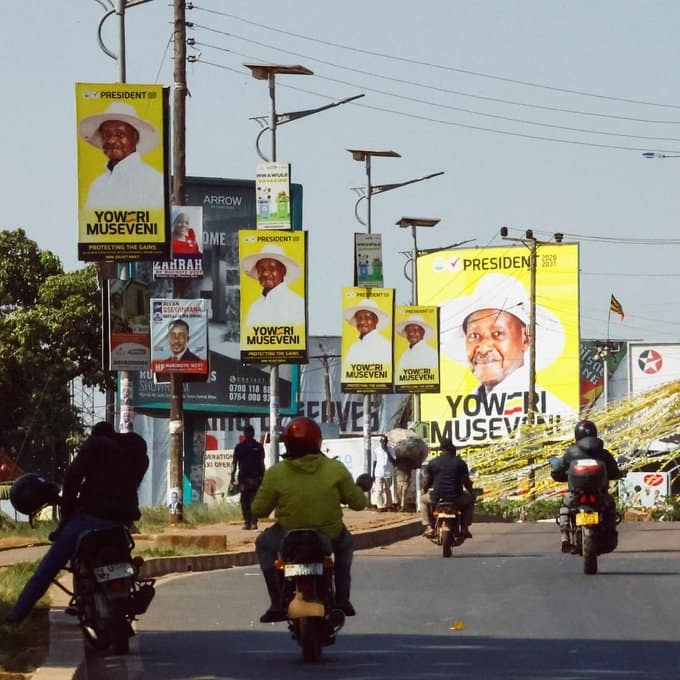
Ugandan authorities have begun the gradual process of restoring internet access across the nation, ending a near-total digital blackout that lasted for several days and cast a long shadow over the announcement of President Yoweri Museveni’s controversial victory in the recent presidential election. The shutdown, widely condemned by rights groups, diplomats, and citizens alike, had severed a critical lifeline for communication, commerce, and information, intensifying the atmosphere of tension following the polls.
The internet disruption began on the eve of the January 14th election and extended through the vote-counting period and the declaration of results by the Electoral Commission, which proclaimed the 78-year-old Museveni, in power since 1986, the winner of a seventh term. The state-run Uganda Communications Commission (UCC) had initially ordered telecom companies to suspend internet and social media access, citing the need to prevent the spread of “illegal information” and maintain public order.
The restoration, which began late Monday, is being implemented in phases, with full connectivity yet to be achieved. Access to major social media platforms and messaging services like Facebook, Twitter, WhatsApp, and Instagram remains notably sluggish or inaccessible for many users, even as basic web browsing slowly returns.
“The government’s decision to shut down the internet was a blunt instrument of control, not a measure for security,” said Dr. Sarah Birete, executive director of the Centre for Constitutional Governance, a local civil society organization. “It silenced independent media, hindered election monitoring, prevented citizens from reporting abuses, and inflicted massive economic damage on businesses that rely on digital transactions. A partial restoration does not erase the harm done.”
The election itself was marred by a pre-poll crackdown that included the arrest of opposition candidates, a ban on campaign rallies in several areas, and a pervasive deployment of security forces. The leading opposition candidate, Robert Kyagulanyi, popularly known as Bobi Wine, was placed under effective house arrest before and after the vote. His National Unity Platform party has rejected the results, alleging widespread fraud and military intimidation at polling stations.
The internet blackout effectively isolated the country during this critical period, preventing the real-time sharing of images, videos, and accounts from citizens and independent observers. International election observer missions, including those from the European Union and the United States, cited the shutdown as a severe impediment to transparency and have expressed deep concerns over the integrity of the electoral process.
The economic cost of the outage is estimated to be in the tens of millions of dollars daily, affecting everything from mobile money services—ubiquitous in Uganda—to ride-hailing apps, online businesses, and digital freelancers. “My entire business is online. For five days, I was cut off from clients, payments, and my work. This is not just an inconvenience; it’s a direct attack on our livelihoods,” said Fiona Namutebi, a digital marketer in Kampala.
As connectivity trickles back, the digital landscape remains under scrutiny. Analysts warn that the government has demonstrated both the capability and the willingness to impose a digital stranglehold at will, setting a concerning precedent for future dissent. For many Ugandans, the return of the internet brings little relief from the political uncertainty and the chilling message sent by the state’s control over the digital public square.
About The Author