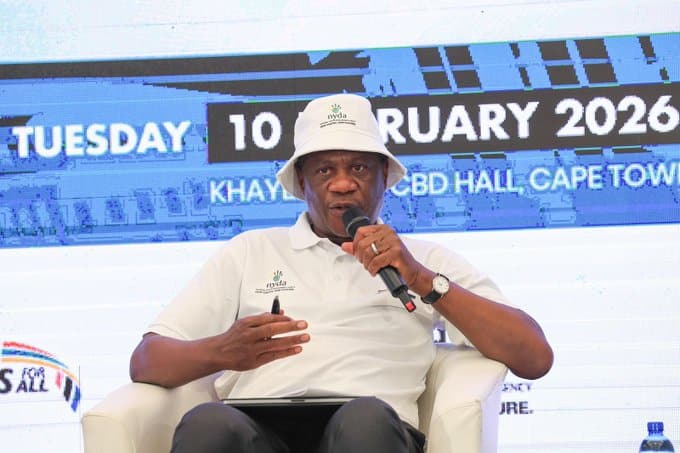
Under the stark Cape sun, the Thusong Service Centre in Khayelitsha became a vibrant crucible of South Africa’s future on Thursday, as Deputy President Paul Mashatile led a high-stakes engagement with hundreds of young people, community leaders, and stakeholders at the National Youth Development Agency (NYDA) Presidential Youth Roundtable. The event, far from a ceremonial lecture, unfolded as a raw, energetic, and at times tense dialogue where the soaring aspirations of the nation’s youth met the hard granite of socio-economic reality.
Mashatile, leading the delegation in President Cyril Ramaphosa’s stead, was joined by a formidable government contingent including the Minister in The Presidency for Women, Youth and Persons with Disabilities, Dr. Nkosazana Dlamini-Zuma, and Western Cape Premier Alan Winde, presenting a rare show of unity across political lines on the pivotal issue of youth development.
A Stage Set for Candid Exchange
The atmosphere crackled with a mixture of hope and palpable frustration. Young entrepreneurs showcased tech innovations and small business products in the hallways, their work standing as testament to latent potential. But once the floor opened, the narrative quickly turned to systemic barriers.
“This is not just a talk shop,” declared Deputy President Mashatile in his opening remarks, setting the tone. “We are here to listen, to understand the real challenges from your mouths, and to account for the work being done. You are not leaders of tomorrow; you are leaders of today, and we must partner with you.”
The Litany of Challenges: Unemployment, Crime, and Access
For over three hours, a procession of youth representatives, students, and informal traders took the microphone, delivering pointed, personal testimonies. The issues raised painted a comprehensive picture of a generation under siege:
- The Jobs Abyss: Graduate unemployment was the dominant theme. “I have a degree in finance. I have sent out 200 applications. I am now a cleaner,” shared one young woman, her voice trembling with defiance. “What is the value of our education if it leads only to debt and despair?” Others highlighted the mismatch between curricula and market needs.
- The Funding Chasm: Aspiring entrepreneurs detailed the bureaucratic maze and collateral requirements that lock them out of traditional funding. “The NYDA grant is a drop in the ocean and too small to start a real business that can hire others,” argued a young man running a small plumbing service. Calls for streamlined, accessible venture capital and patient funding models were loud and clear.
- The Ecosystem of Crime: Several speakers linked joblessness directly to the rampant crime and gangsterism plaguing townships. “Idle hands are the devil’s workshop. When there is no hope, no opportunity, crime becomes the only employer,” stated a community activist from Site B, urging for youth economic interventions to be framed as critical crime prevention strategies.
- Infrastructure and Digital Divides: Lack of safe recreational spaces, unreliable public transport, and the crippling cost of data were highlighted as secondary but critical barriers that stifle social and professional mobility.
Government Response: Pledges, Programmes, and Partnership
In response, the leadership outlined a multi-pronged strategy. Deputy President Mashatile detailed government’s focus on scaling up pathways into the economy, including:
- Expanding the Presidential Employment Stimulus, highlighting that over 1.2 million opportunities had already been created.
- Strengthening the NYDA, promising to review its funding models and scale up its capacity to serve as a true one-stop-shop for youth development.
- Accelerating the implementation of the Youth Employment Service (YES) and other public-private partnerships to place more youth in work experience.
- Prioritising skills for the digital economy and the energy transition, framing these as the growth frontiers for new jobs.
Minister Dlamini-Zuma emphasised a cross-departmental approach, urging youth to access opportunities in sectors like agriculture and the green economy. Premier Winde, while acknowledging the national scope of the crisis, committed the Western Cape government’s resources to supporting youth-owned SMMEs and improving technical and vocational education.
A Promise of Sustained Dialogue
The roundtable concluded not with a resolution, but with a commitment to sustained action. Deputy President Mashatile announced the establishment of a dedicated working group, including youth representatives from the day’s dialogue, to monitor the implementation of discussed solutions and maintain open channels.
“Today was not the end. It is the beginning of a more accountable, more direct conversation,” Mashatile stated in his closing. “We have heard you. The energy, the criticism, the ideas—we are taking them with us. Your future is non-negotiable.”
As the hall emptied, the mood was cautiously optimistic yet weighted with skepticism bred from past promises. The true measure of the Khayelitsha roundtable will not be in its vigorous debate, but in the tangible opportunities that flow from it—and whether this dialogue becomes the catalyst for change that South Africa’s impatient youth demand.
About The Author