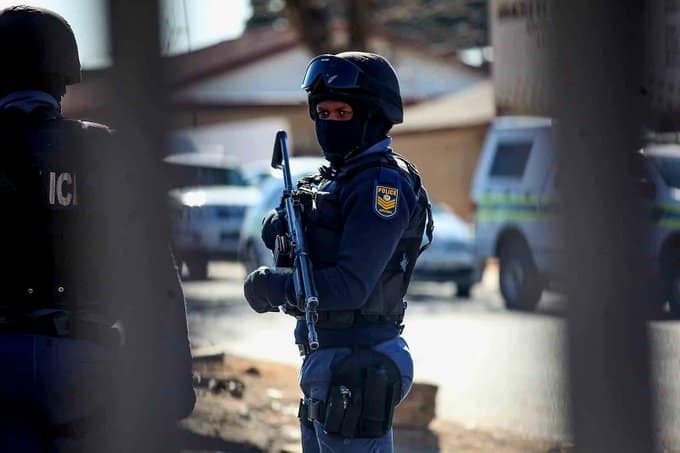
The festive lights had scarcely been taken down, the hopeful “Happy New Year” greetings still echoing, when the province of KwaZulu-Natal was plunged into a wave of violence that has marked 2026 with a deadly, sobering stamp. In a series of coordinated and explosive confrontations spanning multiple districts over the first ten days of the year, police have engaged in fierce shootouts with suspected criminal syndicates, leaving at least 15 suspects dead and a community grappling with the stark reality of its security challenges.
The incidents, described by police top brass as “pre-planned operations based on actionable intelligence,” were not isolated crimes of passion, but targeted raids on what authorities are calling “high-value hideouts and operational nodes” for gangs involved in organized crime, including cash-in-transit heists, armed robbery, and kidnapping.
The Flashpoints: A Chronology of Violence
The first clash erupted in the early hours of January 2nd near Estcourt, along the N3 corridor—a vital and notoriously dangerous freight route. A multi-disciplinary team, tracking a vehicle linked to a wanted CIT heist squad, attempted a stop. What ensued was a high-speed chase ending in a roadside ambush, where suspects opened fire with high-calibre rifles. In the ensuing exchange, four suspects were fatally wounded. Police recovered two R5 assault rifles, stolen property, and a vehicle reported hijacked in Johannesburg.
Just two days later, the focus shifted to the South Coast. Acting on a tip-off regarding a kidnapping-for-ransom cell, Tactical Response Team (TRT) officers descended on a safe house in Port Shepstone. The suspects, reportedly barricaded inside, refused to surrender and initiated a prolonged gunfight. When the smoke cleared, three men lay dead. A fourth was arrested, and a victim who had been held for five days was found unharmed but traumatized in a locked room.
The most intense battle, however, occurred on January 7th in Inanda, north of Durban. In a pre-dawn raid targeting a compound allegedly used as a planning base for a series of violent business robberies, police met with what an official statement called “a militarized level of resistance.” For over an hour, the air crackled with automatic gunfire. Eight suspects were killed in this single engagement. The haul from the scene was staggering: seven firearms (including AK-47s), over 500 rounds of ammunition, explosives, bulletproof vests, and a small arsenal of stolen goods. Two police officers sustained non-life-threatening injuries.
The Official Stance: “No Alternative”
Police Commissioner in the province, Lieutenant General Nhlanhla Mkhwanazi, addressed the media in a sombre press conference. “The year has begun with tragic but necessary operations,” he stated. “Our officers approached each situation with the primary goal of apprehension. However, when our members and the lives of the public are met with immediate, sustained, and lethal volleys of gunfire, they are left with no alternative but to defend themselves with proportional force.”
He emphasized that the operations were intelligence-driven, aiming to dismantle networks responsible for terrorizing communities. “These were not random encounters. These were surgical strikes against individuals high on our most-wanted lists, individuals who have repeatedly shown a blatant disregard for human life.”
Community and Analyst Reactions: A Murmur of Unease
While the business community and some civic associations have expressed relief at the police’s “forceful stance,” a murmur of unease and familiar questions are rising from civil society and political opponents.
The Social Justice Coalition has called for an immediate, independent investigation by the Independent Police Investigative Directorate (IPID). “Fifteen deaths in a week is an extraordinary number,” said spokesperson Thandeka Ndlovu. “While we abhor the violence of these criminal syndicates, we must guard against a slide into a ‘shoot-to-kill’ policy. The circumstances of each death must be thoroughly scrutinized. Were all suspects armed? Was there any attempt to disable and arrest? The public deserves transparency.”
Political analyst Professor Sipho Dlamini from the University of KwaZulu-Natal offered a grim perspective. “This bloody start underscores two brutal truths. First, the criminal groups operating in KZN are incredibly well-armed and willing to wage war against the state. Second, the police, after years of being outgunned and undermined, are now deploying a more aggressive, militarized response. We are witnessing an escalation—an arms race on the ground. The short-term gain may be a disruption of these networks, but the long-term social cost and the potential normalization of such extreme violence are deeply worrying.”
The Aftermath and the Path Forward
IPID has confirmed it is investigating all 15 deaths as per mandate. Meanwhile, police operations have visibly intensified across the province, with increased roadblocks and patrols in hotspot areas.
As KwaZulu-Natal moves deeper into January 2026, the atmosphere is one of grim resolution mixed with profound anxiety. The police have drawn a line in the sand, but at a terrifying cost. The community is left caught between the fear of criminal empires and the reverberations of state-led lethality, wondering if this violent storm is an end to the old year’s chaos, or a deadly precedent for the new one. The only consensus is that the province’s battle for law and order has entered a new, and more deadly, phase.
About The Author