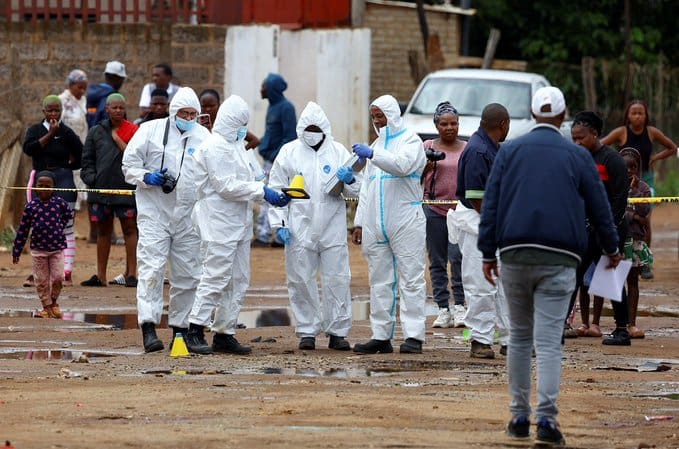
In the wake of a devastating mass shooting in Bekkersdal that claimed nine lives and left ten wounded, a leading criminologist has issued a stark and urgent warning that illegal and inadequately regulated taverns have become ground zero for a national crisis of fatal violence. Professor Nirmala Gopal, a respected voice in criminology from the University of KwaZulu-Natal, has called for an immediate, systemic overhaul of liquor regulation and enforcement, arguing that these unlicensed establishments are not merely venues for socialising but are increasingly functioning as lethal flashpoints for criminality, social breakdown, and tragedy.
The Bekkersdal attack, which unfolded in the early hours of a Friday night, is not an isolated incident but part of a grim and recurring pattern. In recent years, taverns and shebeens—particularly those operating outside the law—have been the scenes of some of South Africa’s most horrific violent crimes, including the 2022 Soweto and Pietermaritzburg mass shootings.
“These are not random acts of violence,” Professor Gopal asserted in an interview following the Bekkersdal tragedy. “They are symptomatic of a perfect storm created by a toxic convergence of factors. An illegal tavern is, by its very nature, a space that operates beyond the reach of the state. There is no oversight on operating hours, no enforcement of age restrictions, no adherence to basic safety standards like fire escapes or lighting, and critically, no mechanism to prevent them from becoming hubs for drug dealing, illicit firearms, and gang turf wars.”
The Anatomy of a Hotspot: Why Unregulated Taverns are Lethal
Professor Gopal’s analysis outlines a multi-layered threat environment cultivated by these establishments:
- The Enforcement Vacuum: Operating without a licence means owners are already in contravention of the law, making them less likely to cooperate with police or report criminal activity on their premises for fear of being shut down. This creates a “no-go” zone for conventional policing.
- Magnets for Criminal Enterprise: The combination of cash transactions, late-night crowds, and impaired judgement makes these venues prime targets for armed robberies. Furthermore, they often become de facto trading posts for drugs and illegal firearms, drawing rival gangs and syndicates into conflict.
- Social and Spatial Triggers: Many are located in residential areas, meaning violence spills directly into homes and streets. Extended, unregulated operating hours lead to noise complaints and disputes that escalate into violence, involving patrons and frustrated neighbours alike.
- The “Third Place” Problem: In communities with high unemployment and few recreational facilities, these taverns become the default “third place” outside of home and work. When that sole social outlet is lawless and dangerous, it corrodes the entire social fabric.
A Call for a “Whole-of-Society” Crackdown
Professor Gopal argues that reactive policing after a massacre is a failure of prevention. She advocates for a decisive, multi-pronged strategy:
- Intelligence-Driven Enforcement: Municipalities, SAPS, and the South African Revenue Service (SARS) must share data to identify and permanently shut down illegal operators through coordinated blitzes, targeting both the venues and their supply chains.
- Strict Liability for Owners: Legislating “duty of care” laws that hold tavern owners, legal or illegal, civilly and criminally liable for foreseeable violence on their premises.
- Community Co-regulation: Empowering community policing forums and neighbourhood watches to monitor compliance and report illegal operations, breaking the cycle of community intimidation.
- Addressing the Demand: Investing in the creation of safe, municipally-supported recreational alternatives, especially for youth, to reduce dependence on these high-risk venues.
“The tears of the families in Bekkersdal are a direct indictment of our collective failure to regulate the liquor environment,” Professor Gopal concluded. “We are mourning lives lost in places that should never have been open in the first place. Until we treat the proliferation of illegal taverns as the national security threat it is, these deadly attacks will continue to punctuate our festive seasons and our daily lives with unbearable grief.”
The professor’s warning places the Bekkersdal shooting within a much larger and more troubling context, challenging authorities to move beyond condolences and towards concrete, systemic action to dismantle the infrastructure of violence thriving in the shadows of the informal liquor trade.
About The Author