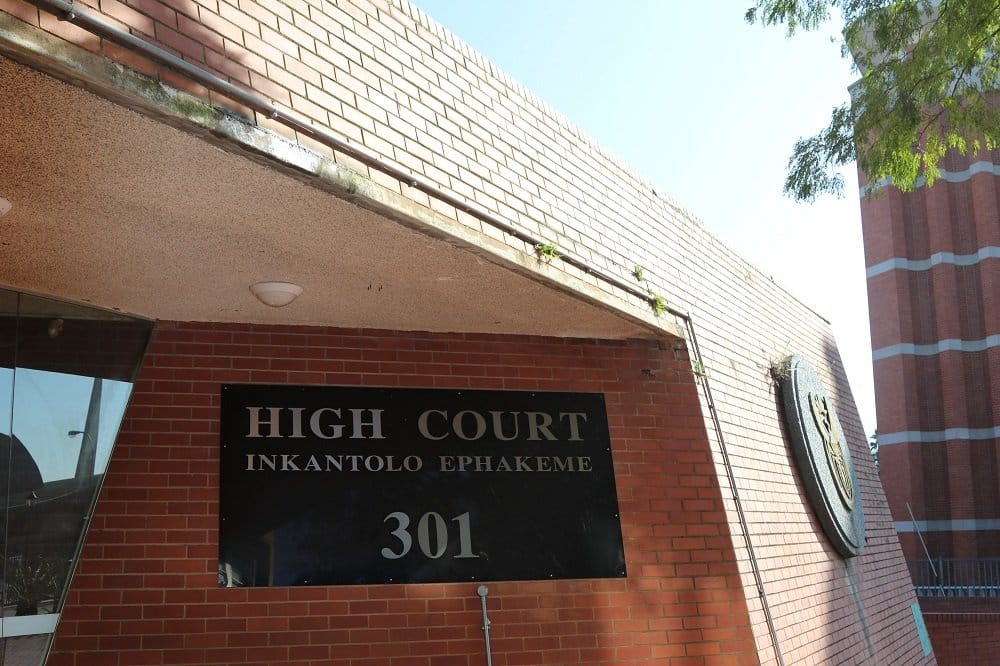
BLOEMFONTEIN – The long-running corruption saga involving former Free State Premier and African National Congress Secretary-General Ace Magashule crawled forward at a glacial pace on Tuesday, as the much-anticipated pre-trial hearing in the R255 million asbestos case was abruptly postponed, with proceedings now set to resume on Wednesday.
Magashule, along with 17 co-accused—including former senior provincial officials, businesspeople, and service providers—was expected to face another round of legal maneuvering in the Free State High Court. Instead, what unfolded was a familiar scene in a case defined by delays: brief appearances, legal arguments about logistics, and a new date on the calendar.
The case, which has dogged Magashule since his time as premier and followed him through his tumultuous tenure as the ANC’s top official, relates to a controversial 2014 project to audit and remove asbestos from hundreds of homes across the province. Instead of protecting poor communities from a deadly carcinogen, prosecutors allege, the project was a elaborate scheme to line the pockets of politically connected insiders.
The Charges: A Saga of Neglect and Graft
At the heart of the matter is a R255 million contract awarded to the now-defunct company Blackhead Consulting. The contract, entered into by the Free State Department of Human Settlements, was meant to identify and remove asbestos roofing in communities like Odendaalsrus, Thabong, and others across the province—a genuine public health crisis in an area where asbestos-related diseases remain a scourge.
Instead, the State alleges, the contract was a fraud from the outset. According to the charge sheet, the work was either not done, done incompetently, or massively overpriced. Millions of rands were paid out for services that were never rendered, and the legitimate health concerns of poor communities were exploited as a cover for looting.
Magashule, as the sitting premier at the time, is accused of playing a central role in facilitating the contract and ensuring the flow of funds, despite red flags raised by officials. He faces charges of corruption, fraud, and money laundering. His co-accused include former MECs, senior civil servants, and the businesspeople who allegedly benefited from the scheme.
All 18 accused have pleaded not guilty and have consistently maintained their innocence, with Magashule’s legal team arguing that he was not directly involved in the day-to-day administration of the contract and that the case against him is politically motivated.
The Pre-Trial: Legal Chess, Not Checkers
Tuesday’s proceedings, though brief, were not without significance. Pre-trial hearings in complex commercial crimes cases serve as the legal scaffolding upon which a full trial is built. Issues of disclosure—whether the State has handed over all relevant documents to the defense—are often fiercely contested. So too are applications for separation of trials, where accused individuals argue they should be tried alone rather than in a large group.
The postponement until Wednesday suggests that either outstanding documents need to be filed or that legal teams require more time to consult with their clients on procedural matters.
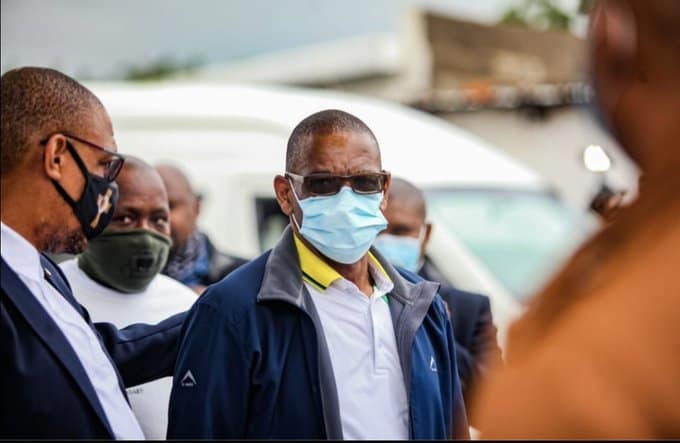
Outside the courthouse, a small contingent of Magashule supporters gathered, singing struggle songs and holding placards declaring their loyalty. Magashule himself, dressed in a dark suit and wearing a face mask, exchanged brief words with supporters before being driven away in a convoy.
“We are here to support our president,” said one supporter, referring to Magashule by the title his followers have continued to use despite his suspension and subsequent removal from the ANC top post. “This is a political case. They are using the courts to fight battles they cannot win at the conference.”
A Political Career in Limbo
For Magashule, the stakes extend far beyond the courtroom. Once one of the most powerful politicians in the country—a kingmaker in ANC internal politics and a central figure in the factional battles that have defined the party’s recent history—his political career has been in deep freeze since his indictment.
He was suspended as ANC Secretary-General in 2021 following his formal charging, part of the party’s controversial resolution that members facing serious criminal charges must step aside within 30 days or face suspension. Magashule fought the decision internally and in the courts, but ultimately lost, cementing his status as a political outsider watching from the sidelines as his erstwhile rivals consolidated power.
The trial, should it finally get underway, represents both a legal peril and a potential platform. A conviction would likely end any remaining hopes of a political comeback. An acquittal, particularly if framed as a vindication, could see him re-emerge as a force in factional politics.
The Long Wait for Justice
For the communities who were meant to benefit from the asbestos project, the repeated delays are a source of bitter frustration. In towns across the Free State, residents still live with asbestos roofs, aware that millions were paid out to remove them—yet nothing changed.
“We see these men in their suits, going to court, and then coming out and going home,” said a community activist from Thabong who asked not to be named. “For us, nothing happens. The asbestos is still there. Our children are still breathing it. When will we see justice?”
The case has become emblematic of the broader challenges facing South Africa’s criminal justice system in pursuing high-level corruption. Complex financial investigations, well-resourced legal teams, and procedural delays have meant that years pass between arrests and trials, eroding public confidence.
What Happens Tomorrow
When court resumes on Wednesday, the legal teams are expected to address the outstanding pre-trial issues. The key question is whether both the State and the defense are ready to proceed to trial, or whether further delays are inevitable.
The State, represented by a team from the National Prosecuting Authority’s Investigating Directorate, has expressed readiness to proceed. The defense teams, however, have raised concerns about the volume of documentation and the complexity of the case, arguing that rushing to trial could prejudice their clients.
Judge Nompumelelo Gusha, presiding, has indicated a desire to move the case forward, but must balance that against the constitutional rights of the accused to a fair trial and adequate preparation.
As the sun set over Bloemfontein, the legal teams returned to their hotels and offices to prepare for another day of arguments. For Ace Magashule, the wait continues. For the residents of the Free State’s asbestos-ridden townships, the wait has already been too long.
The case has been postponed numerous times since the accused first appeared in court in 2020. Whether tomorrow brings a breakthrough or simply another date on the calendar remains to be seen.
About The Author