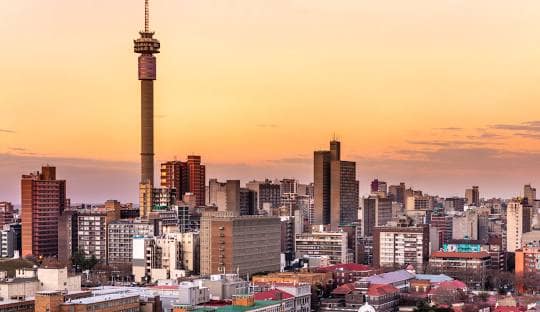
In a landmark decision that strikes at the heart of urban informality and economic rights, the Gauteng High Court has given the City of Johannesburg a strict two-week ultimatum to verify and register over 500 informal traders who were displaced from the city’s central business district. The ruling, handed down on November 3, 2025, is a significant victory for trader advocacy groups but immediately ignited a fierce debate over inclusion, citizenship, and the very nature of the city’s economic landscape.
The Legal Battle: A Fight for the “Right to Livelihood”
The court order is the direct result of a lawsuit brought by the Socio-Economic Rights Institute (SERI), a non-profit organization that has long championed the cause of informal traders. SERI argued that the City’s actions—and inactions—following the displacement of these traders constituted a violation of their rights, not only to fair administrative action but also to their very livelihoods.
“For years, these traders have been operating in a state of profound uncertainty,” a SERI attorney explained outside the courthouse. “They were moved from their trading sites for various reasons—urban regeneration, law enforcement operations, building fires—and were left in limbo, unable to legally earn a living. The court has now affirmed that the City has a constitutional obligation to rectify this and integrate them into the formal urban economy.”
The Court’s Directive: A Race Against Time
The court’s order is both specific and demanding. The City must complete the entire verification and registration process by November 18, 2025. To achieve this, verification sessions are to be held daily at the city’s Opportuning Centre on President Street.
The requirements for registration are clear, yet for many, potentially prohibitive. Applicants must present:
- A valid South African ID or passport.
- Proof of residence.
- Agreement to comply with the City’s 2012 Informal Trading By-Laws.
These by-laws restrict trading to designated stalls and specific areas, a point of contention for traders who argue that the most profitable pitches are often outside these zones.
A Cautious Victory and a Political Firestorm
The reaction to the ruling has been deeply divided, revealing the complex social and political fissures in contemporary South Africa.
SERI and supporting trader committees have hailed the judgment as a crucial step towards justice. “This is not the end, but it is a powerful beginning,” said one trader representative. “It gives us a chance to come out of the shadows, to no longer have to look over our shoulders for police who might confiscate our goods. It is about dignity.”
However, the ruling has also poured fuel on the simmering debate over foreign nationals in the informal economy. Herman Mashaba, the outspoken leader of ActionSA and a former mayor of Johannesburg, was quick to voice strong opposition.
“While we support order and the empowerment of South African entrepreneurs, this court order is a missed opportunity to prioritize South African citizens who are struggling in their own economy,” Mashaba stated. “We must ask: in this verification process, how will the City ensure that it is South Africans, particularly those historically disadvantaged, who are first in line for these trading opportunities? Our policies must put South Africans first.”
This sentiment, while politically potent, underscores the potential for exclusion. Many traders in the CBD, including long-term residents who are foreign nationals, lack formal proof of residence or operate on the fringes of the by-laws. Advocates fear that the strict application of the requirements could see a significant number of the most vulnerable traders left behind, reigniting the very cycle of displacement and informal survival the ruling sought to break.
The next two weeks will be a critical test for the City of Johannesburg. It must navigate the complex logistics of mass registration while simultaneously steering through a political minefield. The outcome will not only determine the futures of 500 traders but will also set a precedent for how South African cities manage the delicate balance between formal regulation and the vibrant, often chaotic, reality of informal work.
About The Author