The fierce Istanbul derby between Galatasaray and Besiktas, a fixture always simmering with historic rivalry, has exploded into a global controversy that transcends a mere 1-1 draw. At the heart of the storm is Nigerian superstar Victor Osimhen, whose moment of red mist has thrown a harsh spotlight on the intense pressures of Turkish football and the persistent specter of racism within the game.
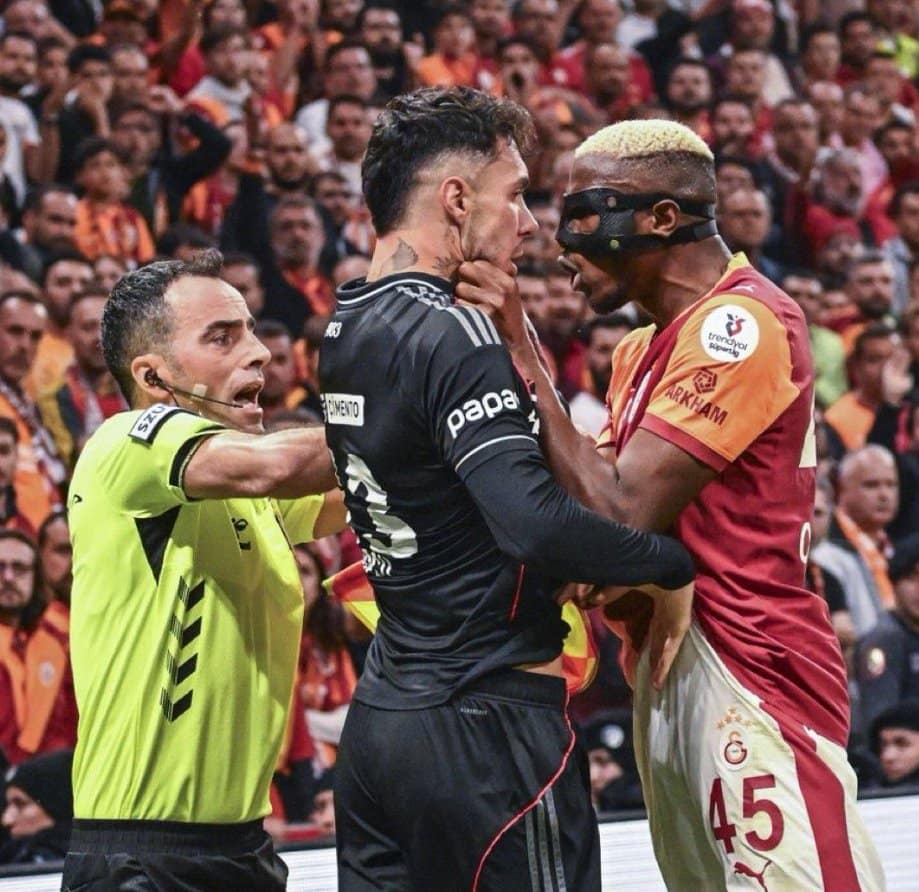
The flashpoint occurred in the 39th minute at a packed Rams Park Stadium. Following a robust challenge near the penalty area, tensions between Osimhen and Besiktas defender Emirhan Topçu boiled over. In a split second captured by cameras and replayed across the world, Osimhen’s frustration manifested in a startling act of aggression: he grabbed Topçu by the throat. The immediate aftermath saw both players receive yellow cards, a decision that has since been widely debated for its perceived leniency given the violent nature of the act.
However, the physical altercation was merely the surface-level explosion. The true fuel for the fire emerged in the claims following the match. Sources close to Osimhen and within the Galatasaray camp alleged that the striker’s reaction was not simply to the tackle, but a visceral response to a racial slur uttered by Topçu. The specific insult alleged, the abhorrent term “black monkey”, has a painful history in football, making the claim especially incendiary.
In response, Emirhan Topçu has vehemently denied the allegations. He publicly attributed the clash solely to the heat of the moment and the frustration from the initial tackle, framing it as a common on-pitch dispute that escalated. “This is a matter of two players fighting for their team,” he stated, dismissing the racism claims as fabrication.
This “he said, he said” dynamic has now forced the hand of the Turkish Football Federation (TFF), which has officially opened an investigation into the unconfirmed allegations. The governing body finds itself in a notoriously difficult position, tasked with uncovering the truth in an incident with no clear audio evidence and conflicting testimonies. The outcome carries immense weight, not only for the individuals involved but for the reputation of the Turkish Super Lig as a whole.
For Victor Osimhen, the immediate consequences are starkly clear. Regardless of the provocation, his act of grabbing an opponent by the throat constitutes clear violent conduct. He now faces an automatic suspension, with disciplinary codes suggesting a potential ban of one to three matches, a significant blow to Galatasaray’s title ambitions.
Yet, the long-term implications are even greater. If the racism allegations are proven, it would represent a damning indictment of the measures in place to protect players in Turkey. If they are not, Osimhen will be condemned by many for having used a very serious claim as a shield for an uncontrollable moment of violence. The incident has once again opened painful conversations about how football institutions investigate and punish racial abuse, and the fine line players walk when responding to intolerable provocation. As the investigation unfolds, the world watches, waiting to see whether this will be another forgotten flashpoint or a catalyst for genuine change.
About The Author