In a decisive demonstration of its parliamentary muscle, the Government of National Unity (GNU) successfully steered the revised 2025 fiscal framework through the National Assembly, setting the stage for the full adoption of the Medium Term Budget Policy Statement (MTBPS) in January 2026. The vote, which passed with 216 votes in favour against 78, underscores the administration’s commitment to its stated path of fiscal consolidation and strategic reallocation, even as it faces fierce criticism from left-leaning opposition parties who decry the framework as a betrayal of the poor.
The adoption, which took place on November 27, 2025, represents a critical milestone for Finance Minister Enoch Godongwana and the GNU, providing them with the legislative mandate to implement their economic strategy. The framework is built on a cautiously optimistic revision of the country’s financial outlook, driven by two key factors: a R19.7 billion upward revision in tax revenue forecasts for the 2025/26 financial year and lower-than-expected government borrowing costs.
A Fiscal Tightrope: More Spending, a Smaller Deficit
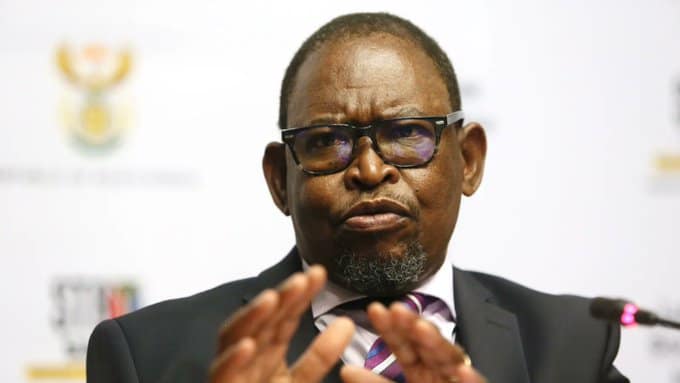
Minister Godongwana, who tabled the policy earlier in the month, framed the revised framework as a “balanced and responsible” approach. The improved revenue, largely attributed to better collection and resilient corporate tax from certain sectors, has created a rare fiscal space.
The framework allocates this windfall with precision:
- R15.8 billion is earmarked for non-interest spending, a move intended to cushion critical social services and infrastructure projects from deeper cuts.
- Simultaneously, the government will use the remainder to reduce the budget deficit by R8.2 billion, a signal to international credit rating agencies and investors of its commitment to fiscal discipline and debt stabilization.
“This framework allows us to do two essential things: protect key public services and continue the vital work of fixing our public finances,” a treasury official stated. “It is a careful balancing act, but one that is necessary for long-term stability.”
The Opposition’s Outcry: “Austerity in Disguise”
Despite the GNU’s comfortable majority, the debate was heated. The Economic Freedom Fighters (EFF) and the uMkhonto weSizwe (MK) Party formed the core of the opposition, casting all 78 votes against the framework.
Their argument centered on the assertion that the framework prioritizes macroeconomic statistics over human needs. They lambasted the GNU for what they called “austerity in disguise,” arguing that the R15.8 billion in additional spending is a paltry sum in the face of soaring unemployment, crumbling municipal services, and widespread poverty.
“The ANC has sold its soul to the DA and their neoliberal agenda,” charged an EFF MP. “This budget does nothing to address the fundamental crises of our time: mass joblessness and inequality. It is a budget for bankers, not for the people of the shacks and the townships.”
The MK Party echoed these sentiments, warning that the GNU’s economic policies would further entrench economic exclusion.
The successful vote, while expected, solidifies the GNU’s economic trajectory. It reveals a governing coalition united on a centrist, fiscally cautious path, but one that is clearly drawing sharp ideological battle lines with its rivals on the left. As the country looks toward the full MTBPS in January, the adopted framework ensures that the debate will no longer be about the direction of travel, but about the speed and ultimate destination of South Africa’s economic recovery.
About The Author