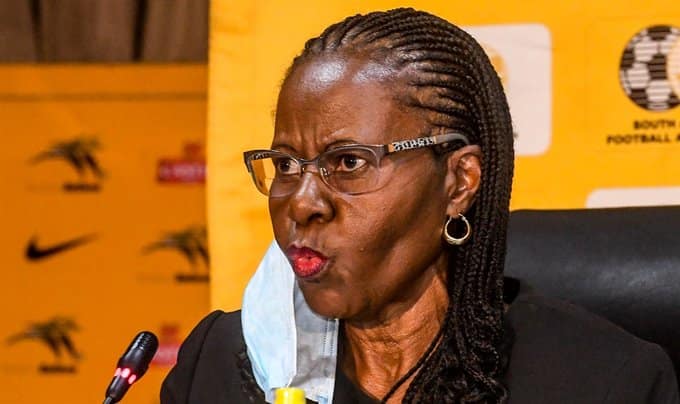
In a landmark ruling with profound implications for South Africa’s ongoing reckoning with its apartheid past, the independent judicial commission investigating alleged political interference in historic Truth and Reconciliation Commission (TRC) cases has decisively rejected applications by former Presidents Jacob Zuma and Thabo Mbeki to have its chairperson, retired Justice Sisi Khampepe, recused from the inquiry.
The ruling, delivered on Monday, firmly dismisses claims of bias and preconception leveled by the two former heads of state, clearing the final major procedural hurdle for the commission to proceed with its sensitive and long-delayed work. The inquiry, formally known as the Commission of Inquiry into Allegations of State Capture Relating to the TRC Final Report, is tasked with examining whether there was deliberate obstruction or political manipulation in the investigation and prosecution of apartheid-era crimes identified by the TRC over two decades ago.
A Clash of Legal Titans Over Perceptions of Justice
The applications for recusal, filed separately by Zuma and Mbeki’s legal teams, constituted a significant challenge to the commission’s legitimacy. They argued that Justice Khampepe, a respected jurist with a storied career including service on the Constitutional Court, could not approach the evidence with an open mind.
Zuma’s legal representatives contended that comments made by Khampepe in a 2021 ruling in an unrelated matter—where she referenced a “pattern of obstruction” in Zuma’s legal dealings—demonstrated a prejudiced view of their client. Mbeki’s team, meanwhile, argued that Khampepe’s prior involvement in a 2006 inquiry into the “Browse Mole” conspiracy report, which touched on political intrigue during his presidency, created an “unavoidable perception” of bias against him.
In a meticulously reasoned 45-page ruling, the commission’s secretariat, advised by independent senior counsel, systematically dismantled these arguments. The ruling emphasized the distinction between judicial findings made on evidence in prior cases and the kind of prejudgment that disqualifies a presiding officer.
“The Chairperson’s previous legal conclusions, grounded in specific evidence before her at the time, do not equate to a closed mind on the entirely distinct matters this commission must investigate,” the ruling stated. “To hold otherwise would be to disqualify the nation’s most experienced jurists from its most difficult inquiries. The applications confuse a judge’s duty to judge with an allegation of illegitimate prejudice.”
Unblocking the Path to a Contentious Historical Inquiry
The dismissal of the recusal bids is a pivotal moment for the commission, which has faced delays and political resistance since its establishment. Its mandate cuts to the heart of unfinished national business: why so few prosecutions followed the TRC’s extensive findings on gross human rights violations, and whether political deals or interference during the late 1990s and early 2000s allowed perpetrators to escape accountability.
Victims’ families and human rights organizations, who have campaigned for such an inquiry for years, hailed the decision. “This is a victory for truth and for the thousands who have waited in anguish for answers,” said Lwando Mantshontsho, spokesperson for the Khulumani Support Group. “The procedural games have been overcome. Now we can finally begin the real work of examining why the promise of justice, made at our democracy’s dawn, was broken.”
Legal analysts noted the ruling’s robustness. “It sends a clear message that the commission’s process will not be easily derailed by procedural challenges from powerful figures,” said Professor Nthabiseng Mogale of the Centre for Applied Legal Studies. “The bar for recusing a judge of Justice Khampepe’s stature is rightly very high, and the applicants failed to meet it.”
Political Repercussions and the Road Ahead
The ruling intensifies the spotlight on the presidencies of both Mbeki and Zuma, under whose tenures the alleged failure to pursue TRC cases occurred. It guarantees that their actions and decisions will be subjected to forensic, judicial scrutiny in public hearings.
Spokespeople for both former presidents expressed disappointment, with Zuma’s foundation stating it was “considering its options,” while Mbeki’s office maintained its stance that the commission’s framing was “fundamentally flawed.”
With the recusal matter settled, the commission is expected to finalize its witness list and begin public hearings within the next quarter. The inquiry now moves unimpeded into what promises to be one of the most complex and emotionally charged examinations of South Africa’s post-apartheid transition—a direct judicial probe into the shadows where politics and justice met after the TRC closed its doors.
About The Author