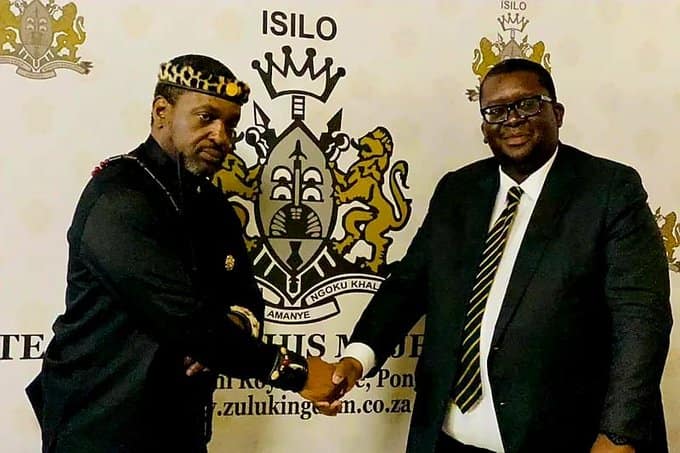
In a decisive move to quell internal discord and reinforce the sovereignty of the throne, the Prime Minister of the Zulu nation, Prince Mangosuthu Buthelezi, has issued a formal directive requiring all members of the royal family and traditional leaders to obtain express permission before securing an audience with King Misuzulu kaZwelithini. This significant intervention aims to establish order, protocol, and unity within the royal household, which has been fraught with public disputes and competing factions since the King’s ascension.
The directive, circulated from the official offices in Ulundi, states that all requests for meetings with the monarch must now be formally channeled through the Prime Minister’s office. This procedure is designed to “protect the dignity of the King and his schedule” and to ensure that all engagements are “in the best interest of the nation and its unity.”
A Response to Prolonged Division
This step is widely seen as a direct response to the very public and damaging tensions that have persisted within the Zulu royal family following the passing of the late King Goodwill Zwelithini in 2021 and the subsequent contentious recognition of King Misuzulu. Various royal family members, including some of the King’s siblings and other senior relatives, have publicly challenged his legitimacy and authority, leading to legal battles and conflicting public statements that have threatened to undermine the stability of the institution.
“The constant stream of unscheduled visits and conflicting advice from various quarters has created an environment of confusion and intrigue around the King,” a senior royal insider, speaking on condition of anonymity, explained. “This directive is not about isolating the King, but about insulating the monarchy from destabilizing influences and allowing His Majesty to govern without being drawn into daily familial disputes.”
Strengthening the Monarch’s Authority
Analysts interpret the move as a strategic effort by Prime Minister Buthelezi, a veteran political and traditional leader, to consolidate King Misuzulu’s authority by formalizing the court’s operations. By controlling access, the Prime Minister can better manage the flow of information and counsel to the King, potentially sidelining rival factions and creating a more consistent and coherent royal administration.
“This is classic palace politics,” said Dr. Gugu Mazibuko, a cultural historian at the University of KwaZulu-Natal. “It centralizes power around the King and his appointed prime minister. It’s a move to transform the royal household from a contested family space into a formal institution with a clear chain of command. Historically, such protocols have been essential for monarchies to navigate succession periods.”
Mixed Reactions and the Path Forward
Initial reactions within the royal circles have been mixed. Supporters of the King and the Prime Minister have welcomed the directive as a necessary measure to “bring respect and structure” back to the royal house. “A King cannot be approached like a relative at a family gathering. There must be protocol,” said Induna (Headman) Bheki Zulu from Nongoma.
However, critics, particularly from family factions that have been at odds with the King, have condemned it as an attempt to create a “gatekeeper” role that could isolate the monarch from genuine counsel and wider family concerns. They argue it may deepen existing rifts rather than heal them.
The directive underscores the ongoing challenge of modernizing one of Africa’s most influential traditional monarchies while navigating intense familial politics. As King Misuzulu continues to define his reign, this new protocol represents a bold attempt to ensure that his authority is exercised from a position of consolidated strength and unimpeded clarity.
About The Author