CAPE TOWN – In a decisive move underscoring the escalating severity of twin environmental crises, Western Cape Premier Alan Winde has confirmed his government has submitted two formal, urgent requests to the National Department of Cooperative Governance and Traditional Affairs (CoGTA) for a provincial disaster declaration. The aim is to unlock critical emergency funding, logistical support, and streamlined regulatory processes to combat raging, widespread wildfires and address acute, worsening water shortages threatening communities, particularly in the Southern Cape.
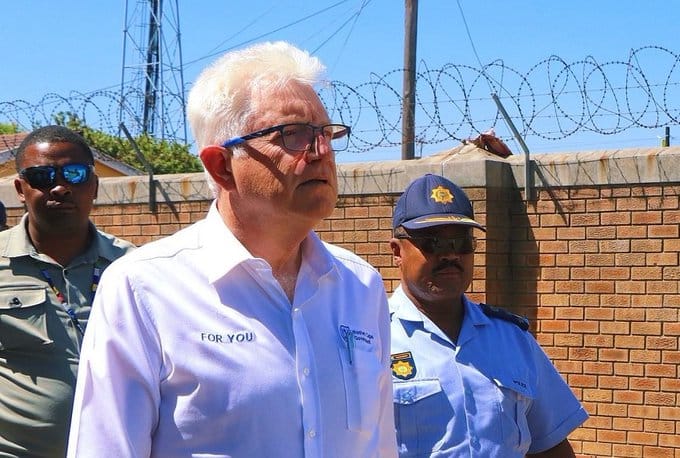
The official requests, sent to CoGTA Minister Thembisile Nkadimeng, represent a significant escalation in the province’s response, signalling that local and provincial resources are now stretched beyond capacity. Premier Winde, flanked by provincial disaster management chiefs, made the announcement following a high-level emergency meeting of the Provincial Disaster Management Centre (PDMC).
“We are facing a convergence of crises that demands a national response,” stated Premier Winde, his tone reflecting the gravity of the situation. “Our teams, from firefighters to municipal water engineers, have been working around the clock for weeks. But the scale is now such that we require the additional resources, funding, and cross-governmental authority that only a formal provincial disaster declaration can facilitate.”
The Twin Fronts of the Disaster
1. A Relentless Fire Season: The Western Cape is enduring one of its most severe and protracted fire seasons in recent memory. Fueled by a combination of persistent, strong southeasterly winds, unseasonably hot, dry conditions, and dense, parched vegetation, wildfires have become near-continuous. Major firefighting operations are currently active across multiple districts:
- In the Overberg District, fires in the Overstrand and Theewaterskloof areas have consumed thousands of hectares of fynbos and farmland, necessitating large-scale evacuations and threatening critical biodiversity.
- The Cape Winelands District has seen devastating outbreaks near Stellenbosch, Franschhoek, and Worcester, with vineyards, infrastructure, and private property at risk.
- Urban-Wildland Interface zones on the slopes of Table Mountain and in the Helderberg basin have repeatedly flared, placing suburban homes in direct danger and exhausting the City of Cape Town’s Fire & Rescue Service.
2. A Deepening Water Crisis: Concurrently, parts of the province, especially the Southern and Central Karoo, are facing a dire water emergency. Towns such as Beaufort West, Laingsburg, and Prince Albert are reporting dam levels at historically low percentages, with some relying almost entirely on emergency groundwater extraction and stringent rationing. The Garden Route, while not at the same critical level, is also experiencing stressed supply systems. The disaster declaration request for water seeks to fast-track funding for emergency borehole drilling, water tankering operations, and the urgent repair of collapsing municipal water infrastructure.
What a Provincial Disaster Declaration Unlocks
A formal declaration under the Disaster Management Act would activate a higher level of coordinated response, providing the Western Cape government with:
- Substantial Emergency Funding: Access to the National Disaster Relief Fund to cover the immense costs of firefighting aircraft, overtime for personnel, equipment, and emergency water provision.
- Logistical and Human Resource Support: The potential deployment of South African National Defence Force (SANDF) personnel and equipment to assist with firefighting, logistics, and water distribution.
- Streamlined Procurement and Regulations: The ability to bypass normal, time-consuming tender processes to acquire emergency goods and services swiftly, and to implement urgent water restrictions or other necessary regulations with enhanced authority.
The Political and Practical Stakes
The request now places the ball firmly in the court of the national government. The speed and scope of CoGTA’s response will be closely watched, as intergovernmental relations between the DA-led Western Cape and the ANC-led national government are often politically fraught.
“We cannot afford any delay,” emphasized Anton Bredell, the Provincial Minister of Local Government, Environmental Affairs and Development Planning, who oversees the disaster management portfolio. “This is not about politics; it is about the safety of our people, the protection of property, and the preservation of our agricultural sector. We have provided all the technical motivation and evidence. We need the declaration now.”
Communities across the province are on high alert, with many volunteering at fire lines or adhering to strict Level 5 water restrictions. As the region braces for more hot, windy conditions, the hope is that the national disaster declaration will be granted imminently, bringing the full weight of the state to bear against a natural emergency that shows no sign of abating. The coming days will test both the resilience of the Western Cape and the efficacy of South Africa’s disaster management framework.
About The Author