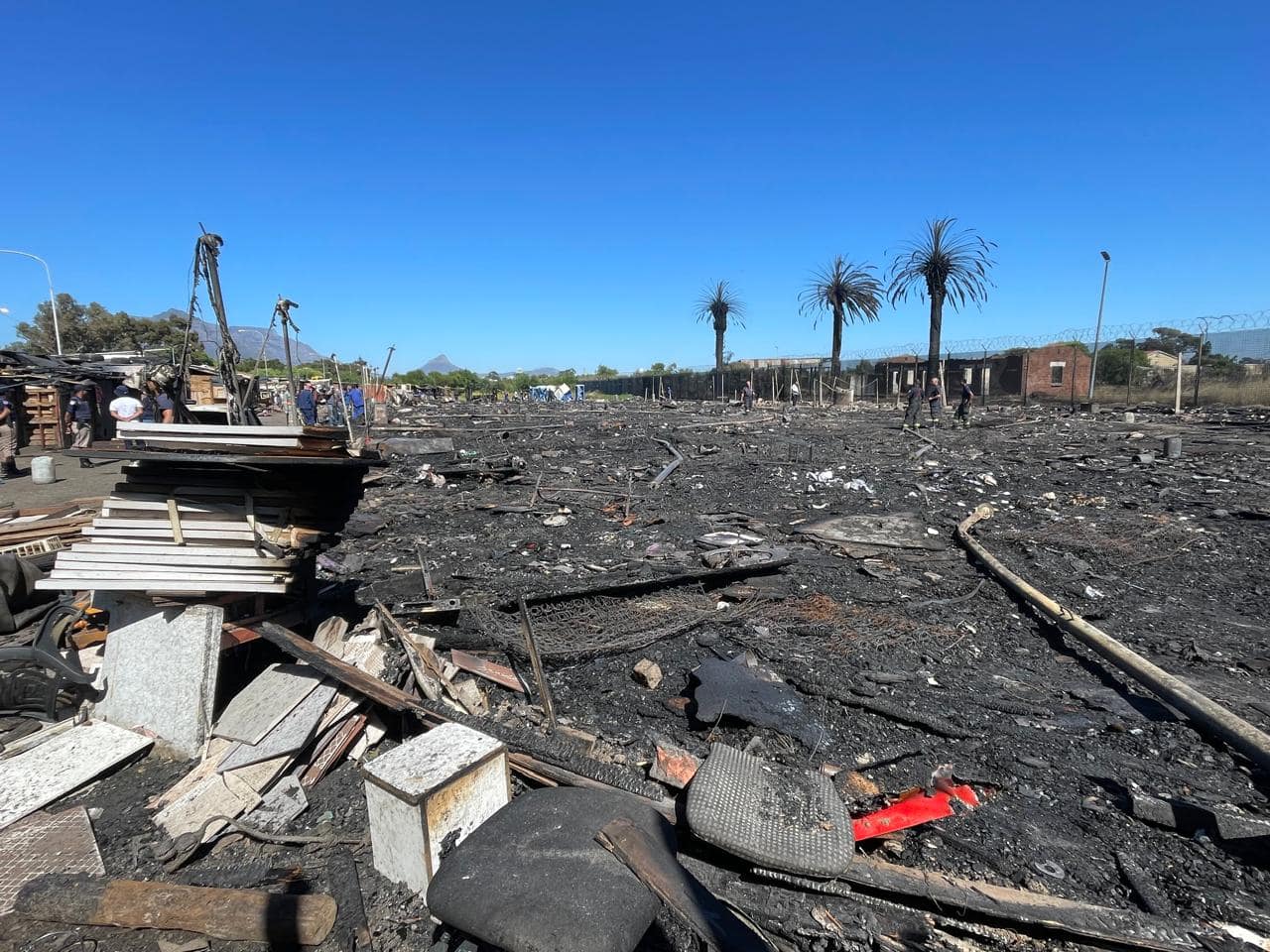
A fast-moving fire swept through the precarious Wingfield refugee camp in Maitland on Thursday afternoon, 6 November 2025, reducing a large communal tent and dozens of surrounding informal structures to ash and embers. The blaze, which erupted under the harsh afternoon sun, has left hundreds of refugees and asylum seekers—many of whom had already endured years of displacement and legal limbo—without shelter, documents, or personal belongings. Miraculously, no fatalities or serious injuries have been reported.
The fire is believed to have started around 3 p.m. and, fueled by strong winds and the densely packed, flammable materials of the shelters, spread with terrifying speed. Residents could only watch in horror as their meagre possessions were consumed by the flames.
“We ran for our lives with only the clothes on our backs,” said Jean Hakizimana, a refugee from the Democratic Republic of Congo who had been living at the site for over a year. “My children’s school books, our papers from Home Affairs, the small things that made this a home… everything is gone. We have nothing left. We are starting from zero, but we have nowhere to go.”
A Swift but Overwhelmed Response
The City of Cape Town’s Disaster Risk Management Centre was swiftly activated, with officials arriving on the scene to coordinate an emergency response. They worked alongside organisations like the Gift of the Givers and the South African Red Cross Society, who provided immediate relief in the form of hot meals, blankets, bottled water, and temporary toilet facilities.
“The immediate priority is humanitarian: ensuring everyone has food, water, and a safe place to sleep tonight,” said a spokesperson for the Disaster Risk Management Centre. “We are assessing the scale of the damage and working with partner organisations to provide critical support.”
Despite these efforts, the mood at the site remains one of despair and uncertainty. The temporary relief does little to address the profound instability that has long defined the lives of the camp’s residents.
A Crisis Compounded by Legal Precarity
The fire is a catastrophic blow to a community already on the brink. The Wingfield camp has been the subject of a protracted legal battle, with the City of Cape Town seeking to evict the refugees and close the site. The residents, who argue they have nowhere else to go and face xenophobic violence in their previous communities, are challenging the eviction. A crucial court hearing is scheduled for early next year.
This tragedy intensifies an already dire human rights situation. “These individuals were already living in extremely vulnerable conditions,” noted a representative from a local refugee rights NGO. “This fire has multiplied their vulnerability a hundredfold. They have lost the few identity documents that connected them to any form of official status, and they have lost the fragile shelter that was their only protection. The psychological trauma is immense.”
As the smoke clears, the charred remains of the camp stand as a stark symbol of a compounded crisis. While emergency aid addresses the immediate physical needs, the fire has ignited urgent questions about long-term solutions for a group of people caught between the devastation of nature and the slow grind of the legal system, their future more uncertain than ever.
About The Author