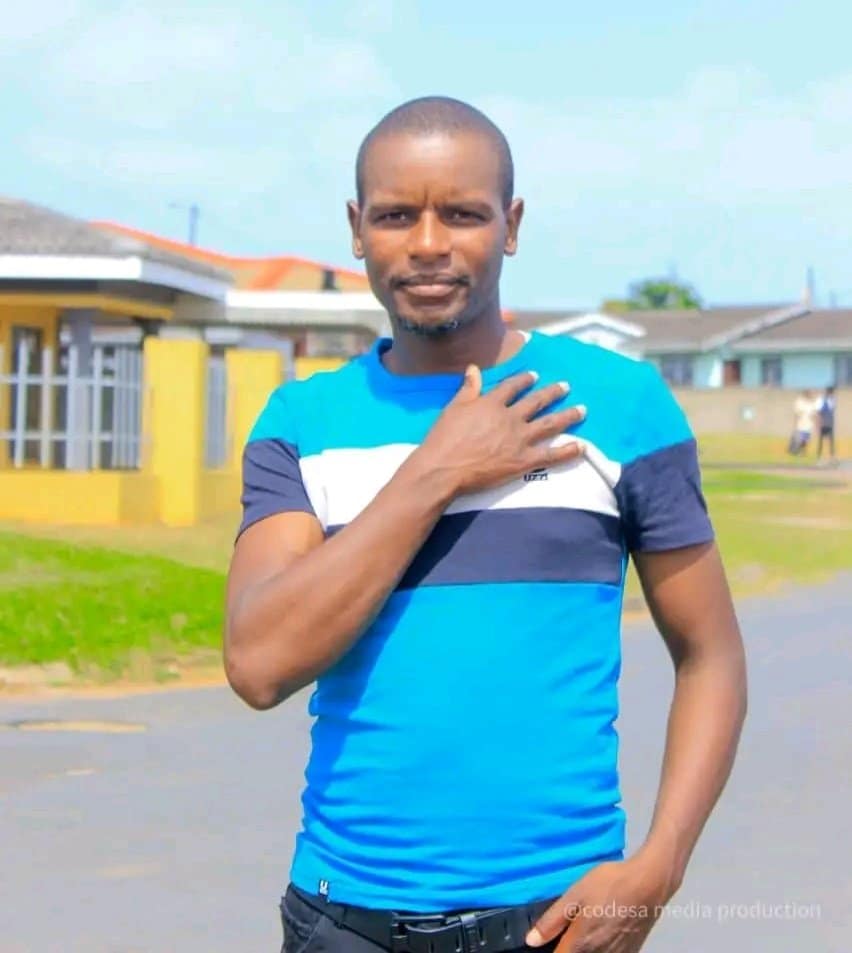
The voice of Sakhengaye Mncwango once filled taxis and taverns across KwaZulu-Natal, a rising star in the fiercely competitive Maskandi music scene. His songs spoke of love, loss, and the struggles of rural life. But on Thursday, February 19, 2026, that voice was silenced forever, not on a stage, but in a hail of police gunfire on a bridge near Melmoth. The man who sang of emotion had become a monster, wanted for the brutal murder of his girlfriend—a killing that occurred just days after he walked free from a 15-year prison sentence for murdering another woman.
The dramatic and bloody end of Sakhengaye Mncwango’s life has sent shockwaves through the Maskandi community and the province at large. It is a story of a failed justice system, a pattern of deadly violence against women, and a final, desperate confrontation on a rural road.
The Killing in Mtunzini
The chain of events that led to Mncwango’s death began on Thursday morning in the Mtunzini area, a coastal town known for its tranquil lagoons and lush vegetation. According to police reports, it was here that Mncwango allegedly committed his latest, and final, atrocity.
Details are still emerging, but what is known is that a woman, his girlfriend, was found murdered. The circumstances of her death have not been fully disclosed, but police sources describe it as a “gruesome” killing, an act of extreme violence that immediately triggered a massive manhunt. The victim’s name has been withheld pending family notification, but she becomes the second known woman to die at Mncwango’s hands.
What makes this killing particularly horrifying is its timing. Mncwango had only recently been released from prison. He had served a portion of a 15-year sentence for the murder of a previous girlfriend, a crime that had derailed his burgeoning music career and branded him a killer. Despite his violent history, he was back on the streets, and within a short space of time, he had allegedly killed again.
The Manhunt and the Interception
As soon as the murder in Mtunzini was discovered, Mncwango became the prime suspect. The South African Police Service (SAPS) in KwaZulu-Natal mobilized its resources, and the National Intelligence Unit (NIU), an elite branch of the police dealing with serious and violent crime, took a leading role.
Intelligence quickly came in. Mncwango was on the move, believed to be heading north towards Vryheid, possibly seeking refuge with family or associates in the rural heartland where he grew up. The NIU tracked his vehicle, plotting an intercept point that would give them the best chance of apprehending a dangerous man without endangering the public.
The chosen location was just after the Umhlathuze Bridge, a crossing point that offered a strategic advantage. Police vehicles moved into position, blocking the road and preparing to arrest the suspect. But Mncwango, according to the official police version of events, had no intention of going back to jail.
The Shootout
As the police closed in, Mncwango made a fateful decision. Instead of surrendering, he allegedly opened fire on the officers. The NIU team, trained for high-risk apprehensions, returned fire. The quiet rural road was suddenly transformed into a war zone, the crack of gunfire echoing across the valley.
The exchange was intense but brief. When the shooting stopped, Mncwango was slumped in or near his vehicle, fatally wounded. He was declared dead at the scene. Remarkably, no police officers were injured in the confrontation.
Colonel Robert Netshiunda, the KZN SAPS spokesperson, confirmed the incident in a statement released on Friday.
“A 35-year-old suspect who was wanted for several cases, including murder, was fatally shot in a shootout with police at Nkwaleni in Eshowe on Thursday,” Netshiunda said. “Police received intelligence that the suspect they were looking for was travelling towards Vryheid, and police intercepted the vehicle just after the Umhlathuze Bridge. A shootout ensued between the suspect and police, and during the shootout, the suspect was shot and fatally wounded. No police officer was injured during the shootout.”
A Troubled History
For those who followed the Maskandi scene, Mncwango’s trajectory from rising star to convicted killer to deceased fugitive is a tragic and infuriating story. He had talent, there was no doubt. His music connected with audiences, and he was seen as one of the promising new voices in the genre, which is dominated by male singers who often sing about romance and heartbreak.
But behind the music was a man with a dark and violent streak. His previous murder conviction, for killing a girlfriend, had resulted in a 15-year prison sentence. He should have been behind bars for over a decade. Yet, for reasons that are now under scrutiny, he was released early and returned to society.
The question that hangs in the air is simple and devastating: How was a man with a murder conviction, a killer of women, allowed back onto the streets to kill again? The justice system, the parole board, and the correctional services department will all face intense questioning about the decision to release Mncwango.
The Maskandi Community Reacts
The Maskandi music community is in shock. While Mncwango’s crimes were horrific, he was still one of their own, a young man who had grown up immersed in the genre’s traditions. Fellow musicians have expressed a mixture of sorrow, anger, and disbelief.
“It’s a tragedy on so many levels,” said a fellow Maskandi artist who asked not to be named. “A woman is dead. A family is mourning. And another family is mourning the loss of their son, even if he did terrible things. The music is overshadowed now, forever. When people hear his songs, they will think of this.”
Social media has been flooded with reactions, ranging from condolences for the families of the victims to relief that Mncwango can no longer harm anyone else. Some have praised the police for their swift and decisive action, while others have questioned why he was free in the first place.
The Unanswered Questions
The death of Sakhengaye Mncwango closes one chapter but opens many others. An inquest will be held into the police shooting, though the fact that he allegedly fired first provides strong justification for the officers’ use of lethal force. The Independent Police Investigative Directorate (IPID) will conduct a routine investigation to ensure all protocols were followed.
The bigger questions, however, will be directed at the Department of Correctional Services. Why was a convicted murderer released early? What risk assessment was conducted? Who made the decision? The families of both the previous victim and the woman killed on Thursday deserve answers.
For now, the people of Eshowe, Melmoth, and the wider Maskandi community are left to process a story that defies easy understanding. A talented musician. A brutal killer. A fatal shootout on a bridge. The songs of Sakhengaye Mncwango will still be played, but they will forever carry a dark and chilling echo.
About The Author