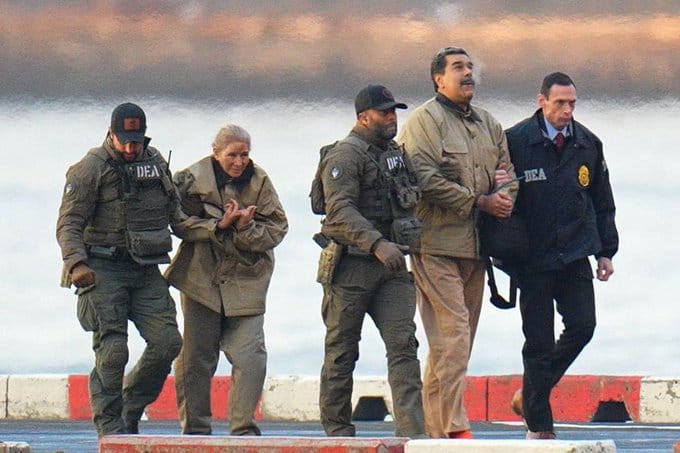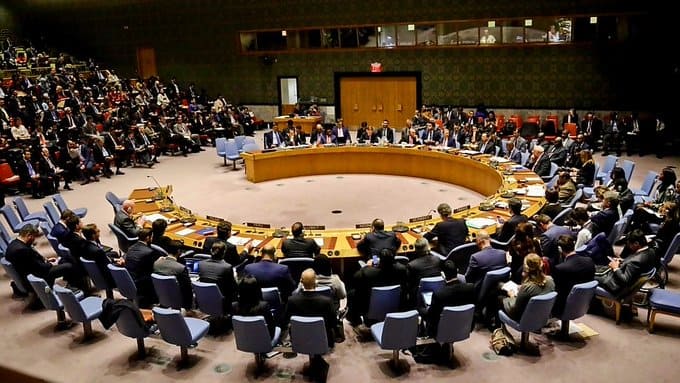
The world is holding its breath as the United Nations Security Council (UNSC) prepares to convene on Monday, January 5, 2026, for an emergency session that will cast a stark light on a new and volatile chapter in international relations. At the center of the debate: the controversial and unilateral military intervention by the United States in Venezuela, which culminated in the dramatic capture of President Nicolás Maduro.
The hastily scheduled meeting, called by a coalition of nations led by Russia and China, promises to be one of the most contentious and consequential gatherings of the global body in decades. It will serve as the primary international arena where the legal, geopolitical, and humanitarian fallout of the U.S. operation will be formally contested, with diplomats preparing for a diplomatic showdown that mirrors the deepening Cold War-style divisions of the 21st century.
A Council Deeply Divided
The session will unfold against a backdrop of profound global fracture. The United States, holding the rotating presidency of the Council for January, is expected to defend its actions under the banner of “restoring democratic order” and enforcing what it terms “targeted sanctions against a criminal regime.” Key allies, including the United Kingdom and France, are anticipated to offer cautious support, focusing on the humanitarian crisis in Venezuela and the Maduro government’s record of alleged human rights abuses.
They will face a formidable and furious opposition. Russia, Venezuela’s most powerful military and political patron, has already condemned the operation as a “blatant act of aggression and a flagrant violation of the UN Charter.” China, a major creditor to Caracas, has warned of “grave consequences for global stability.” Their position is expected to be amplified by non-permanent members sympathetic to the principle of non-interference, such as Algeria and Mozambique, potentially creating a powerful rhetorical bloc against Washington.
The Core Arguments: Sovereignty vs. Intervention
The debate will pivot on two irreconcilable interpretations of international law:
- The U.S. & Allies’ Position: Likely to argue that all diplomatic and economic measures were exhausted, and that the intervention was a necessary, last-resort action to prevent state collapse, combat narco-terrorism linked to the regime, and alleviate a man-made humanitarian disaster—potentially invoking the controversial “Responsibility to Protect” (R2P) doctrine.
- The Russia-China Bloc’s Position: Will vehemently assert the primacy of national sovereignty and the UN Charter’s prohibition against the use of force. They will frame the action as a cynical resource grab for Venezuela’s oil reserves, setting a dangerous precedent for regime change that could be applied anywhere a Western power has economic interests.
Beyond Rhetoric: The Stakes for Global Order
Monday’s session is about far more than Venezuela. It is a direct challenge to the post-Cold War international order.
- The Credibility of the UN: The body faces another potential crisis of relevance. A U.S. veto of any condemning resolution is a near certainty, which critics will decry as proof of the Council’s paralysis and the supremacy of raw power over multilateral law.
- Humanitarian Catastrophe: UN agencies on the ground warn of a drastically worsened situation, with distribution networks for food and medicine shattered and thousands displaced by fighting. The Council will debate—but likely fail to agree on—a mechanism for secure humanitarian corridors.
- Regional Shockwaves: Latin American nations are deeply split. While governments in Colombia, Brazil, and Peru have expressed tacit or quiet relief, others like Mexico, Bolivia, and Cuba decry a return to “gunboat diplomacy.” The session will expose these regional rifts on a global stage.
As delegations finalize their talking points, the Palais des Nations braces for a spectacle of high-stakes diplomacy. With no chance of a unifying resolution, the real outcome of Monday’s debate will not be a document, but a clear, public mapping of the world’s new fault lines. The invasion of Venezuela has already redrawn the political map of South America; on Monday, its repercussions will formally reshape the landscape of global diplomacy.
About The Author