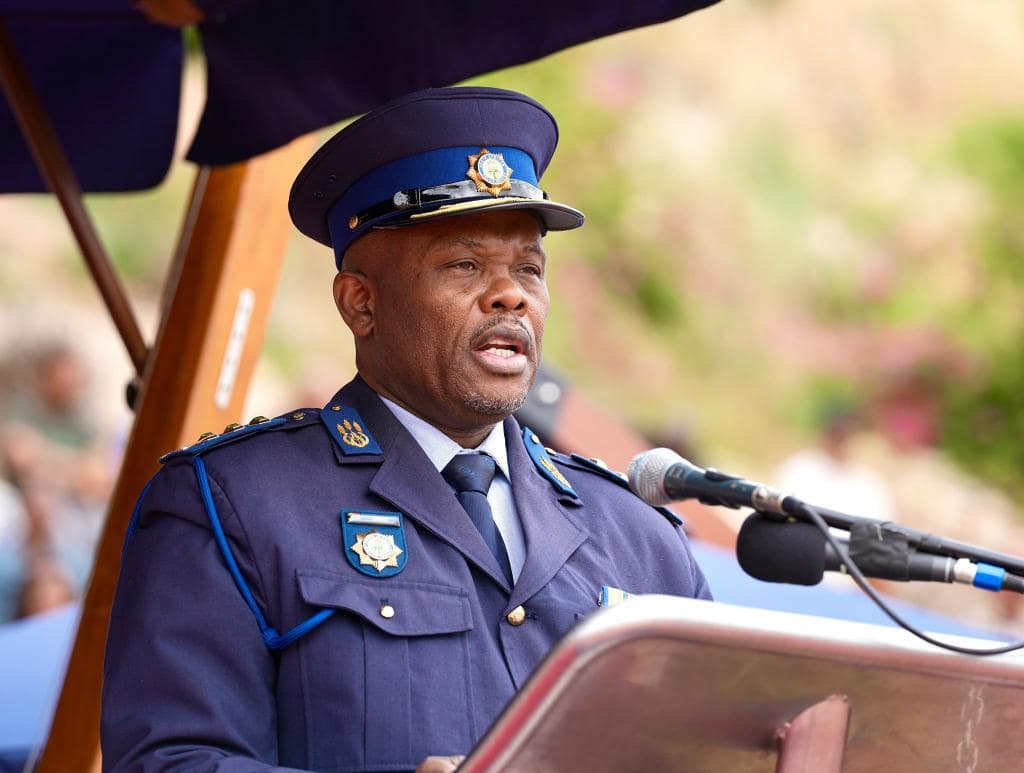
CAPE TOWN – In a hearing room charged with anticipation, suspended Deputy National Police Commissioner Lieutenant-General Shadrack Sibiya is set to take the stand today before a special Parliamentary Ad Hoc Committee, his testimony poised to become a pivotal moment in the investigation into the deep-seated corruption and political rot within South Africa’s criminal justice system.
Sibiya, a figure both celebrated and controversial, arrives at Parliament under a cloud of severe allegations and personal legal peril. His appearance is not merely that of a senior official giving evidence; it is that of a key insider-turned-accused, whose words could either expose the nerve centre of interference within the police or further entangle him in the very web he claims to oppose.
A Catalogue of Allegations: Disbanding Units and Bypassing Chains of Command
The charges against Sibiya, formally levelled by two of the most powerful figures in the SAPS, paint a picture of a maverick officer allegedly undermining the fight against some of the country’s most sensitive crimes. KwaZulu-Natal Police Commissioner, Lieutenant General Nhlanhla Mkhwanazi, has accused Sibiya of unlawfully disbanding the acclaimed Political Killings Task Team (PKTT). This elite unit was instrumental in investigating the wave of assassinations plaguing KwaZulu-Natal, often linked to political and tender rivalries. Its alleged dismantling is seen by critics as a catastrophic blow to justice in the province.
Furthermore, both Mkhwanazi and National Police Commissioner General Fannie Masemola have alleged that Sibiya repeatedly bypassed the established chain of command, choosing to report directly to the Minister of Police. This act, they contend, was a deliberate subversion of internal protocols that crippled coordination and accountability, effectively allowing parallel, and potentially politically motivated, structures to operate within the Crime Intelligence division.
A Raid and a Narrative: The Personal Becomes Political
Adding a dramatic, real-world dimension to these procedural allegations was the recent raid on Sibiya’s home by law enforcement agencies. The seizure of electronic devices—laptops, cellphones, and hard drives—signals that the investigations into his conduct are not merely administrative but have escalated to a criminal probe. For Sibiya’s supporters, the raid is a blatant tactic of intimidation, designed to silence a whistleblower who knows too much. For his accusers, it is the logical culmination of mounting evidence of wrongdoing.
“This is the classic playbook,” stated a political analyst familiar with the security cluster. “When an insider threatens to expose the system, the system strikes back with everything it has. The raid sends a clear message: testifying carries immense personal risk. The question is whether Sibiya will now be more cautious, or if this will embolden him to reveal all.”
The Stakes: More Than One Man’s Career
Today’s testimony, therefore, transcends the fate of a single suspended general. The Ad Hoc Committee and the nation will be listening for answers to fundamental questions:
- The PKTT: Was the disbanding of the Political Killings Task Team an administrative error, a deliberate act of sabotage, or, as some speculate, an operation to protect certain interests involved in the political violence?
- The Chain of Command: Who authorised the bypassing of protocol, and what was the nature of Sibiya’s direct communications with the Police Minister? Were these instructions, and if so, what was their intent?
- The State of Crime Intelligence: Most critically, Sibiya is expected to shed light on the extent to which South Africa’s Crime Intelligence division has been compromised—whether its vast resources and covert powers are being used for state security or for political patronage and personal enrichment.
The outcomes of this testimony have the potential to influence the most significant reforms of the South African police service in a decade. A candid, evidence-backed account from Sibiya could provide the committee with the roadmap it needs to recommend sweeping changes to insulate the institution from political capture. A defensive or obfuscated testimony, however, could leave the dark heart of the system untouched, leaving South Africa’s law enforcement vulnerable to the same forces that have crippled other state enterprises.
As he settles before the committee, Lieutenant-General Shadrack Sibiya is not just a witness; he is a symbol of the internal battle for the soul of the South African Police Service. The nation watches, waiting to see if he will choose the path of caution or the path of truth.
About The Author