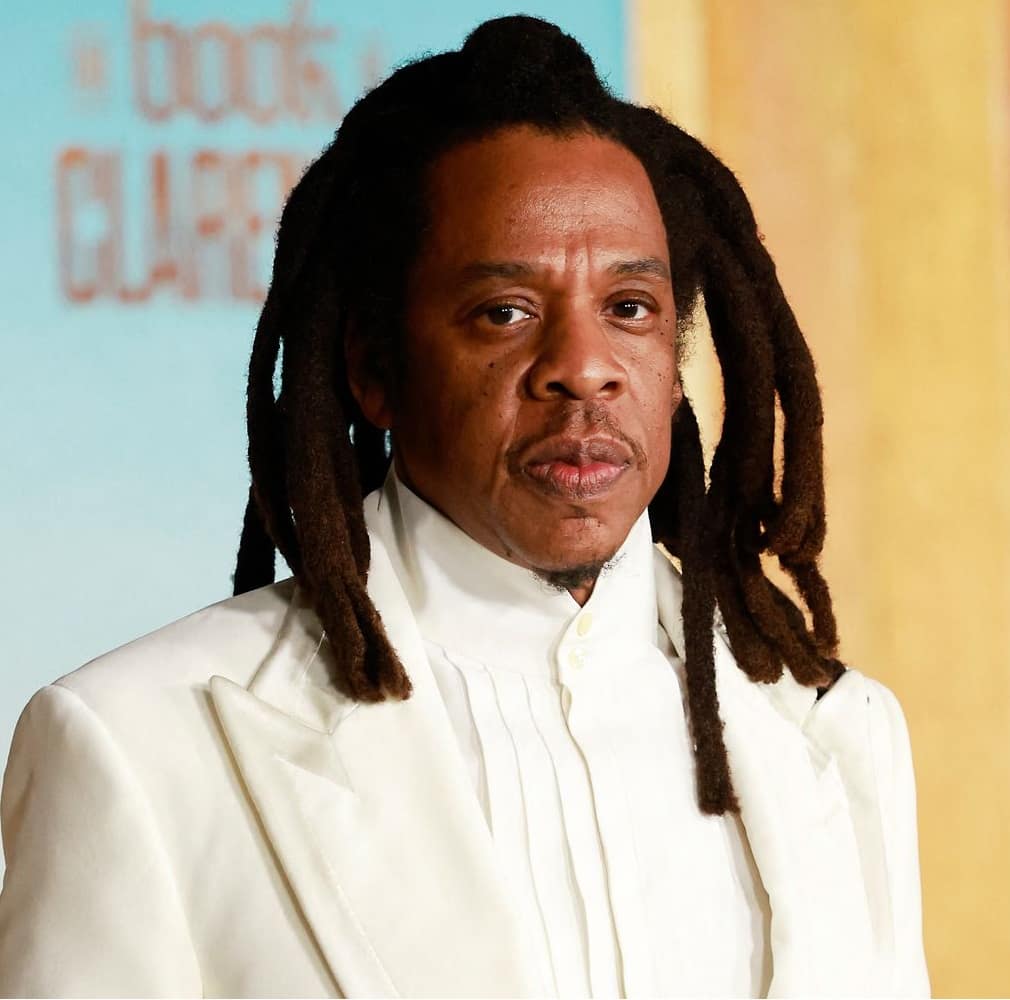
In the digital coliseum of a Twitter Spaces session, where the voices of millions can gather in a virtual amphitheater, Shawn “Jay-Z” Carter was asked a question that has become a modern-day hip-hop rite of passage: Who could face him in a Verzuz battle? His response was not a list of worthy adversaries or a playful dismissal. It was a calm, matter-of-fact declaration of sovereignty. “It’s not a chance,” he stated, asserting that no rapper, “not one,” living or deceased, could stand on stage and compete with his catalog.
The reasoning, from his perspective, is unassailable arithmetic. With a career spanning three decades, the billionaire mogul pointed to a bedrock of 13 studio albums, a run from Reasonable Doubt to *4:44* that maps the evolution of hip-hop itself, and a staggering 14 No. 1 Billboard singles. This isn’t just a list of songs; it’s a cultural archive. To go hit-for-hit with Jay-Z, an opponent would need to counter not just anthems like “Hard Knock Life (Ghetto Anthem)” or “Empire State of Mind,” but the layered, street-savvy lyricism of “Dead Presidents II,” the corporate triumph of “Dirt Off Your Shoulder,” and the raw vulnerability of “Song Cry.”
The internet, as it is wont to do, erupted. The reaction was not a unified front of agreement, but a vibrant, chaotic debate that laid bare a stark generational fissure. A significant portion of younger hip-hop fans, who came of age in the streaming era, responded with a collective shrug of unfamiliarity. Their acknowledgment of Jay-Z was often through featured verses or his status as a pop culture figure; the deep cuts and solo classics that define his legacy to older listeners were not part of their foundational listening. This wasn’t disrespect, but a simple reflection of a shifted cultural timeline.
For his defenders, however, the statement was a necessary reminder of a titan’s scope. They flooded timelines with clips of his iconic 2001 Unplugged performance, dissected the complex wordplay of The Blueprint, and argued that his catalog possesses a unique duality of street credibility and boardroom mastery that no other artist can replicate. The debate quickly moved from if anyone could face him to who would even dare.
Inevitably, the conversation crystallized around one name: Kanye West. Once a prodigy at Jay-Z’s feet, their complicated history, from the collaborative glory of Watch the Throne to the very public falling-out, makes him the most narratively rich, if lyrically outgunned, potential opponent. Others floated names like Nas, his once-ferce rival, with whom the “Ether” vs. “Takeover” debate still simmers, or the conceptually flawless André 3000. Yet, each proposed matchup revealed a flaw: while an artist might have a stronger run of critical darlings or more innovative production, could they muster 20 undeniable, era-defining hits?
Ultimately, Jay-Z’s pronouncement was about more than just music. It was a statement about legacy, endurance, and the sheer, overwhelming volume of a career built not on moments, but on a dynasty. He wasn’t just claiming victory in a hypothetical battle; he was reframing the very premise of the conversation. In doing so, he forced a generation to look back and, in the reflection, see not just a rapper, but an institution. The question was never really about who would win. For Jay-Z, the answer was always self-evident. The real discussion he sparked is about how we measure greatness across the ever-widening generations of hip-hop.
About The Author