In the crucible of a Qatari evening, under the bright lights of the Aspire Zone Complex, South Africa’s Amajimbos didn’t just win a football match; they authored a legend. Down a man for over an hour of play, the nation’s U-17 squad summoned a performance of sheer will and tactical brilliance to secure a historic 3-1 victory over Bolivia in their Group A opener at the FIFA U-17 World Cup.
This wasn’t merely a win; it was a national milestone, marking the first time a South African team at any level has claimed a victory in the knockout-stages format of a FIFA World Cup, a moment that will be etched into the annals of the country’s rich sporting history.
A Dream Start, A Sudden Nightmare
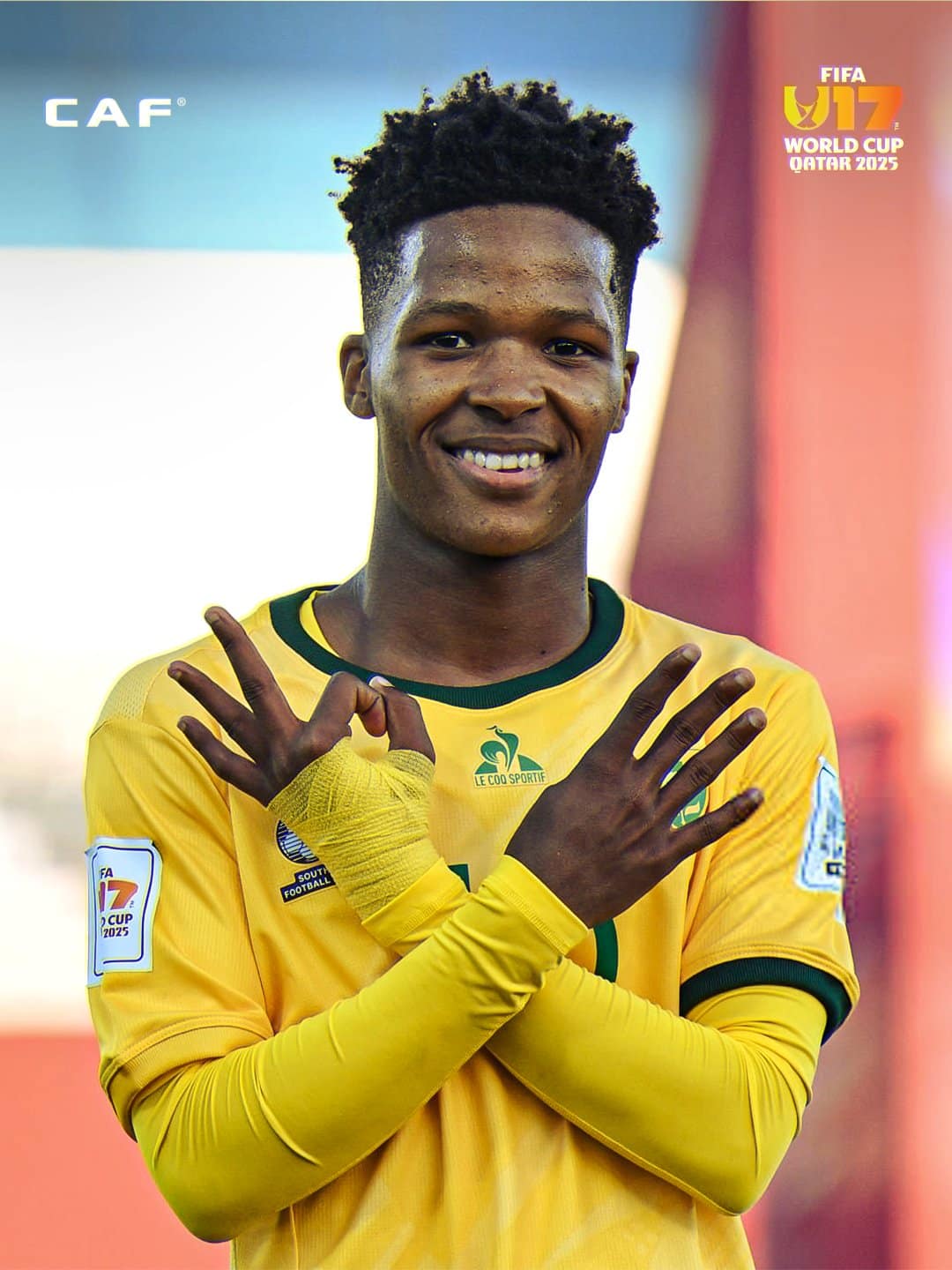
The Amajimbos, whose name translates to “Young Warriors,” lived up to it from the first whistle. They played with a fearlessness that belied their World Cup debutant status, pressing Bolivia high and moving the ball with crisp, confident passes. Their early dominance was rewarded in the 20th minute. A fluid team move culminated in the ball falling to the dynamic Emile Witbooi, who made no mistake, slotting home with a composure that sent the South African contingent in the stands into raptures.
The dream start, however, turned on its head in the 35th minute. Defender Sive Pama, already on a yellow card, engaged in a seemingly innocuous tussle for the ball. The referee, in a decision that sparked immediate controversy, deemed the challenge worthy of a second yellow, reducing the Young Warriors to ten men. The momentum shifted violently. Just minutes later, Bolivia was awarded a penalty, calmly converted by Jesús Maraude.
In the span of a devastating five-minute period, a lead had evaporated, and the team was staring down the barrel of a grueling 55 minutes with a numerical disadvantage.
The Rebirth: Khumalo’s Masterstroke and a Display of Maturity
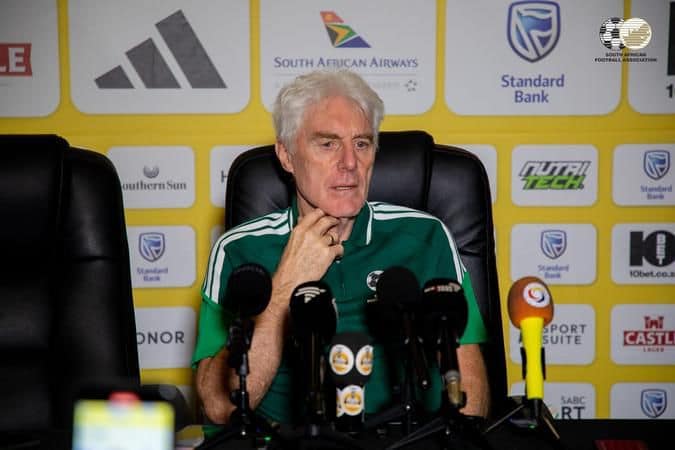
What followed was a testament to the character instilled by coach Vela Khumalo. Instead of folding, the Amajimbos regrouped. Khumalo made an immediate tactical adjustment, sacrificing an attacker to shore up the midfield and institute a disciplined, counter-punching game plan.
“The message at halftime was simple: be brave, be smart,” Khumalo revealed in the post-match press conference. “We told the boys, ‘This is not a setback; this is your moment to show the world who you are.’ The maturity they showed was beyond their years. They executed the plan perfectly.”
The second half became a masterclass in resilient, ten-man football. They defended in a compact, organized block, frustrating the Bolivian attack. Then, against the run of play, the breakthrough came. In the 65th minute, a swift turnover found its way to substitute Neo Bohloko. With a surge of pace and a clinical finish, he restored South Africa’s lead, unleashing pure bedlam on the pitch and the sidelines.
But the Young Warriors weren’t done. With Bolivia pushing forward in desperation, South Africa landed the knockout blow. A lightning-fast counter-attack in the 83rd minute was finished coolly by Shaun Els, sealing a victory that was as emotionally charged as it was historic.
Beyond the Scoreline: A Nation’s Hope and a Group of Destiny
The final whistle triggered scenes of unbridled joy. Players collapsed to the turf in exhaustion and elation, while Coach Khumalo embraced his staff, a look of vindication and immense pride on his face.
“This victory is not for us, it’s for every South African who has believed in this project,” Khumalo stated, his voice thick with emotion. “We showed that South African football has heart, and we have talent. We showed that even when the odds are stacked against you, you never, ever give up.”
The result propels the Amajimbos to the top of Group A alongside Italy, who also won their opener. It sets up a fascinating encounter in their next match against the hosts, Qatar. Suddenly, a path to the knockout stages, once a distant dream, is now a tangible goal.
For South Africa, a nation whose senior men’s team has experienced its share of footballing heartache, the Amajimbos have provided a jolt of unadulterated hope. They have proven that with resilience, tactical acumen, and an unbreakable team spirit, history can be made—even with only ten men on the field.
About The Author