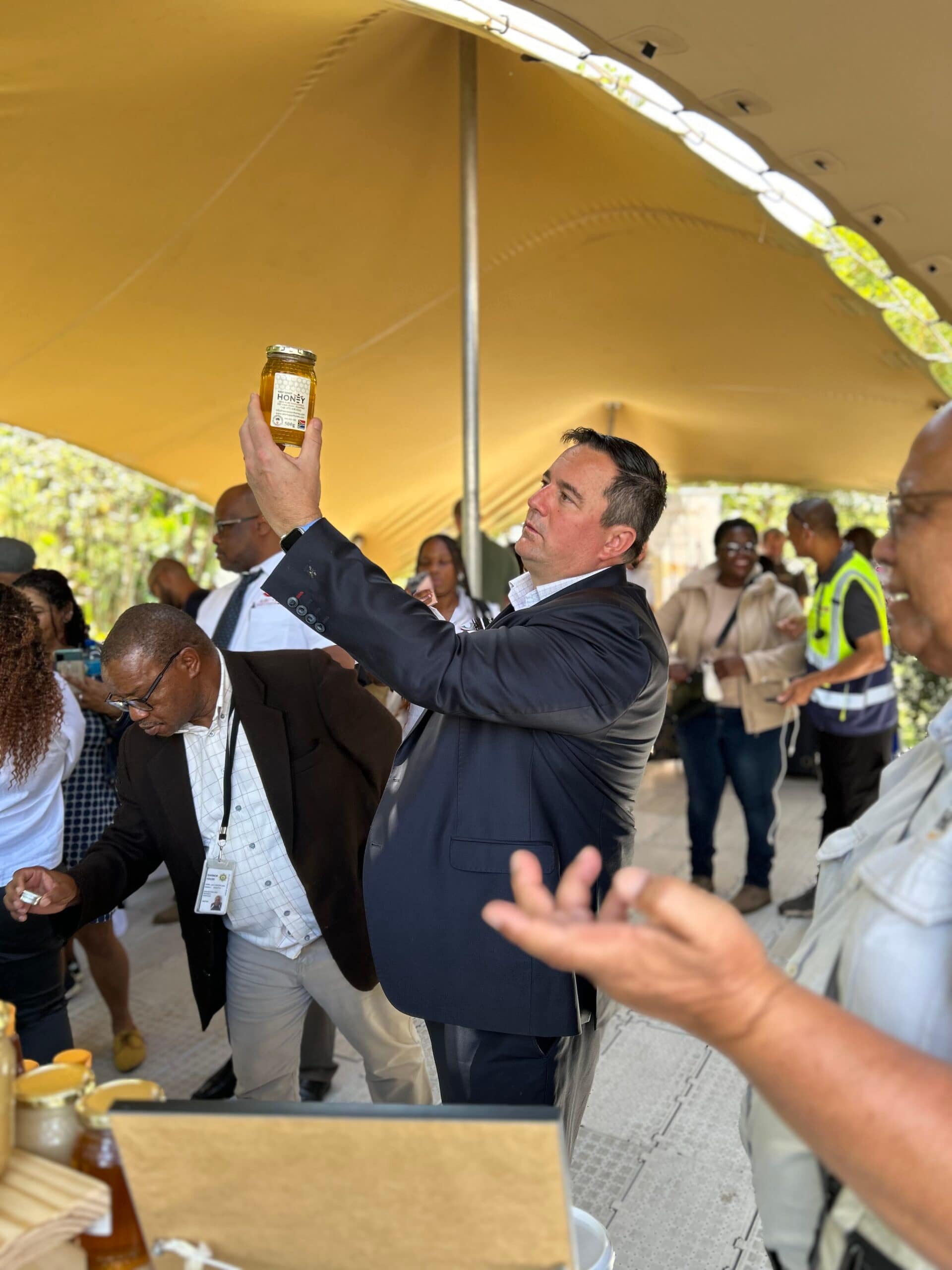
In a speech that blended agricultural pragmatism with ecological poetry, Agriculture Minister John Steenhuisen has reaffirmed the government’s commitment to strengthening South Africa’s beekeeping industry, describing the humble honeybee as “the farmers of the sky” whose silent, unceasing labour underpins the nation’s food security, rural livelihoods, and biodiversity.
Speaking at the inaugural National Apiculture Symposium held at the Cape Town International Convention Centre, Steenhuisen addressed a gathering of commercial apiarists, small-scale beekeepers, researchers, and conservationists. He framed the health of the bee population not as a niche environmental concern, but as a cornerstone of the country’s agricultural and economic resilience.
“While our farmers till the soil with tireless dedication, there exists another workforce, one that operates not with tractors and ploughs, but with delicate wings and intricate dances,” Steenhuisen declared, captivating the audience. “These are our ‘farmers of the sky’—the honeybees. They are the unseen pollinators in our orchards, the vital spark in our fields of sunflowers and canola, and the guardians of our fragile fynbos ecosystems. Without their free and priceless service, our agricultural tapestry would begin to unravel.”
The minister’s evocative language underscored a critical reality: approximately one-third of the food consumed by South Africans is directly or indirectly dependent on pollination. The symposium served as a platform to launch the government’s new “Sector Development Strategy for Apiculture 2024-2030,” a comprehensive plan designed to address the key challenges facing beekeepers.
The Three Pillars of the New Strategy
The strategy rests on three core pillars:
- Combating Hive Theft and Biosecurity: In response to a rising tide of apiary crime, the government plans to establish a national hive registration and marking system, similar to vehicle registration, to help track and recover stolen colonies. Furthermore, a renewed focus will be placed on combating pests and diseases like the American Foulbrood and the small hive beetle, which can decapitates entire apiaries. “A stolen hive is not just a loss of income; it is a theft from our national food basket,” Steenhuisen stated.
- Expanding Market Access and Empowerment: The strategy aims to formalise and grow the market for South African honey and other hive products, such as propolis, royal jelly, and beeswax. This includes support for quality standards, export certification, and initiatives to help small-scale and emerging beekeepers, particularly those in rural and former homeland areas, access commercial value chains. “From the healing properties of propolis to the unique flavours of our indigenous fynbos honey, we have products the world desires,” the minister said.
- Research, Development, and Climate Resilience: Acknowledging the threats posed by climate change, pesticide use, and habitat loss, the plan calls for increased investment in research partnerships with institutions like the Agricultural Research Council (ARC). Key areas of study will include breeding more resilient bee strains, understanding the impact of changing weather patterns on forage availability, and promoting pollinator-friendly farming practices.
A Ripple Effect of Benefits
Beyond the hives themselves, Steenhuisen highlighted the broader socio-economic impact of a robust beekeeping sector. “Beekeeping is uniquely positioned to create jobs without demanding vast tracts of land,” he explained. “It can be a primary source of income or a vital supplementary one, empowering women and youth in rural communities. It is an enterprise that fosters entrepreneurship while simultaneously healing the environment.”
The announcement was met with cautious optimism from industry bodies. The South African Bee Industry Organisation (SABIO) welcomed the government’s “long-overdue” focus. “The recognition of bees as ‘farmers of the sky’ is more than just a slogan; it’s a paradigm shift,” said a SABIO representative. “Now, we need to see these words translated into tangible action on the ground, especially in the fight against hive theft, which is crippling our members.”
As the symposium concluded, the image of the honeybee as a “farmer of the sky” lingered—a powerful symbol of an interconnected system where the hum of a tiny insect is as crucial to the nation’s prosperity as the rumble of a tractor. The success of Minister Steenhuisen’s ambitious plan will ultimately be measured in the health of the hives, the stability of rural livelihoods, and the continued bounty of South Africa’s harvests.
About The Author