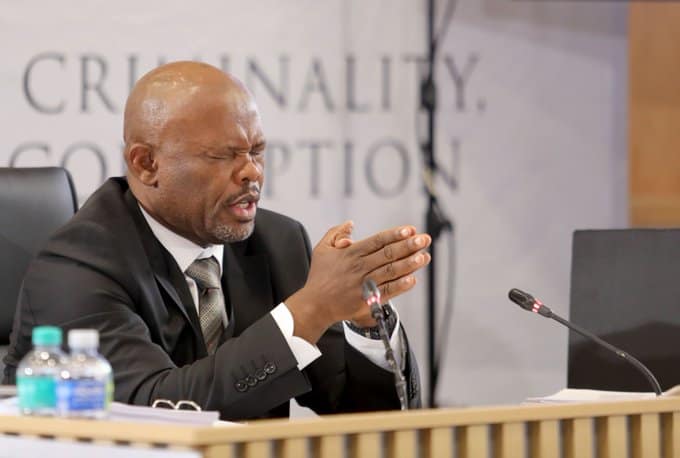
The atmosphere in the Madlanga Commission of Inquiry, already thick with tension and explosive allegations, reached a new level of confrontational drama on Friday, February 20, 2026. Suspended Deputy National Police Commissioner Lieutenant-General Shadrack Sibiya, who has spent the week dropping bombshell after bombshell, found himself on the defensive as commission lawyers turned the tables and subjected him to rigorous cross-examination.
The flashpoint was a seemingly innocuous piece of digital communication: an email dated January 3, 2024. But as Commissioner Baloyi delved into the contents and context of the message, Sibiya’s demeanor shifted from confident witness to aggrieved party. At one point, he openly declared that he felt “oppressed” by the line of questioning, a statement that sent ripples through the hearing room and underscored the high personal stakes of the proceedings.
The email in question, which has been referred to in commission documents as the “PKTT” email, is believed to relate to Sibiya’s interactions with private individuals and entities during his tenure as a top police official. While the full contents have not been made public, sources close to the commission suggest it involves communications about security deployments, private sector partnerships, or potentially sensitive operational matters.
Commissioner Baloyi, known for his meticulous and often relentless questioning style, pressed Sibiya on the timing, purpose, and recipients of the email. He wanted to know who else was copied, what authority Sibiya had to send it, and whether it contradicted his previous testimony about his relationship with certain private parties.
The Exchange That Changed the Mood
The tension began to build as Baloyi read extracts from the email aloud, asking Sibiya to confirm or deny specific phrases. Sibiya, who had been composed and even theatrical in his earlier testimony, began to show signs of frustration. He shifted in his chair, his answers became shorter, and he repeatedly asked for questions to be clarified.
Then came the moment of rupture. After a particularly pointed question about why a certain individual was included in the email chain, Sibiya threw his hands up and addressed the commission directly.
“Chairperson, I must object,” Sibiya said, his voice rising. “I am feeling oppressed by this line of questioning. I am here to assist the commission, not to be ambushed by interpretations of emails that are being taken out of context. This is not a trial. I am a witness, not an accused.”
The word “oppressed” hung in the air. It was a powerful, loaded term, evoking the very abuses of power the commission was established to investigate. By using it, Sibiya was attempting to flip the script, casting himself as the victim of the process rather than a subject of scrutiny.
Commissioner Baloyi paused, exchanged glances with the chair, and then responded with measured calm. “General Sibiya, no one here is oppressing you. We are simply seeking the truth. That is the mandate of this commission. If you feel a question is unfair, you may state your reasons. But the questioning will continue.”
The PKTT Mystery
The exact nature of the “PKTT” email remains shrouded in mystery, but it is clearly a significant piece of evidence in the commission’s broader investigation into allegations of police corruption, criminal capture, and misconduct.
According to legal analysts observing the proceedings, the email likely pertains to Sibiya’s communications with private security companies, business figures, or possibly even individuals with alleged underworld connections. The commission has been particularly interested in the relationships between senior SAPS officials and private actors, seeking to determine whether those relationships improperly influenced police operations.
Sibiya has previously testified about his efforts to root out corruption and his warnings about irregular overtime payments. But the PKTT email suggests that the commission has evidence that may complicate that narrative, potentially showing Sibiya in a less favorable light.
The Legal Dance
Sibiya’s claim of oppression is a strategic move as much as an emotional outburst. By raising the issue on record, he is creating a basis for potential future legal challenges to the commission’s proceedings. If he is eventually charged with any offense, his lawyers could argue that his testimony was coerced or that his rights were violated during the inquiry.
It also plays to his base of supporters, who view him as a whistleblower being persecuted by a system that does not want the truth to come out. By portraying himself as a victim, Sibiya garners public sympathy and frames the commission as a tool of his enemies rather than a neutral fact-finding body.
However, the commission’s legal team is experienced and unlikely to be rattled. They have heard such complaints before from witnesses who find themselves in uncomfortable positions. Their job is to extract the truth, regardless of whether the witness feels comfortable.
The Broader Context
The Sibiya testimony is a critical component of the Madlanga Commission’s work. The commission was established to investigate allegations of a “state capture” style takeover of the SAPS by criminal elements. Sibiya, as a suspended deputy commissioner with years of insider knowledge, is one of the most important witnesses to appear.
His allegations about irregular overtime payments, cosmetic surgery funded by alleged criminals, and high-level corruption have already made headlines. But his credibility is now being tested. The PKTT email could either corroborate his story or reveal inconsistencies that undermine his testimony.
For the public watching the proceedings, the clash between Sibiya and Commissioner Baloyi was a reminder that the truth is rarely simple. Even a witness who claims to be exposing corruption can have his own secrets and complicities.
What Comes Next?
The commission adjourned for the weekend with Sibiya still on the stand. He will return on Monday to face further questioning about the PKTT email and other documents. His legal team is expected to be more aggressive in objecting to questions they deem unfair, and the commission’s lawyers will continue to press for clarity.
For Sibiya, the stakes could not be higher. His career, his reputation, and potentially his freedom hang in the balance. For the commission, the challenge is to navigate the legal and emotional minefield and extract the information the public needs to understand what really happened inside the SAPS.
One thing is certain: the drama at the Madlanga Commission is far from over. And Shadrack Sibiya, whether as hero, villain, or victim, will remain at the center of it.
About The Author