JOHANNESBURG – The South African National Editors’ Forum (SANEF) has issued a forceful condemnation of KwaZulu-Natal Provincial Police Commissioner, Lieutenant General Nhlanhla Mkhwanazi, following his unprecedented request for a state security-led investigation into the country’s news media, a move described as a direct assault on press freedom and a chilling echo of the apartheid past.
The controversy stems from Mkhwanazi’s testimony before the Parliamentary Ad-Hoc Committee investigating allegations of threats to national security. During the proceedings, the senior police official did not merely critique media reporting; he formally requested that the committee, along with the Joint Standing Committee on Intelligence, task the state security apparatus with conducting a counterintelligence investigation against South African media houses and journalists.
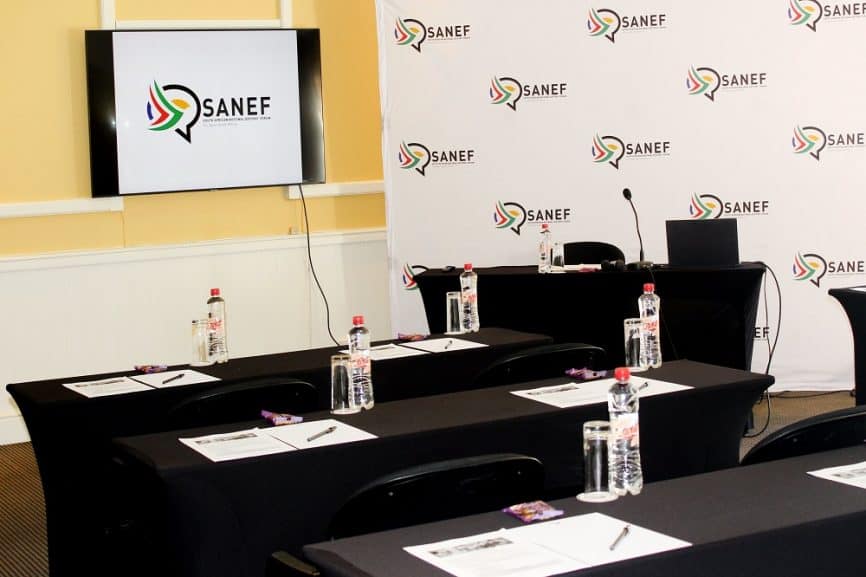
In a strongly-worded statement, SANEF expressed profound alarm, stating that Mkhwanazi’s comments “pose a direct attack on media freedom and the constitutional principles of transparency and accountability.” The editors’ forum highlighted that his stance went beyond a simple complaint, evolving into a call for the full weight of the state’s security machinery to be brought to bear on the fourth estate.
A Call for “Heavy Penalties” and Imprisonment
Disturbingly, SANEF revealed that Mkhwanazi “doubled down on his stance” during his parliamentary appearance, explicitly advocating for the imprisonment of journalists and the imposition of “heavy penalties” for those who err in their reporting.
This rhetoric, SANEF argues, seeks to criminalize journalistic error and frames the work of the media not as a democratic function, but as a potentially treasonous activity. By framing it as a matter for “counterintelligence,” the media is effectively cast as an enemy of the state, a dangerous precedent in a constitutional democracy.
A “Significant Setback” and Apartheid Echoes
The organization warned that acceding to Mkhwanazi’s request “would represent a significant setback for media freedom in South Africa.” In a powerful historical comparison, SANEF stated that such an action is “reminiscent of the oppressive tactics employed by the apartheid state,” which routinely used state security laws to harass, intimidate, and silence critical journalists and publications.
SANEF’s condemnation underscores a critical battle line in South Africa’s democracy: the independence of the press from state interference, particularly from the security services. The forum has consistently held that existing mechanisms, including the Press Council and the Broadcasting Complaints Commission, are the appropriate channels for addressing grievances about reporting standards—not the shadowy realm of state security probes.
The call for an investigation has sent ripples of concern through the media industry, raising fears that it could embolden other state officials to seek similar punitive measures against critical journalism. As the Ad-Hoc Committee deliberates, SANEF and other civil society bodies are expected to vigorously oppose any move that treats a free press as a legitimate target for state security operations.
About The Author