A deepening scandal involving the leak of at least two high-stakes matric examination papers in Gauteng has sent shockwaves through South Africa’s educational community, triggering widespread panic among candidates, fury from parents, and a desperate scramble by authorities to contain the damage. As the nation braces for the release of the National Senior Certificate (NSC) results, the South African Democratic Teachers’ Union (SADTU) has mounted a vigorous defense, arguing passionately that the breach, while severe, is a localized failure and must not be allowed to taint the credibility of the entire national examination system.
The crisis erupted in late October, during the crucial final examination period. Papers for Mathematics Paper 2 and Physical Sciences Paper 2—two subjects pivotal for university entrance into science, technology, engineering, and medicine (STEM) fields—were allegedly circulated via encrypted messaging platforms hours before the scheduled exam time. The leak appears to have been contained to a network of schools within specific districts of Gauteng, the country’s most populous province and its economic heartland.
The Ripple Effect of a Breach
The immediate aftermath was chaotic. Social media became a wildfire of screenshots, accusations, and anguish. Panicked students who had not seen the papers worried they were now at a catastrophic disadvantage. Honest educators were dismayed. “You could feel the morale in the exam hall shift,” recounted one Johannesburg principal, speaking on condition of anonymity. “There was a palpable sense of betrayal and unfairness among those writing legitimately. It undermines everything we’ve worked for.”
The Department of Basic Education in Gauteng and the national Umalusi council—the quality assurance body for assessments—launched an urgent investigation. Initial reports suggest the leak may have originated not from a central printing facility, but potentially during the complex chain of distribution and storage at a school or district level. Security protocols, which include storing papers in safes and strict chain-of-custody documentation, are believed to have been violated.
SADTU’s Stance: Isolate the Malignancy, Protect the Whole
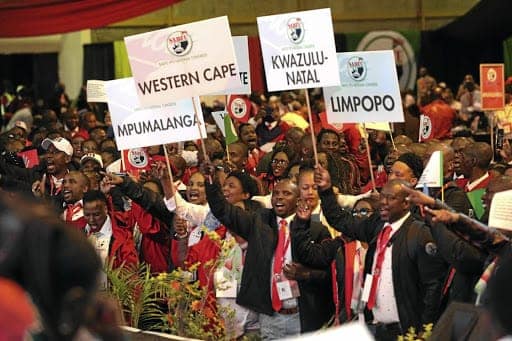
In the face of growing national concern, SADTU, the country’s largest teachers’ union, has taken a firm and nuanced position. While condemning the breach in the strongest terms, the union is campaigning to prevent a blanket condemnation of the 2023 matric results.
“SADTU views in a very serious light the alleged leakage of question papers,” stated General Secretary Mugwena Maluleke in a press conference. “This is a criminal act that must be prosecuted to the fullest extent. However, we must be meticulous and precise in our response. To paint the entire matric class of 2023, a cohort of over 700,000 candidates nationwide, with the brush of scandal because of the alleged actions of a few in one province, is fundamentally unjust and destructive.”
The union’s argument rests on several pillars:
- The Scale is Localized: They emphasize that the vast majority of the 6,800 examination centers across South Africa’s nine provinces conducted their exams with integrity. “The system is not rotten,” argued one SADTU provincial official. “It has suffered a wound in one specific area. We treat the wound, we do not amputate the patient.”
- Protecting the Innocent Majority: SADTU highlights the psychological and future academic impact on honest learners. “Our primary concern is for the students who wrote cleanly,” Maluleke continued. “Their results must be recognized as legitimate. Their futures—their university placements, their bursaries, their pride—must not be collateral damage.”
- Systemic Pressure vs. Criminality: While not excusing the leak, union leaders contextualized it within the immense, high-stakes pressure of the matric exam. They distinguish between isolated criminal acts and systemic collapse, urging a response that punishes the guilty without condemning the entire structure.
A Nation Grappling with Trust and Legacy
The scandal has ignited a fierce public debate. Critics, including some parent bodies and opposition parties, argue that any leak exposes a fatal vulnerability. “Integrity is binary; you either have it or you don’t,” argued a spokesperson for the Parents’ Association of South Africa. “This isn’t just about Gauteng. It raises questions about security protocols everywhere. Umalusi’s credibility is now on the line.”
Education analysts point out that this incident strikes at the core of the matric certificate’s value. The NSC is more than a graduation document; it is a national currency of achievement, a passport to further study and employment. Its credibility is sacrosanct. “Every time its integrity is questioned, the value of every single certificate in the hands of a graduate is subtly diminished,” noted an education policy expert from Wits University.
Umalusi and the Department of Basic Education now face a logistical and ethical minefield. Options include: discarding the compromised papers and using a pre-prepared “Z-version” re-write for affected districts; annulling specific problematic questions; or a rigorous statistical moderation to identify anomalous performance patterns. Each option carries massive implications for timing, fairness, and public trust.
The Path Forward: Investigation, Accountability, and Restoration
As the investigation continues, with the Hawks potentially being brought in given the criminal nature of the leak, the focus turns to damage control and restoration. SADTU has called for:
- A swift, transparent, and unforgiving investigation to identify the perpetrators.
- Stronger, technology-aided security measures for paper distribution and storage.
- Psycho-social support for affected honest learners.
- A clear, unequivocal statement from Umalusi on the steps taken to ensure the national results’ integrity.
The coming weeks will be critical. When the national results are announced, the spotlight will be intensely focused on Gauteng’s performance statistics. The nation will be watching, not just to celebrate top achievers, but to see if the guardians of its educational system successfully isolated a scandal, or if the leak has irrevocably stained the hard-earned success of an entire generation. SADTU’s plea is clear: punish the guilty, protect the innocent, and preserve the system that, despite its flaws, remains a cornerstone of South Africa’s future.
About The Author