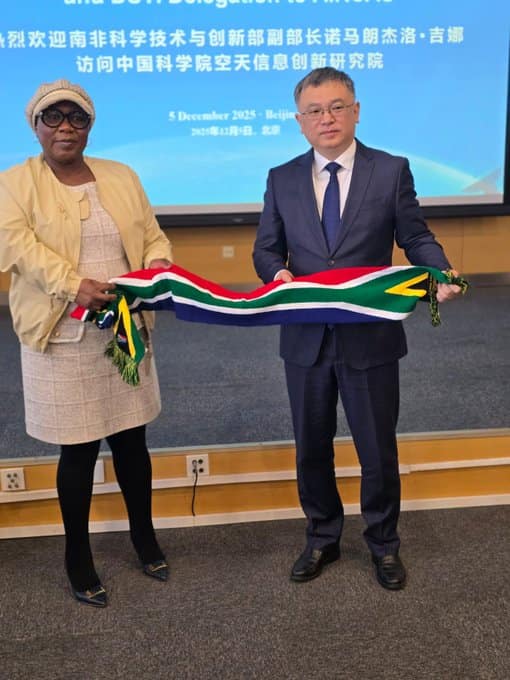
In a strategic move to solidify one of the Global South’s most consequential scientific partnerships, South Africa and China have signed a landmark Memorandum of Understanding (MoU) to expand their Young Scientists Exchange Programme (YSEP) significantly. The agreement, finalised during a high-level bilateral meeting in Beijing this week, aims to catalyse cross-border research collaboration, accelerate innovation in priority sectors, and cultivate the next generation of scientific leaders from both nations.
The enhanced programme, hailed by officials as a “bridge for future-facing talent,” is designed to dramatically increase the number of early-career researchers, postdoctoral fellows, and PhD candidates participating in joint projects. It will facilitate extended research placements, create dedicated funding streams for Sino-South African teams, and establish virtual collaboration platforms to sustain partnerships beyond physical exchanges. A core, stated focus is on empowering young scientists from historically disadvantaged backgrounds and underrepresented groups, ensuring the benefits of international collaboration contribute directly to broader transformation goals.
“This MoU is far more than an administrative renewal; it is a quantum leap in our commitment to shared knowledge creation,” said Dr Phil Mjwara, Director-General of South Africa’s Department of Science and Innovation. “We are moving from ad hoc exchanges to a structured, scaled-up pipeline that will immerse our brightest young minds in world-class laboratories and projects in China, and vice versa. This is an investment in human capital that will pay dividends in innovation for decades.”
The expansion comes at a pivotal moment as both countries aggressively pursue leadership in the industries of the future. The programme will explicitly prioritise research in green energy technologies (including green hydrogen, battery storage, and renewable integration), advanced manufacturing and robotics, biotechnology, and space science and earth observation—sectors where China has formidable research and development capacity, and South Africa possesses unique strategic assets and research niches.
“The 21st-century challenges of climate change, disease, and sustainable development demand international cooperation, particularly between developing nations that share similar challenges and aspirations,” stated a senior official from China’s Ministry of Science and Technology. “This programme harnesses the vitality and fresh perspectives of youth to find solutions that are both innovative and applicable to our contexts.”
Analysts view the strengthened science diplomacy as a key pillar in the comprehensive strategic partnership between South Africa and China. “This is soft power with hard outcomes,” remarked international relations expert Prof. Mzukisi Qobo. “It builds enduring networks of influence and collaboration at the individual and institutional levels. The scientists who train and work together today will be the directors of research institutes, chief scientists, and policy advisors of tomorrow, creating a deep, resilient web of cooperation that transcends political cycles.”
The first cohort under the expanded YSEP is scheduled to be announced in the first quarter of 2026, with both governments pledging to streamline visa processes and provide logistical support to ensure the programme’s success. This partnership signals a shared belief that the most valuable resource for national development is not just mineral wealth or infrastructure, but cultivated, connected, and empowered human intellect.
About The Author