In a masterclass of digital-age clap-back culture, South African socialite and public figure Prince Tshina Tshivhase has definitively silenced an online detractor, not with words alone, but with the ultimate weapon of modern credibility: the purchase receipt. The dispute, which erupted over the authenticity of a brown Gucci bucket hat, has since spiralled into a wider discussion about luxury, inflation, and the art of keeping impeccable financial records.
The saga began when a user on X (formerly Twitter) cast a skeptical eye on a photo of the Prince sporting the designer headwear. Accusing the hat of being a counterfeit, the troll’s comment threatened to undermine the very essence of high-fashion flexing. Instead of engaging in a war of words, Prince Tshivhase opted for a display of cold, hard proof.
The Paper Trail: From Waterfront to Inbox
In a stunning two-part rebuttal, the Prince produced a veritable audit trail for his Gucci collection. First, he posted a clear photo of an in-store receipt from the Gucci boutique at the V&A Waterfront in Cape Town, dated December 2020. The document detailed the purchase of the now-contested brown GG bucket hat for a sum of R6,900.
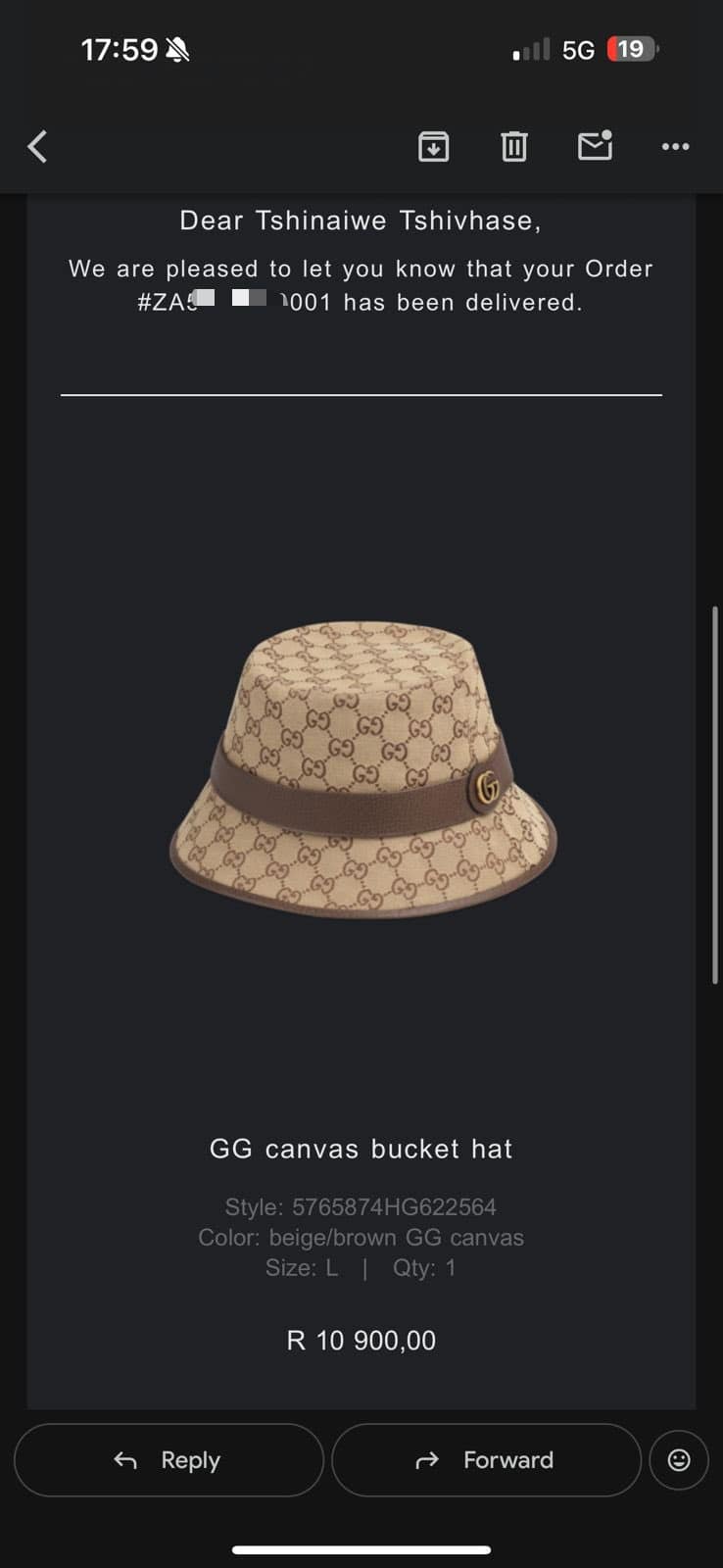
Not content with proving the hat’s origin, he then showcased his commitment to the brand by presenting a second piece of evidence: a 2025 email confirmation for a replacement of the very same hat, this time at a price of R10,000. The two receipts, separated by five years, did more than just authenticate the accessory; they painted a stark picture of luxury inflation, with the hat’s price having increased by over 44% in that period.
Social Media Erupts and Divides
The posts, which quickly amassed over 13,000 engagements, sent South African social media into a frenzy. Supporters and fans hailed the Prince for his flawless victory. “The way he just went and fetched a five-year-old receipt… we have to stan a meticulous king!” wrote one user, capturing the sentiment of many who admired his organizational skills and unassailable response.
However, the incident also ignited a more profound debate. In a nation grappling with a high cost of living, unemployment, and economic strain, the display of luxury spending prompted mixed reactions. Some questioned the morality of such expenditures, while others defended his right to spend his money as he sees fit. A minority of skeptics shifted their focus, now questioning the validity of the receipts themselves, suggesting they could have been fabricated—a claim for which no evidence was provided.
Gucci’s Price Point Confirms the Narrative
An independent check with official Gucci channels confirmed that the current pricing for the item aligns perfectly with the R10,000 figure cited in the 2025 email, effectively validating the Prince’s claims and leaving the initial accusation in tatters.
The incident has cemented Prince Tshina Tshivhase’s status as a social media figure who comes prepared. He didn’t just defend his hat; he defended his brand with a level of proof that is both rare and devastatingly effective in the often-facile world of online disputes. In the court of public opinion, the verdict was clear: when you come for the prince, you had better bring more than just accusations.
About The Author