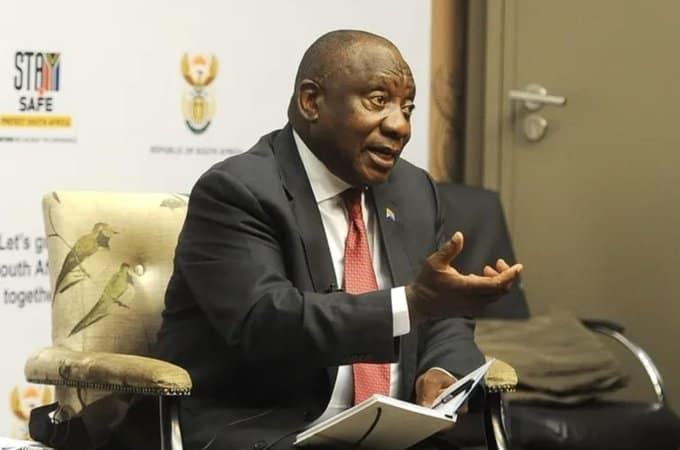
President Cyril Ramaphosa has signed two proclamations authorising the Special Investigating Unit (SIU) to investigate alleged maladministration, fraud, and irregularities in the construction of three primary schools in the Free State, while simultaneously expanding an existing probe into information technology procurement at the Great Kokstad Local Municipality in KwaZulu-Natal—the latest moves in an ongoing drive to root out corruption and ensure that public funds are properly accounted for in essential service delivery.
The first proclamation empowers the SIU to examine the planning, tendering, and execution of construction projects at three unnamed primary schools in the Free State, following allegations that contracts were irregularly awarded, payments were made without proper oversight, and substandard work was delivered despite substantial state expenditure. The investigation will also scrutinise whether officials involved in the projects acted in contravention of the Public Finance Management Act, the Municipal Finance Management Act, or the Prevention and Combating of Corrupt Activities Act, and whether any suppliers benefited unduly through fraudulent or collusive practices.
According to a statement from the Presidency, the Free State school construction probe will have the power to subpoena witnesses, seize documents, and recover any financial losses suffered by the state as a result of the alleged irregularities. “The President is determined to ensure that every rand allocated for building the future of our children is spent with the utmost integrity,” the statement read. “Where there is evidence of wrongdoing, the SIU will pursue it without fear or favour.”
The second proclamation extends the SIU’s ongoing investigation into IT procurement at the Great Kokstad Local Municipality, which was initially authorised in late 2025 following complaints about inflated contracts and irregular expenditure on software, hardware, and related services. The expanded scope will now include additional contracts and transactions that have come to light during the initial phases of the inquiry, as well as possible connections between municipal officials and service providers that may have facilitated the alleged irregularities.
The Kokstad municipality, which serves a predominantly rural area in the south of KwaZulu-Natal, has faced persistent governance challenges, including frequent changes in political leadership and multiple adverse audit findings from the Auditor-General. The expansion of the SIU probe reflects growing concerns that the municipality’s IT procurement practices may have been systematically compromised, with millions of rands potentially diverted away from critical services such as water, sanitation, and road maintenance.
Both investigations will operate under Section 4 of the Special Investigating Units and Special Tribunals Act, which grants the SIU broad powers to gather evidence and refer cases for prosecution if criminal conduct is identified. The unit has also been directed to submit interim and final reports to the President, who may then take further action, including the institution of civil proceedings to recover losses or the referral of cases to the National Prosecuting Authority for criminal prosecution.
The proclamations come amid heightened public scrutiny of government spending, particularly on infrastructure projects that have consistently been plagued by delays, cost overruns, and allegations of corruption. The education sector, in particular, has been a focal point of concern, with reports emerging in recent years of incomplete or poorly constructed schools that fail to meet basic safety and functionality standards. In the Free State, where the three schools under investigation are located, community activists have long complained about crumbling facilities and opaque procurement processes that seem to benefit a select group of contractors.
Civil society organisations have welcomed the President’s intervention, but have also cautioned that investigations alone are insufficient without robust follow-through and meaningful consequences for those found to have flouted the law. “We have seen too many reports gather dust on shelves while perpetrators walk free,” said a spokesperson for the anti-corruption advocacy group Corruption Watch. “The SIU must not only investigate—it must ensure that evidence leads to prosecutions and that stolen funds are recovered. That is the only way to restore public confidence.”
As the SIU prepares to deploy investigative teams to the Free State and KwaZulu-Natal, the affected municipalities and provincial departments have been instructed to cooperate fully with the inquiries and to provide all requested documentation without delay. Failure to cooperate may result in further legal consequences, including referral to the relevant authorities for contempt of the proclamations.
For President Ramaphosa, the authorisation of these probes represents another step in fulfilling his stated commitment to clean governance and ethical public administration—a commitment that has been tested repeatedly by entrenched corruption networks within both national and local government. While the investigations are still in their early stages, the message from the Presidency is clear: the era of impunity is over, and those who misuse public money will face the full might of the law.
About The Author