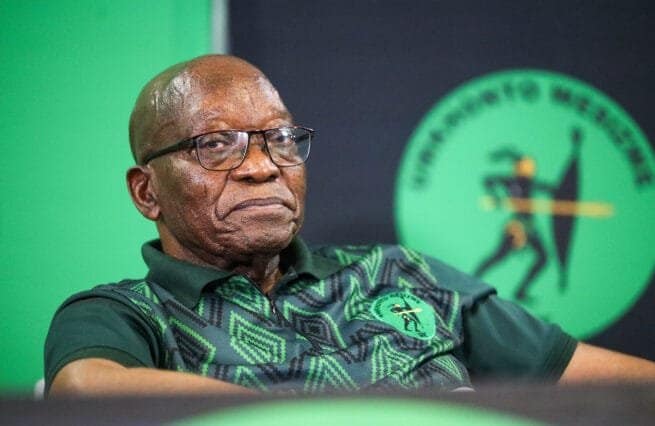
The uMkhonto weSizwe (MK) Party has been formally instructed to vacate its provincial offices in Polokwane after the landlord locked the premises in an escalating dispute over months of unpaid rent, exposing the growing financial strains facing the fledgling political party as it struggles to establish a stable operational footing ahead of the 2026 local government elections.
The lockout, which took effect earlier this week, has effectively shuttered the party’s Limpopo headquarters, leaving staff and volunteers scrambling to find alternative working arrangements. The landlord, who has declined to be named, confirmed that rental arrears had accumulated over several months despite repeated attempts to engage the party’s leadership on a repayment plan. “We were left with no choice but to secure the property,” the landlord said in a brief statement. “We have a business to run, and we cannot continue to provide premises without payment.”
The MK Party, which burst onto the political scene in late 2023 and surprised many with its strong electoral performance in the 2024 national elections, has been grappling with the logistical and financial realities of transitioning from a protest movement into a fully-fledged political organisation. While the party has drawn significant support from disaffected voters in KwaZulu-Natal, Gauteng, and parts of the Eastern Cape, its operational infrastructure in other provinces has remained threadbare, with limited fundraising capacity and a heavy reliance on volunteerism.
Provincial party officials have acknowledged the rent dispute but sought to downplay its broader significance, describing it as a temporary setback rather than a sign of systemic dysfunction. “We are in the process of relocating to more cost-effective premises that better suit our current needs,” said a party representative in Polokwane. “The lockout is an unfortunate administrative matter, but it does not affect our commitment to serving the people of Limpopo. We are exploring all options to ensure our work continues without interruption.”
However, political analysts have warned that the incident reflects deeper vulnerabilities within the MK Party’s organisational model. Unlike established parties with access to donor funding, state subsidies, and corporate sponsorships, the MK Party has relied heavily on grassroots mobilisation and the personal charisma of its leadership to sustain its momentum. As the novelty of the party’s emergence fades and the demands of governance and constituency work intensify, the pressure to build durable institutional capacity has become increasingly acute.
The Polokwane eviction also carries symbolic weight, coming just weeks after the party celebrated a high-profile defection from the ANC in KwaZulu-Natal—the province where the MK Party has its strongest foothold. The contrast between the party’s political momentum and its operational fragility underscores the challenges of translating electoral support into sustainable organisational strength. “You can win votes on emotion and anger,” said one political commentator, “but you cannot run a party on goodwill alone. The MK Party needs to professionalise its finances quickly, or it risks becoming a flash in the pan.”
The landlord has indicated that legal proceedings to recover the outstanding debt may follow if the MK Party does not settle the arrears promptly. Meanwhile, the party’s Limpopo leadership has assured members that provincial activities will continue through temporary office arrangements and mobile operations until a permanent solution is found.
For the MK Party, the Polokwane lockout serves as a sobering reminder that building a political alternative in South Africa’s competitive landscape requires not only popular appeal but also the mundane but essential machinery of financial management and administrative discipline. As the party looks ahead to the 2026 local government elections, the challenge will be to demonstrate that it can govern itself before it can credibly aspire to govern others. Whether the party can learn that lesson quickly enough remains an open question.
About The Author