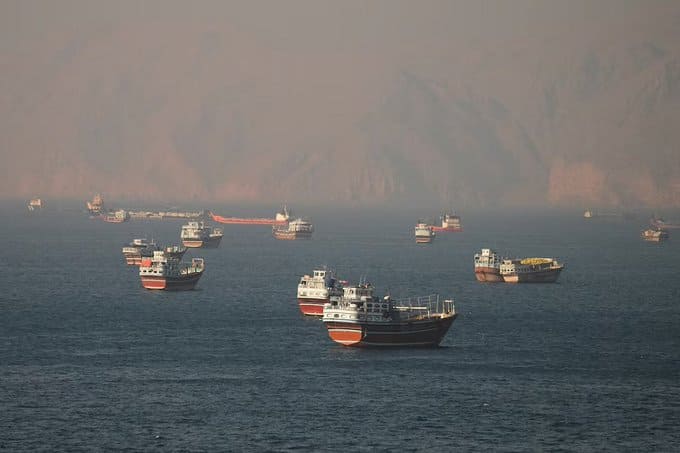
Despite the ink barely drying on a landmark U.S.-Iran peace agreement hailed by diplomats as a historic breakthrough, the world’s largest shipping conglomerates are adopting a cautious posture, refusing to resume full-scale transit through the strategic Strait of Hormuz until they witness tangible, sustained evidence that the détente is both durable and “material.” Senior executives from Maersk, MSC, and several major tanker operators confirmed from their London headquarters on Thursday that their vessels will continue to divert around the Cape of Good Hope for at least several more weeks, citing lingering geopolitical uncertainties that no piece of paper can immediately erase.
The Strait of Hormuz, a narrow maritime chokepoint through which approximately 20% of the world’s petroleum passes, has been a theater of heightened tension for years, with attacks on commercial shipping, vessel seizures, and mine incidents creating an uninsurable risk profile that has driven insurance premiums to stratospheric levels. While the newly brokered agreement promises de-escalation and mutual naval deconfliction, industry insiders emphasize that trust must be rebuilt through verifiable actions on the water. “A diplomatic communiqué is not a naval escort,” remarked one senior risk analyst at a London-based maritime insurance syndicate. “Our clients need to see Iranian Revolutionary Guard Corps vessels standing down, communications protocols normalizing, and at least thirty consecutive days of incident-free passage before we can even begin recalculating our risk matrices.”
The financial implications of this sustained diversion are staggering. Each rerouted tanker incurs an additional 8 to 12 days of sailing time, translating into millions of dollars in extra fuel costs, crew wages, and supply chain delays. These expenses, industry sources note, will inevitably cascade down to global fuel prices, potentially offsetting any immediate economic benefits of the peace deal. The cautious stance is also informed by the bitter lessons of the 2015 Joint Comprehensive Plan of Action, which was later unilaterally abandoned, leaving shipping companies to absorb substantial losses when tensions re-escalated overnight.
Maritime analysts have urged the U.S. and Iranian navies to conduct joint confidence-building patrols in the coming weeks to accelerate the restoration of trust. For now, however, the message from the shipping industry is unequivocal: peace must be proven at sea, not just proclaimed at a podium, before they risk returning to one of the world’s most volatile waterways.
About The Author