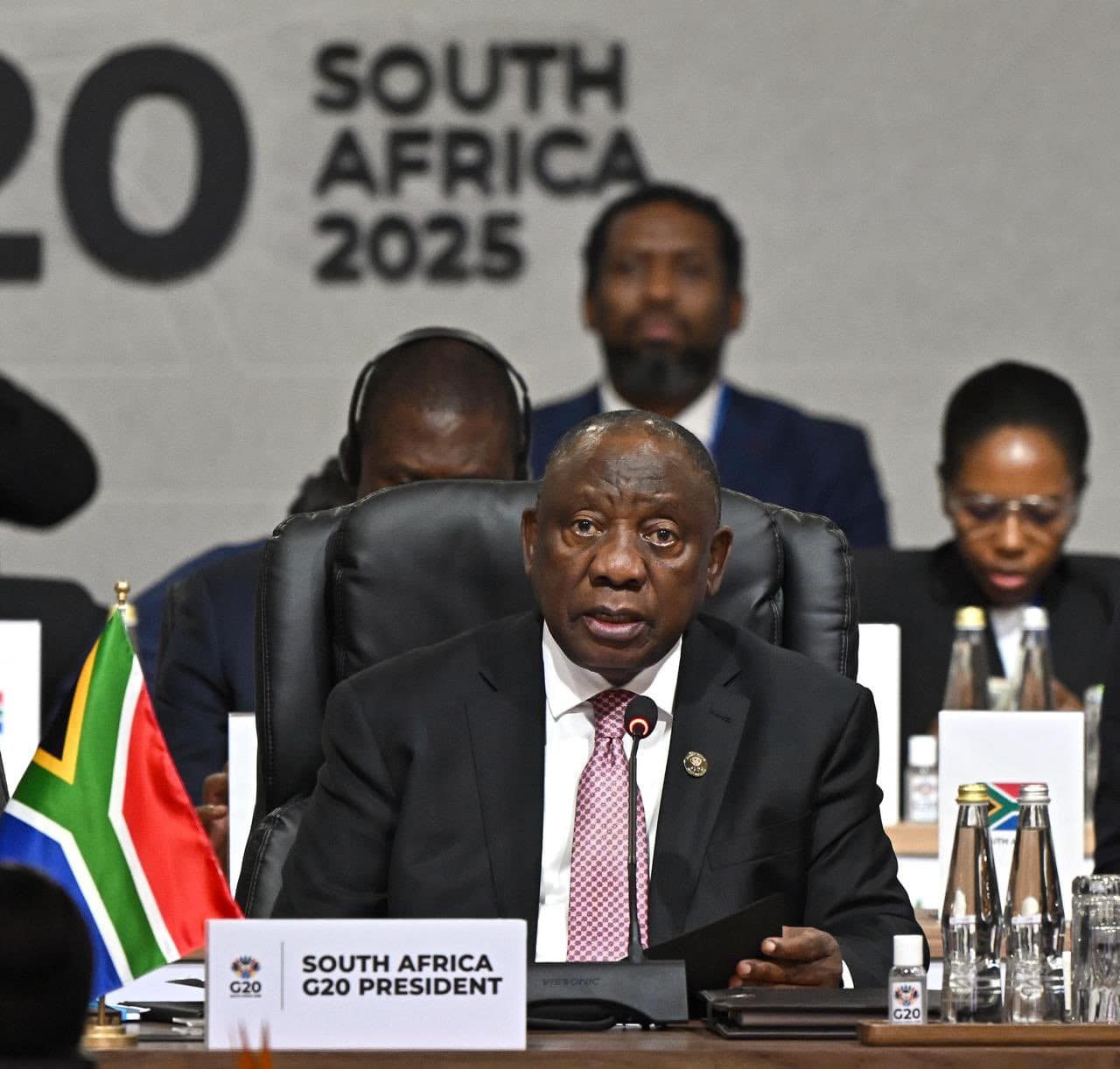
South Africa’s landmark hosting of the G20 Leaders’ Summit on 22 and 23 November 2025 ended with President Cyril Ramaphosa urging world leaders to turn “solidarity, equality and sustainability” into tangible global action.
Held at the Nasrec Expo Centre, the summit marked the first G20 to take place on African soil. Ramaphosa’s closing remarks highlighted the importance of centring development, climate resilience and inclusive growth for low- and middle-income countries priorities long championed by the African continent.
Despite the absence of the United States and a few diplomatic tensions around protocol, leaders adopted a wide-ranging declaration covering climate finance, debt relief, food security, digital transformation and global financial reform.
Ramaphosa welcomed the agreement, noting that it reflected the realities of a changing world where developing economies demand a stronger voice. He emphasised that the commitments must now translate into action, saying the outcomes show the G20 is capable of “building a fairer, more sustainable global order.”
Civil society presence around the summit was strong, with activists raising issues such as inequality, climate justice and gender-based violence the latter receiving significant attention after South Africa declared it a national disaster ahead of the meeting.
While some analysts said the absence of certain major leaders weakened the geopolitical weight of the summit, others argued that it allowed Global South priorities to take centre stage.
The final declaration includes major pledges of more climate adaptation funding, accelerated debt restructuring for struggling economies, support for resilient food systems and new steps towards a just energy transition. Implementation over the coming year will determine the strength of these commitments.
As the summit closed, Ramaphosa called on nations to “continue the momentum beyond Johannesburg,” framing the event as a turning point for African leadership within global governance structures.
About The Author