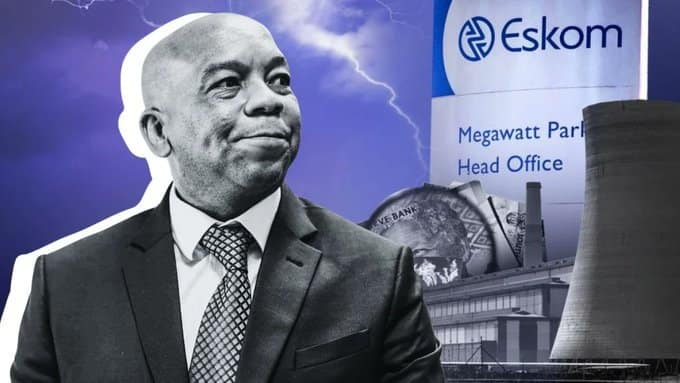
South African households, businesses, and industry bodies have just two weeks left to submit formal objections to a controversial National Energy Regulator of South Africa (NERSA) proposal that would compel electricity consumers to pay an additional R76 billion to compensate Eskom for what the regulator itself describes as past “regulatory errors” and tariff shortfalls.
The proposed Regulatory Clearing Account (RCA) balance adjustment, open for public comment until 21 January 2026, relates to the 2022/2023 financial year. It is the largest single RCA application in the country’s history and would effectively see the public retroactively finance what NERSA acknowledges were its own miscalculations and Eskom’s financial mismanagement during that period.
The R76 billion stems from a complex reconciliation process where Eskom’s actual revenue, expenses, and sales volumes are compared against the assumptions NERSA used when it originally granted tariff increases. The utility argues it incurred massive un-budgeted costs, primarily due to escalating diesel expenditure for open-cycle gas turbines to combat load-shedding, lower-than-projected sales, and increased municipal debt non-payment. NERSA, after review, has provisionally agreed that a significant portion of these costs qualify for recovery from consumers.
Energy experts and consumer advocacy groups have reacted with outrage, labeling the move a “catastrophic moral hazard” that rewards failure and institutionalises inefficiency.
“This is an indefensible transfer of risk from Eskom and the regulator directly to the public,” said Elise Steenkamp, lead analyst at the Energy Accountability Centre. “NERSA is admitting it made errors in its original calculations, and Eskom is admitting it failed to control its costs or meet its performance targets. Yet, the solution is not to hold leadership accountable or to implement structural reforms, but to simply send an astronomical bill to consumers who already pay for constant power failures.”
If approved, the R76 billion would be recovered through a surcharge added to electricity tariffs over a period of one to three years, beginning in the 2026/27 financial year. This would trigger an immediate and severe secondary wave of price hikes on top of the already-approved annual tariff increases, which are themselves set to rise significantly. The combined effect could push the total year-on-year electricity price increase for some municipalities and direct customers into double digits.
The South African Federation of Trade Unions (SAFTU) and the Organisation Undoing Tax Abuse (OUTA) have already announced coordinated campaigns to mobilize mass public comments against the proposal.
“Eskom’s inefficiency and NERSA’s regulatory failure are being turned into a public debt,” said OUTA’s energy portfolio manager, Brendan Miller. “We are calling on every South African to object. This sets a dangerous precedent where there is no consequence for poor performance, only a blank cheque written by the consumer.”
In its consultation paper, NERSA has outlined the technical rationale for the RCA adjustment but acknowledges the severe financial impact. The regulator is legally obligated to consider public commentary before making a final determination.
Economists warn that implementing such a surcharge would have devastating knock-on effects across an already fragile economy, further fueling inflation, stifling small businesses, and pushing more households into energy poverty.
The deadline of 21 January 2026 represents the final formal channel for public intervention before NERSA’s decision is finalized. All written submissions must be sent to the regulator’s designated email address, with hearings for oral arguments likely to follow for major stakeholder groups.
The outcome of this process will be a defining moment for South Africa’s energy governance, testing whether the principle of “the user pays” extends to paying for systemic failure.
About The Author