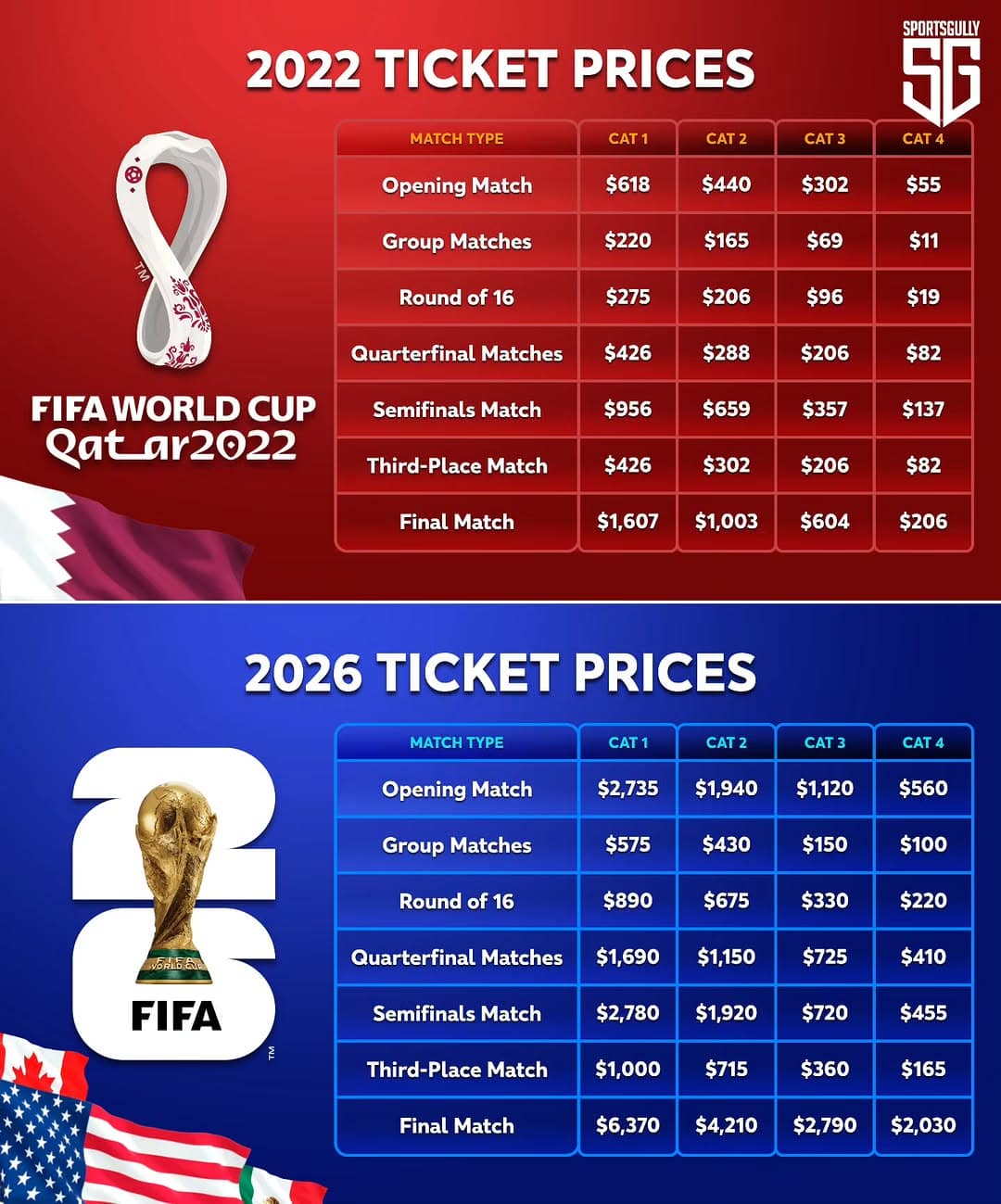
The unveiling of FIFA’s ticketing strategy for the 2026 World Cup has unleashed a torrent of frustration and anger from the global football community, threatening to overshadow the historic nature of the first 48-team tournament hosted across three nations. What was meant to be a celebration of football’s expansion has quickly morphed into a heated debate about commercialization, accessibility, and the very soul of the sport.
The core of the controversy lies in FIFA’s “dynamic pricing” model, which has produced sticker prices that dwarf those of the 2022 tournament in Qatar. While fans anticipated a premium for the unprecedented scale of the event, the revealed figures have been a profound shock. The pricing spectrum is staggering: a group-stage match can range from a seemingly accessible $60 to a jaw-dropping $805 for a premium seat. The climax of the tournament, the final, has reached a stratospheric new high, with the most expensive tickets cresting at $6,730.
The backlash has been swift and merciless, primarily playing out on social media platform X. Fans, supporter groups, and sports commentators have universally panned the strategy, labeling it a blatant “cash grab” that systematically prices out the average working-class supporter, the very lifeblood of the global game. Many have posted side-by-side comparisons with 2022 Qatar prices, illustrating dramatic hikes that far outpace inflation. The sentiment is one of betrayal, with accusations that FIFA is prioritizing corporate hospitality and wealthy tourists over the passionate, chanting fans who create the electric atmosphere that defines the World Cup.
In defense of the model, FIFA points to the immense logistical and operational scale of the 2026 tournament. With 104 matches, a significant increase from the previous 64, across massive, state-of-the-art venues in the U.S., Canada, and Mexico, the governing body argues that dynamic pricing is a necessary, modern tool to manage unprecedented demand and help cover costs. They further emphasize measures designed to promote fairness, such as random-selection draw lotteries for the initial sales phase and an official, regulated resale platform to combat black-market touting and scalping.
However, critics remain deeply unconvinced. They argue that these accessibility measures are a smokescreen for what is ultimately a profit-maximization scheme. The dynamic pricing model itself is a point of contention, as it can cause prices to surge in real-time for high-demand matches, creating a frantic and expensive bidding war among fans. Furthermore, the inclusion of resale fees on the official platform is seen as FIFA seeking to profit from the secondary market as well, effectively “double-dipping” on a single ticket.
The underlying fear, echoed in thousands of angry posts, is that the 2026 World Cup is being transformed from a global folk festival into an exclusive luxury product. The concern is that stadiums will be filled not with the most passionate, but with the most affluent, sanitizing the vibrant and diverse culture that makes the World Cup unique. As the ticket lottery gets underway, the question hanging over the tournament is no longer just about who will lift the trophy, but about who will be able to afford a seat in the stadium to witness it.
About The Author