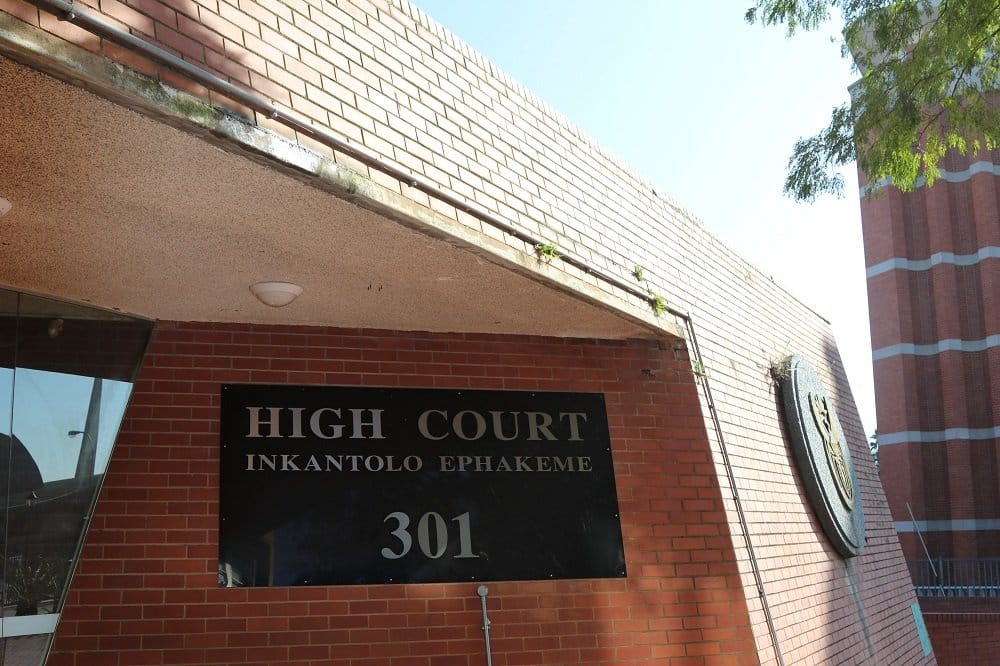
In a significant ruling that underscores the balance between state security interests and the rights of the accused, the Pretoria High Court has overturned a controversial bail condition imposed by acting chief magistrate Vusimuzi Mahlangu that barred three men charged under the Intelligence Services Act from accessing any premises of the State Security Agency’s crime intelligence division.
The applicants—Dumisani Khumalo and two co-accused whose identities remain protected by court order—were charged earlier this year with multiple counts relating to the unauthorised possession and dissemination of classified information. In granting them bail in October, Magistrate Mahlangu attached a stringent condition prohibiting them from entering “any premises, building, or facility owned, leased, or used by the Crime Intelligence Division of the State Security Agency” while awaiting trial.
The defence team, led by Advocate Thandeka Nkosi, launched an urgent application in the High Court, arguing that the condition was overly broad, punitive, and effectively prevented their clients from preparing a proper defence. “This condition presumes guilt and imposes a form of pre-conviction punishment,” argued Adv. Nkosi. “It severs our clients from their professional and institutional context, hindering their ability to consult with colleagues, access necessary documentation under supervision, and instruct us on highly technical matters central to the case.”
The State, represented by Senior State Advocate Mark Williams, contended that the restriction was a necessary safeguard to protect national security, prevent witness intimidation, and ensure the integrity of ongoing investigations. “The accused face serious charges related to the most sensitive of state functions. Unfettered access to crime intelligence premises poses a demonstrable risk,” Williams asserted.
In his judgment, Judge Pieter van der Westhuizen found that while the magistrate’s concern for protecting state security was valid, the condition as formulated was “disproportionate and impermissibly vague.” He noted that it failed to distinguish between secure operational areas and general administrative offices, and it did not account for supervised access under controlled conditions for legitimate defence purposes.
“A blanket ban of this nature unjustly hampers the accused’s constitutional right to a fair trial, which includes the right to adequately prepare and present a defence,” Judge van der Westhuizen stated. “The condition, in its current form, amounts to an unreasonable prior restraint.”
The High Court set aside the condition and ordered that the matter be remitted to the magistrate’s court for the formulation of a new, more narrowly tailored condition. The judge suggested that any new restriction should specify precise locations from which the accused are barred and include mechanisms for controlled, pre-approved access for legal and preparatory purposes, under the supervision of independent officers or the Investigating Officer.
Legal experts hailed the ruling as a crucial check on prosecutorial overreach in sensitive state security cases. “This judgment reaffirms that even in matters of national security, the courts will not rubber-stamp conditions that eviscerate fundamental trial rights,” said constitutional law professor Kgomotso Mokoena. “It insists on precision and proportionality.”
The ruling is a procedural victory for the accused, though they remain subject to other bail conditions, including the surrender of passports and regular reporting to a police station. The case is scheduled to return to the magistrate’s court next week to finalise the revised conditions, as the complex trial continues to unfold.
About The Author