The public gallery of the Pretoria Magistrate’s Court was packed to capacity on Thursday morning, a restless sea of faces reflecting a community still raw with grief and disbelief. Outside, a smaller group gathered in silent vigil, holding placards with a single, devastating image: the smiling face of Karabo “Kay” Mokoena, the 26-year-old e-hailing driver whose life was cut short in a brutal attack that has shaken the capital to its core.
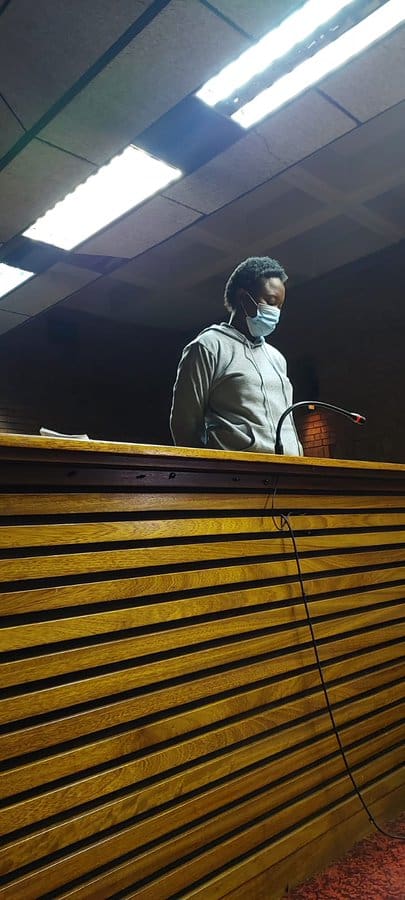
Inside Court C, the atmosphere was thick with tension as four accused men were led into the dock, their heads bowed, their eyes fixed on the floor. They stood shoulder to shoulder—two in faded work jackets, two in plain t-shirts—looking less like cold-blooded killers and more like ordinary young men from the townships. But the charges laid against them tell a different story. A story of premeditation, of cold calculation, of a life traded for a car and a few hundred rand.
The Charges: Premeditated Murder
The state’s case, outlined by prosecutor advocate Thandeka Mkhize, is as chilling as it is comprehensive. The four accused—Sipho Magubane (29), Thabo Ndlovu (31), Kagiso Phiri (27), and Mandla Dlamini (26)—face two counts of premeditated murder and one count of robbery with aggravating circumstances.
“The state alleges,” Mkhize told the magistrate in measured, deliberate tones, “that on the night of February 12, 2026, the accused persons conspired to lure an e-hailing driver to a remote location in Mamelodi East with the intention of robbing him of his vehicle. The state further alleges that during the commission of this robbery, the deceased, Mr. Karabo Mokoena, was brutally assaulted and fatally wounded. The state will argue that the murder was premeditated, planned in advance as part of the robbery conspiracy.”
The word “premeditated” hung in the air like a death sentence itself. Under South African law, a conviction for premeditated murder carries a mandatory sentence of life imprisonment.
The Dashcam: Witness to Horror
What makes this case particularly devastating—and particularly damning for the accused—is the existence of evidence that captures the final moments of Karabo Mokoena’s life. The young driver, like many in the e-hailing industry, had installed a dashboard camera in his white Toyota Corolla for his own protection. It was a decision born of caution, of awareness of the dangers that lurk on the city’s dark streets. He could never have known that the camera would become the primary witness to his own murder.
According to sources close to the investigation who spoke on condition of anonymity, the dashcam footage tells a harrowing story. Mokoena is seen picking up a fare in Pretoria CBD just after 10 PM. The passenger, believed to be one of the accused, directs him to an address in Mamelodi East—a route that experienced drivers know can be risky at night. Upon arrival, the footage shows three figures emerging from the darkness, surrounding the vehicle. What follows is brief, violent, and final.
“The footage is extremely disturbing,” a police source said. “You see the driver trying to defend himself. You see the attackers dragging him from the vehicle. You see them continuing to assault him even after he is on the ground, even after he is no longer moving. It’s the kind of thing that stays with you.”
Mokoena was declared dead at the scene by paramedics who arrived shortly after a passerby discovered his body in the early hours of the morning. He had been beaten, stabbed, and left in a drainage ditch alongside the road. His car was gone.
The Arrests: A Swift Resolution
The arrests came remarkably quickly, a testament to the pressure placed on police by an outraged public and a grieving family. Within 48 hours of the murder, all four suspects were in custody, tracked down through a combination of cellphone data, witness statements, and good old-fashioned police work.
“The message must be clear,” said provincial police commissioner Lieutenant General Tommy Mthombeni at a press conference announcing the arrests. “We will not tolerate this senseless violence. We will use every resource at our disposal to bring those responsible to justice. These men thought they could take a life and disappear into the townships. They were wrong.”
Mokoena’s vehicle, stripped of its registration plates and partially dismantled, was recovered in a garage in a neighboring township three days after the murder. Forensic teams are still processing it for evidence.
The Accused: Faces in the Dock
In the dock on Thursday, the four accused presented a study in contrast. Magubane, the oldest, stood rigid, his jaw set, occasionally glancing toward the gallery where a woman—perhaps a girlfriend, perhaps a sister—sat with tears streaming down her face. Ndlovu appeared nervous, shifting his weight from foot to foot, his eyes darting around the courtroom. Phiri stared straight ahead, expressionless, as if determined to show nothing. Dlamini, the youngest, looked barely out of his teens, his face betraying a confusion that seemed out of place for someone accused of such a calculated crime.
They are all from Mamelodi, all known to each other, and according to police, all with prior records for lesser offenses. The state will argue that they represent a growing phenomenon in South Africa’s townships: young men who view e-hailing drivers as soft targets, as walking ATMs whose vehicles can be sold for quick cash to criminal networks.
The Community: Grief and Anger
Outside the court, the mood was somber but simmering with anger. Among the crowd was Thabo Mokoena, Karabo’s older brother, his face a mask of grief held together by sheer will. He spoke to reporters in a voice that cracked but refused to break.
“My brother was not just a driver. He was a son, a brother, an uncle to my children. He was studying part-time, trying to better himself. He drove at night to pay for his courses, to help my mother with the bills. He was doing everything right. And these animals took him from us like he was nothing. Like he was garbage.”
The e-hailing community has also mobilized. Drivers from Uber, Bolt, and other platforms gathered in a convoy outside the court, their vehicles decorated with black ribbons and posters demanding justice. Many have taken the day off work, a costly decision but one they feel is necessary.
“We are all Karabo,” read one placard. “We are all targets.”
The Legal Road Ahead
The four accused were not required to plead on Thursday. The case was postponed to March 5 for a formal bail application, though the state has indicated it will oppose bail vigorously, citing the severity of the charges and the strength of the evidence.
“The state considers the accused a flight risk,” prosecutor Mkhize told the court. “Given the nature of the allegations and the evidence available, including the dashcam footage, the state will argue that there are no compelling circumstances to justify their release.”
Legal Aid attorneys have been appointed for all four, a standard procedure in cases where accused cannot afford private representation. Outside the court, the defense lawyers declined to comment, citing the ongoing nature of the proceedings.
The Bigger Picture
Karabo Mokoena’s death is not an isolated incident. It is part of a troubling pattern that has seen e-hailing drivers across South Africa become increasingly vulnerable to violent crime. In Johannesburg, Cape Town, Durban, and Pretoria, drivers have been robbed, hijacked, and killed at an alarming rate. The nature of the work—driving strangers to unknown locations, often at night, often in cash transactions—makes them ideal targets for criminals who view them as soft and unprotected.
The industry has responded with various safety measures: panic buttons, tracking devices, driver training programs. But as Thursday’s court proceedings made clear, technology and training can only do so much when confronted with the cold calculation of premeditated violence.
The Wait Continues
As the magistrate adjourned proceedings and the four accused were led back to the holding cells, the gallery slowly emptied into the harsh Pretoria sunlight. The family of Karabo Mokoena gathered in a tight circle, arms around each other, drawing strength from shared grief. They face a long wait now—weeks, months, perhaps years—before the legal process runs its course. Before they can say that justice has been done.
Thabo Mokoena, Karabo’s brother, stood apart for a moment, looking toward the court building as if searching for answers in its blank concrete walls.
“I know this won’t bring him back,” he said quietly. “Nothing will bring him back. But maybe, if these men are punished, maybe the next driver will think twice before picking up a stranger. Maybe the next family won’t have to go through this. That’s all we can hope for now. That’s all we have left.”
The convoy of e-hailing drivers began to disperse, their black ribbons fluttering in the afternoon breeze. The vigil outside the court gradually dissolved, leaving only a few scattered flowers and a single photograph of Karabo Mokoena, smiling, alive, remembered. The wheels of justice had begun to turn. For a family in mourning, for a community in shock, for an industry on edge, the question now is whether they will turn fast enough—and whether, at the end of the road, they will deliver the justice that Karabo Mokoena and so many others like him deserve.
About The Author