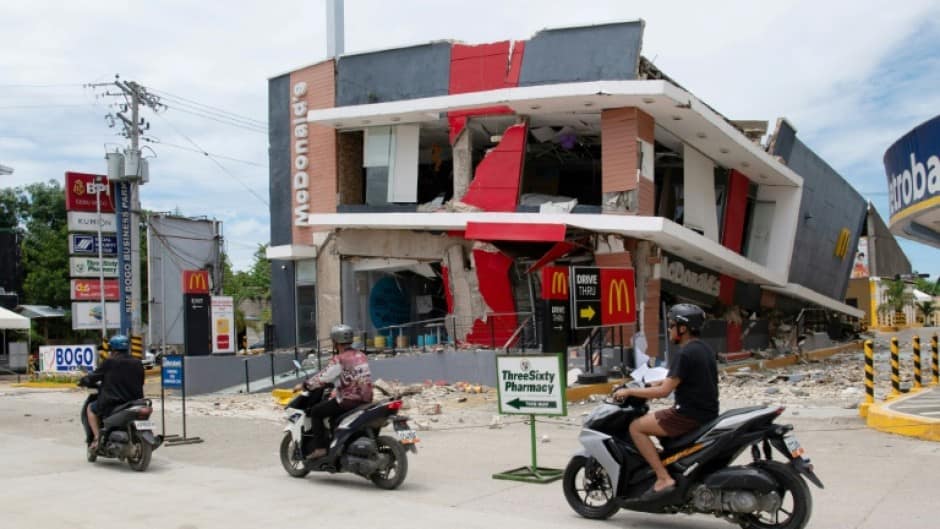
The human cost of the powerful earthquake that struck the central Philippines continued to mount, with officials confirming on Thursday that the death toll has risen to 72. The grim discovery of three more victims pulled from the rubble of a collapsed hotel in Bogo city marks a somber turning point, as the urgent search for survivors officially winds down and the monumental task of aiding the living begins.
With the retrieval of these final victims, the frantic rescue phase has transitioned into a recovery and relief operation. National Disaster Risk Reduction and Management Council spokesman Junie Castillo stated that rescue units in the hardest-hit Cebu province are being demobilized. “We have zero missing, so the assumption is all are accounted for,” Castillo said, bringing a painful but definitive closure to the initial emergency response.
However, the end of the search belies the scale of the crisis that remains. The government reported 294 people injured and approximately 20,000 residents displaced from their homes, many now facing a precarious existence. The quake, which measured a powerful 6.9 in magnitude, wreaked havoc across northern Cebu, destroying nearly 600 houses and damaging countless more. The trauma is compounded by a relentless series of hundreds of aftershocks, which continue to rattle the region.
“One of the challenges is the aftershocks,” explained Castillo. “It means residents are reluctant to return to their homes, even those houses that were not (structurally) compromised.” This fear has forced thousands to sleep in the open or in makeshift shelters, heightening the urgency for organized aid.
In response to the growing humanitarian emergency, Cebu Provincial Governor Pamela Baricuatro made a public appeal for assistance. She detailed critical shortages of safe drinking water, food, clothing, and temporary housing for the displaced population. The provincial government also called for volunteers to help manage the influx of donations, requiring hands to sort and distribute essential supplies efficiently.
The severity of the situation prompted a visit from President Ferdinand Marcos Jr., who flew to Cebu with senior aides to inspect the damage firsthand. His tour included a particularly poignant stop at a partially damaged housing project in Bogo. This development was originally built for survivors of the 2013 Super Typhoon Haiyan, one of the most catastrophic natural disasters in the nation’s history. The site, a symbol of past resilience, has now become a scene of fresh tragedy, with a local government statement confirming that eight bodies were “recovered from collapsed houses” within the project, underscoring the cruel and recurring vulnerability of the region to nature’s fury.
About The Author