The long-running, deeply personal feud between former Acting National Police Commissioner Khomotso Phahlane and forensic investigator Paul O’Sullivan has escalated into a new, digital arena, with a threatening WhatsApp message now taking centre stage in a drama that continues to expose the fractious underbelly of South Africa’s fight against high-level corruption.
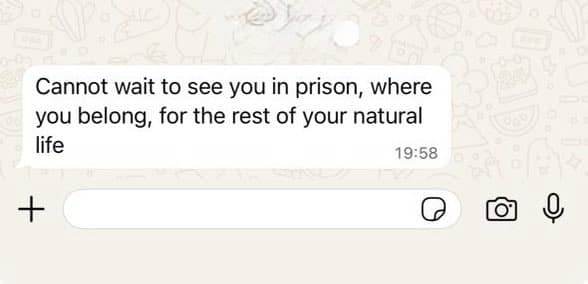
Amidst a press conference dominated by his claims of being targeted by a “rogue unit” within the National Prosecuting Authority (NPA), Phahlane presented what he termed as evidence of a campaign of intimidation. He shared a WhatsApp message, dated November 24, sent directly to him by O’Sullivan. While the full contents were not fully disclosed, Phahlane characterised it as a direct threat, designed to harass and unnerve him.
This digital missive is merely the latest salvo in a conflict that has smouldered for nearly a decade, a battle that has already cost one man his career and which the other frames as a relentless pursuit of justice.
The Genesis of a Grudge: The Blue Light Sirens and Luxury Pistols
The roots of this animosity stretch back to 2016. Then, Phahlane was the powerful Acting National Police Commissioner, having stepped into the role with the backing of the controversial former Police Commissioner, Khomotso Phahlane. O’Sullivan, a tenacious and often controversial private forensic investigator with a history of taking on powerful figures, began digging into Phahlane’s finances.
O’Sullivan’s investigation, conducted in collaboration with the Independent Police Investigative Directorate (IPID), focused on allegations of massive corruption. The central claims involved Phahlane allegedly abusing police resources to fund a lavish lifestyle. Specific allegations included that a police “blue light” convoy was used to escort a custom-built, R3 million Volvo XC90 SUV—a gift for Phahlane’s wife—from the factory in Durban to their home in Pretoria.
Furthermore, the probe zeroed in on the procurement of several high-end, custom-made luxury pistols, valued at hundreds of thousands of rands, which were allegedly purchased for Phahlane using state funds. This led to a raid on Phahlane’s home by IPID and the Hawks in 2017, a very public humiliation that culminated in his suspension and eventual removal from office later that year.
A Familiar Accusation in a New Wrapper
Phahlane’s decision to publicise the WhatsApp message is a strategic echo of a past confrontation. In 2021, during a session of Parliament’s Portfolio Committee on Police, a similar tactic was employed. Then, Phahlane read aloud excerpts from emails and messages he claimed were from O’Sullivan, which included language that MPs from across the political spectrum described as “disgusting,” “threatening,” and “unacceptable.”
By presenting this new message, Phahlane is reinforcing his longstanding narrative: that he is not a subject of legitimate investigation, but the victim of a vindictive and orchestrated persecution. His claims of an NPA “rogue unit” targeting him are an attempt to place this personal feud within the larger, politically charged context of factional battles within South Africa’s law enforcement agencies.
The Unyielding Pursuer and The Cornered Target
For his part, Paul O’Sullivan has never been one to shy away from a fight. He has built a reputation as a dogged antagonist of the powerful, having previously targeted figures like former South African Airways board chair Dudu Myeni and individuals linked to state capture. He frames his pursuit of Phahlane as a classic case of holding a corrupt official to account, undeterred by the immense power of the office his target once held.
The ongoing tension between the two men underscores a critical and troubling dynamic in South Africa’s anti-corruption efforts. It highlights a world where state institutions like the NPA and IPID are often perceived as so compromised or ineffective that private citizens like O’Sullivan feel compelled to step into the void. Yet, it also raises questions about the methods employed in these private crusades and the thin line between tenacious investigation and personal vendetta.
As the two men continue their bitter war of attrition—fought through court papers, media statements, and now, private messaging apps—the core issues of alleged corruption and abuse of power risk being drowned out by the noise of personal acrimony. The WhatsApp message is not just a text; it is a symbol of a conflict that shows no sign of abating, a toxic byproduct of a system struggling to hold itself accountable.
About The Author