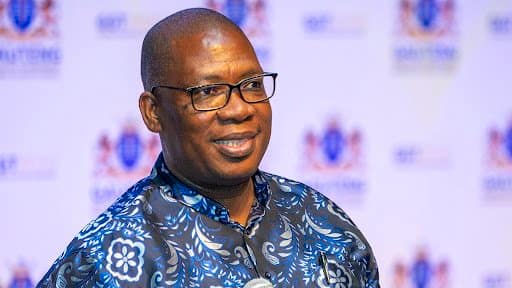
To govern Gauteng is to command the nerve centre of South Africa. It is the province that houses the nation’s executive capital in Pretoria, its judicial heart in Johannesburg, and its financial engine across the bustling metros of Sandton and Midrand. It is a place of starkest contrasts: towering wealth adjacent to profound poverty, world-class infrastructure strained by overwhelming demand, and boundless potential shackled by persistent inequality. At the helm of this complex, pulsating entity stands Premier Panyaza Lesufi, a leader who has cast himself not merely as a manager, but as a transformative, and often fearless, champion of the poor—a guide toward a long-envisioned “Promised Land.”
Lesufi’s ascent to the premiership was less a political transition and more a mobilisation. Known for his tenure as Gauteng’s MEC for Education, where he spearheaded the controversial but decisive replacement of pit latrines and the integration of technology in township schools, he entered the province’s highest office with a reputation as a pragmatic activist. His leadership style is characterised by a potent, sometimes disruptive, blend of populist rhetoric and decisive action, all framed within an unapologetically pro-poor agenda.
The Architecture of a Pro-Poor Agenda
Premier Lesufi’s vision for Gauteng is built on several disruptive pillars, each designed to directly alter the lived reality of the province’s most marginalised citizens:
- The War on Crime and ‘Zama Zamas’: Perhaps his most visually dramatic initiative has been the declared war on illegal mining and associated crime. The rollout of a specialised police unit, the deployment of advanced technology like drones and helicopters, and the forceful clearing of derelict mineshafts have been touted as a direct assault on the economic and physical terror inflicted by syndicates. While questions on sustainability and judicial outcomes remain, the political message is clear: the state, absent for too long, is forcibly reasserting control in lawless spaces.
- Reimagining Social Welfare: The “Nasi iSpani” Model: Moving beyond traditional grant systems, Lesufi’s administration has launched large-scale public employment programs. Initiatives like “Nasi iSpani” (Here is Work) aim to create thousands of short-term jobs in cleaning, maintenance, and community safety. Critics call it a temporary fix, but the Premier frames it as both an immediate economic relief and a mechanism to instil dignity and inject cash into stagnant township economies.
- A Technological Leap for the Marginalised: True to his background, Lesufi is pushing a digital inclusion agenda. Programs to provide free Wi-Fi in townships, equip learners with tablets, and digitise government services are framed as essential tools for liberation in the 21st century. The goal is to prevent Gauteng’s poor from suffering a second, digital-era dispossession.
- Confronting Spatial Apartheid: The administration has aggressively pursued the release of state-owned land for housing and integrated human settlements. The push to develop mega-cities like the “Letsema City” project is presented as a direct attack on the geographical legacy of apartheid, aiming to move the poor closer to economic opportunities.
The Criticisms and the Crucible
This bold, action-oriented style inevitably draws fierce debate. Opposition parties and some economists accuse the Premier of policy showmanship—prioritising visible, high-impact operations over the less glamorous, systemic work of improving education outcomes, fixing municipal financial management, and attracting sustained private investment. His rhetoric, often fiery and confrontational, is labelled as divisive by some, and his interventions are sometimes seen as running ahead of meticulous planning and inter-governmental coordination.
Yet, within the context of Gauteng’s immense pressures—a population swollen by continuous migration, a housing backlog numbering in the millions, and a deep-seated crisis of hope among the youth—Lesufi’s “fearless” posture holds significant political power. He speaks and acts in a manner that acknowledges the urgency of the province’s pain. For many residents of hostels, informal settlements, and crime-ridden neighbourhoods, he projects an image of a leader finally fighting for them.
Guiding the Giant
Steering Gauteng is likened to piloting a supertanker—its course is slow to change, and the forces of inertia are immense. Panyaza Lesufi has chosen the role of a disruptive captain, willing to fire engines and alter headings dramatically. Whether his pro-poor, action-first approach will successfully translate into sustainable economic inclusion and lasting social stability—truly guiding the province toward its “Promised Land”—remains the defining question of his tenure.
What is undeniable is that he has reshaped the political discourse in Gauteng. He has placed the immediacy of poverty, insecurity, and exclusion at the very centre of the provincial agenda, challenging the notion that these issues can be solved through incrementalism. In the economic heart of the nation, Premier Lesufi is betting that fearless, pro-poor leadership is not just morally right, but is the only viable compass for a shared future.
About The Author