A harrowing case of alleged gender-based violence in Mamelodi has ignited a firestorm of public outrage, but in a troubling twist, a significant portion of the fury is being directed not only at the accused but at the woman tasked with ensuring his right to a fair trial.
Tebogo Mnisi, a 38-year-old bouncer, stands accused of the brutal, premeditated murder of two young women. The state alleges that on the evening of October 26, 2025, following an argument at a tavern in Mamelodi East, Pretoria, Mnisi pursued his 22-year-old girlfriend, Tshiamo Moramaga, and her 21-year-old cousin, Baleseng Moramaga, to their home. There, he is accused of opening fire, fatally shooting both cousins. A third individual, who was present at the scene, survived the attack and is a key witness for the prosecution.
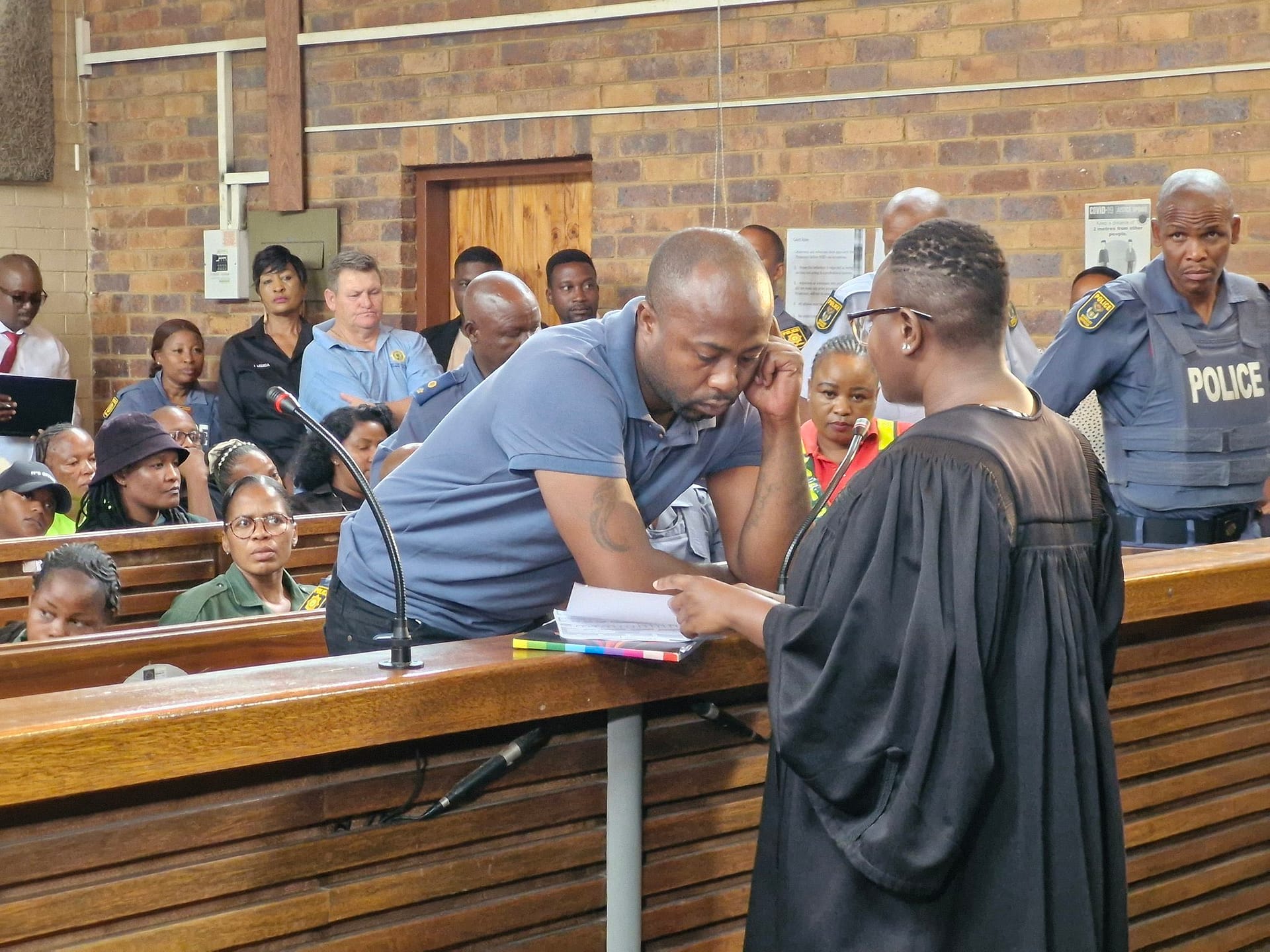
The case, which has sent shockwaves through the community, took a procedural turn on October 29 when Mnisi appeared in the Pretoria Magistrate’s Court. Facing a formidable public gallery filled with mourning family members and community activists, Mnisi, through his state-appointed Legal Aid South Africa attorney, abandoned his application for bail. The case was subsequently postponed to January 2026 for further investigation.
However, the legal proceedings have been overshadowed by a vicious social media campaign targeting Mnisi’s legal representative—a female attorney whose identity has been circulated online alongside venomous criticism. Comments on platforms like X and Facebook have labeled her a “traitor to women,” accused her of “defending a monster,” and questioned her morals for representing a man accused of such a heinous act against women.
This backlash highlights the intense emotional friction between the foundational principles of the justice system and the raw, justified anger surrounding South Africa’s pervasive gender-based violence (GBV) crisis. The case of Tshiamo and Baleseng Moramaga is seen not as an isolated incident, but as a tragic emblem of a national scourge.
The Legal Profession’s Unwavering Defense
In the face of the online vitriol, members of the legal fraternity have rushed to defend the attorney and explain the critical role she plays. “The right to legal representation and the presumption of innocence are not privileges for the likeable; they are constitutional cornerstones for everyone, regardless of the crime they are accused of,” stated a spokesperson for Legal Aid South Africa. “Our attorneys do not endorse the actions of their clients. Their professional duty is to ensure the legal process is fair, the state proves its case, and the rights of the accused are upheld. A failure in this duty undermines the entire justice system.”
This sentiment was echoed by legal experts and law societies, who emphasized that without diligent defense attorneys, the state could wield unchecked power, leading to potential miscarriages of justice that would ultimately weaken the rule of law for all citizens.
A Nation’s Raw Nerve
The public’s reaction, while legally misdirected, stems from a place of profound pain. South Africa is grappling with devastatingly high rates of GBV, and for many, the sight of a woman standing in court to defend a man accused of killing two young women feels like a profound betrayal. “How can she, as a woman, look at those grieving families and then use her skills to help their alleged tormentor?” one social media user questioned, a sentiment that has been widely echoed.
Gender rights activists find themselves in a complex position, condemning the violence while defending the legal process. “Our anger is justified, but it must be focused on the right targets: the alleged perpetrator, a justice system that often fails victims, and a society that allows such violence to fester,” said a prominent activist. “Attacking a lawyer for doing her job is counterproductive. It distracts from the real issue and sets a dangerous precedent where legal representation is dictated by public sentiment.”
As the case prepares for its next hearing in January, the controversy surrounding the defense attorney has become a painful, parallel narrative. It underscores a nation struggling to reconcile its thirst for immediate justice for GBV victims with the disciplined, often uncomfortable, requirements of a constitutional democracy. The journey to justice for Tshiamo and Baleseng Moramaga will be long, and it will unfold within a courtroom where even the most reviled individual is entitled to a defense—a principle now being tested in the court of public opinion.
About The Author