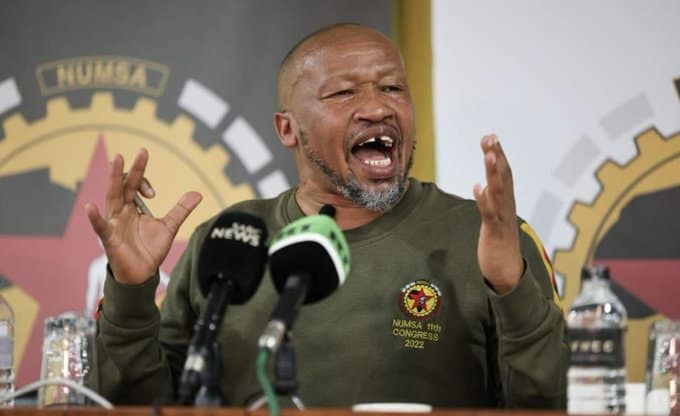
The National Union of Metalworkers of South Africa (NUMSA), the country’s largest and most influential trade union, has been plunged into crisis following the sudden and dramatic resignation of its high-profile National Spokesperson, Phakamile Hlubi-Majola. The resignation, confirmed in a tense press briefing at the union’s headquarters, comes in direct response to a sustained campaign of chilling death threats that have left Hlubi-Majola and her family in genuine fear for their lives.
The development exposes not just the perilous environment in which labour activists sometimes operate but also points to deepening internal and external pressures facing the militant union as it navigates a fraught political landscape and complex negotiations in key economic sectors.
A Voice Silenced: The Threats and Resignation
Hlubi-Majola, known for her articulate, forceful, and uncompromising commentary, had been the public voice of NUMSA for several years. According to sources close to the union’s leadership, the threats began several months ago, escalating from vaguely worded warnings to graphic, specific messages detailing violent consequences for her continued work. The threats, delivered via multiple anonymous channels, reportedly referenced her high-profile campaigns, including NUMSA’s fierce criticism of state-owned enterprises, its opposition to certain government policies, and its recent, contentious battles within the collective bargaining arena.
“I can confirm that Comrade Phakamile has tendered her resignation for reasons related to her personal safety and that of her family,” stated NUMSA General Secretary Irvin Jim, his usual combative demeanour subdued by clear anger and concern. “She has been subjected to a cowardly campaign of intimidation designed to silence a powerful voice for workers. We are treating this with the utmost seriousness.”
Jim confirmed that the threats had been reported to the South African Police Service (SAPS), but expressed frustration with the pace of the investigation. “We have opened cases, provided evidence, and yet the perpetrators remain in the shadows. This is not just an attack on an individual; it is an attack on the very right of a trade union to speak truth to power.”
NUMSA’s Response: Defiance and Internal Scrutiny
In its official response, the union struck a tone of defiant resilience mixed with palpable anxiety. The National Executive Committee (NEC) released a statement vowing that Hlubi-Majola’s departure “will not mute the voice of NUMSA” and pledged to “uncover and confront the forces behind these threats, whether they originate from outside antagonists or from within any quarter.”
This last phrase—”from within any quarter”—has sparked intense speculation. NUMSA is no stranger to internal factionalism. As a key driver of the socialist-oriented “workerist” bloc opposed to the ANC and the SACP, and as a founding force behind the nascent Socialist Revolutionary Workers Party (SRWP), the union operates in a highly charged political atmosphere. Its critiques are aimed not only at employers and the state but also at rival unions and former political allies. This has created a long list of entities with potential motive to intimidate its most visible communicator.
“The nature of the threats suggests a deep knowledge of her movements and role,” a senior union insider, speaking on condition of anonymity, revealed. “It’s shaken everyone. The question on every shop steward’s mind is: if they can come for the spokesperson with this level of menace, who is next? The GS [Irvin Jim]? Other leaders?”
Broader Implications: A Chilling Effect on Labour Activism
The incident has sent shockwaves through South Africa’s civil society and labour movement. The Congress of South African Trade Unions (COSATU), from which NUMSA was expelled in 2014, issued a statement condemning the intimidation. “An attack on one voice of labour is an attack on all,” a COSATU spokesperson said. “We stand in solidarity with Comrade Phakamile and call for a swift and transparent investigation.”
Security analysts note that while violence and intimidation have historically been used against union organisers, particularly in mining and rural sectors, the targeted harassment of a senior, urban-based spokesperson in Gauteng represents an alarming escalation. It points to a potential strategy of targeting high-profile media-facing figures to cripple a union’s ability to shape public narrative and mobilise support.
The Path Forward: A Union at a Crossroads
For NUMSA, the immediate tasks are threefold: first, to ensure the safety of Hlubi-Majola and other staff; second, to pressure law enforcement for a credible investigation; and third, to manage the significant communications gap left by her departure.
In the longer term, the crisis forces the union to confront its own security vulnerabilities and the intense hostility its political trajectory generates. As it prepares for major wage negotiations in the metal and engineering sectors and continues its project of building a radical left political alternative, the union must now operate under a shadow of fear.
Phakamile Hlubi-Majola’s resignation is more than a personnel change. It is a stark, frightening indicator of the high-stakes, high-risk environment in which South Africa’s battles over economic justice and political power are increasingly being waged. Her silenced microphone leaves a void, not just at NUMSA’s press conferences, but in the nation’s discourse—a chilling reminder of the price some pay for speaking out. The union’s next moves, and the police’s response, will be closely watched as a test of whether such intimidation can, and will, be allowed to succeed.
About The Author