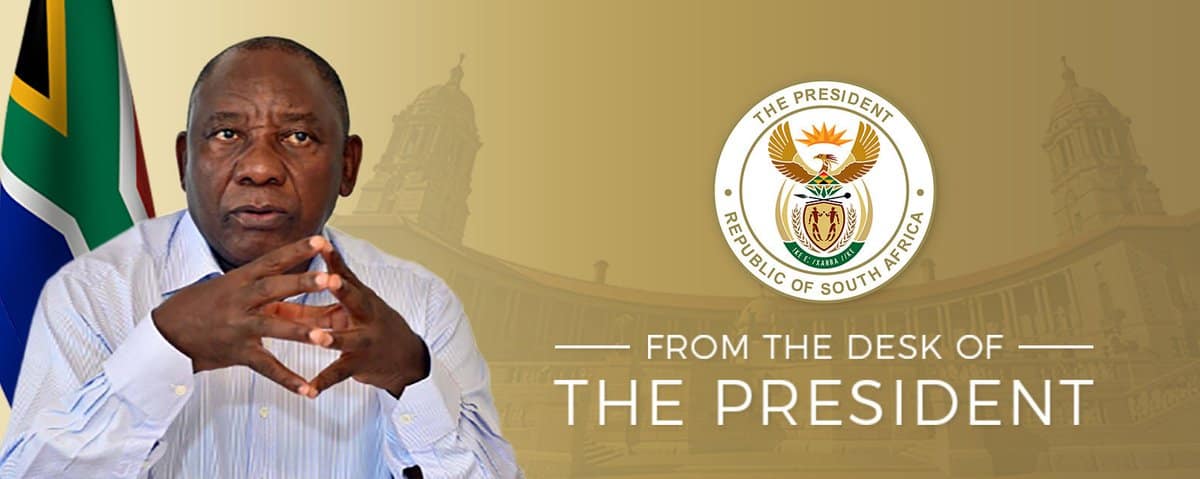
President Cyril Ramaphosa has adopted a stance of strategic silence regarding the explosive claim by suspended Police Minister Senzo Mchunu that he approved the controversial disbandment of the Political Killings Task Team (PKTT), stating he will only address the allegations upon the conclusion of the Madlanga Commission of Inquiry.
Speaking to reporters on Monday during a visit to anti-apartheid stalwart Tlou Theophilus Cholo in Pretoria, the President firmly declined to offer a “running commentary” on the active judicial proceedings. “I appointed the Madlanga Commission to investigate allegations made against Minister Senzo Mchunu. A lot has been said, and a lot more will be said,” Ramaphosa stated. “I will await the conclusion of the proceedings and the submission of the commission’s report before making any comments.”
The President’s refusal to be drawn into the public fray comes amid a deepening political and institutional crisis over the December 2024 dissolution of the PKTT—a specialized unit critical to investigating politically motivated assassinations in KwaZulu-Natal. The issue has pitted the word of his suspended minister against the testimony of the country’s top police official, creating a credibility chasm at the heart of the state’s security apparatus.
The conflicting narratives were laid bare in recent testimonies. Last week, Mchunu told a parliamentary ad hoc committee under oath that he had “briefed the president, and he agreed with the briefing I gave him” before issuing the directive.
However, National Police Commissioner General Fannie Masemola provided a starkly different account before the Madlanga Commission. He testified that while Ramaphosa was aware of Mchunu’s directive, the President had previously expressed strong support for the task team’s work and was visibly “taken aback” by its sudden dissolution. “Mchunu told me the president had agreed, but I was surprised because the president had earlier praised the team’s dedication and performance,” Masemola stated.
Caught between these two contradictory testimonies from his senior officials, Ramaphosa is positioning himself above the fray, emphasizing “respect for due process and the work of Justice Madlanga.” His silence, while legally prudent, leaves a critical question hanging over the presidency: who is telling the truth about the dismantling of a unit tasked with stopping South Africa’s most sensitive murders? The nation must now wait for the Madlanga Commission’s report, expected later this year or early next, for a definitive answer.
About The Author