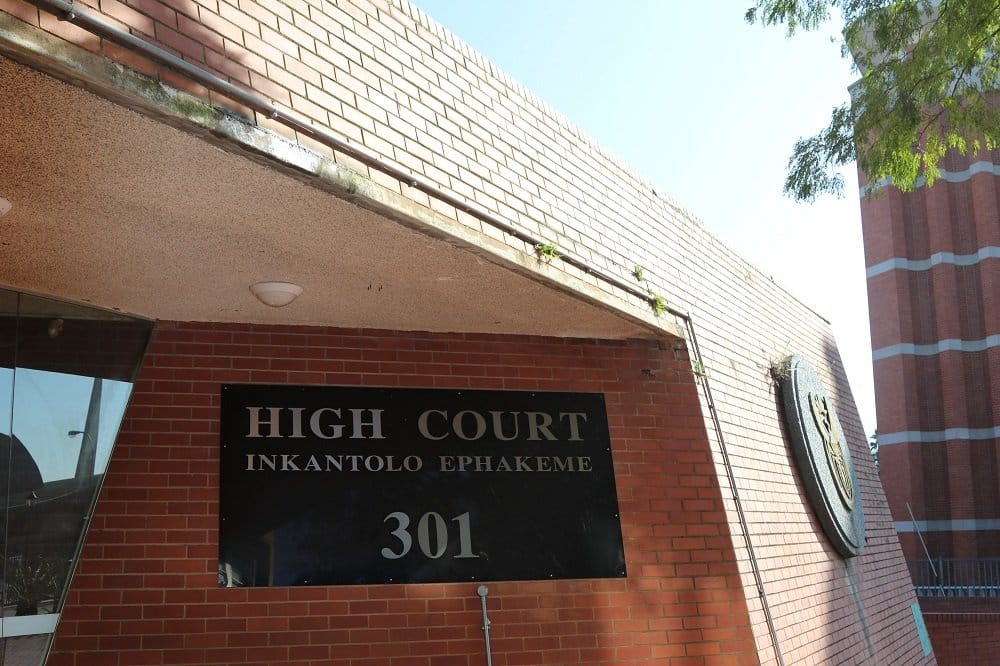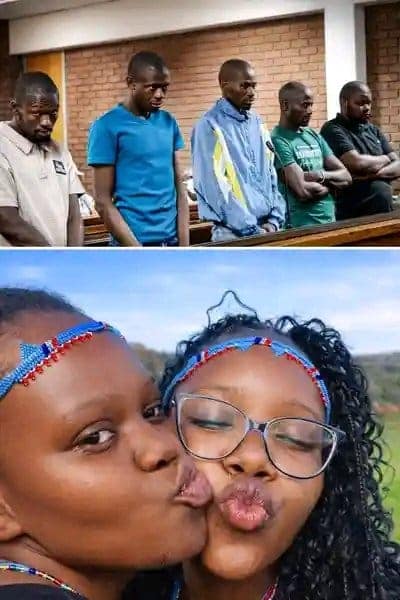
The winter light filtered through the high windows of the Virginia Magistrates’ Court, casting long shadows across the polished wooden benches where the accused sat in a neat row. Five men, all citizens of the Kingdom of Lesotho, all dressed in the identical navy tracksuits issued to awaiting-trial detainees, all wearing expressions carefully calibrated between defiance and deference. They did not look at the public gallery, where the survivors of the family they are accused of exterminating sat in silent vigil.
The magistrate, a woman of measured demeanor and deliberate speech, had taken less than twenty minutes to reach her decision. The State’s case, she ruled, was compelling. The witnesses were credible. The accused, if released on bail, posed an unacceptable flight risk. Their connections to South Africa were tenuous, their resources were unknown, and the severity of the charges against them—four counts of premeditated murder, one count of attempted murder, conspiracy to commit murder, and multiple violations of the Prevention of Organised Crime Act—weighed heavily against any presumption of liberty.
“Bail is refused,” she said. “The accused shall remain in custody pending the finalization of their trial.”
In the public gallery, a woman who had lost her husband, her mother-in-law, her sister-in-law, and her brother-in-law in a single night of violence pressed her hands together in her lap and allowed herself, for the first time in six months, to exhale. The men who had forced her family to kneel and pray before executing them would not walk free while awaiting justice. Not today. Not yet.
The Night of the Execution
The Moloi family had gathered on the evening of August 17, 2025, at their home in Meloding, a residential area on the eastern edge of Virginia in the Free State goldfields. It was a Sunday, and the family had attended morning services at the Zion Christian Church congregation in nearby Odendaalsrus. They had shared a meal in the afternoon—pap and moroho and grilled chicken—and had settled into the comfortable rhythms of an evening without obligation.
Mpho Moloi, 52, was a shift supervisor at the Harmony Gold mine, a position he had held for nineteen years. His mother, ‘M’e ‘Malineo Moloi, 78, was visiting from her home in Ladybrand, where she lived independently and maintained the vegetable garden that had sustained her family through the lean years of the 1980s and 1990s. His sister, Nthabeleng, 44, was a nurse at the Bongani Regional Hospital in Welkom. His brother, Teboho, 48, was a long-distance truck driver who had returned from a cross-border run to the Democratic Republic of Congo three days earlier.
They were, by every account, an ordinary South African family: employed, religious, aspirational. They had worked hard to achieve the modest prosperity they enjoyed. They had sent their children to decent schools. They had paid their bond and their municipal rates and their car installments. They had, through decades of disciplined saving and strategic investment, accumulated assets worth approximately R2.8 million: the family home in Meloding, a small rental property in Virginia’s town center, two vehicles, and a life insurance policy on Mpho with an accidental death benefit of R1.5 million.
It was that policy, the State would allege, that marked them for destruction.
The Men at the Door
The survivors’ accounts, painstakingly extracted through multiple interviews with forensic social workers and statement takers, describe the arrival of the intruders as both sudden and eerily methodical. There was no forced entry; the men appeared to have been admitted by someone inside the house, though the family has been unable to determine who opened the door or why.
There were five of them, all Basotho men speaking a mixture of Sesotho and English. They were not masked. They made no attempt to conceal their faces or their identities. They moved through the house with the confidence of people who knew its layout, who knew its occupants, who knew precisely what they had come to do.
“They did not shout,” testified ‘M’e ‘Malineo Moloi’s sister, who was present during the witness statement but not at the scene. “My sister told me they spoke quietly, almost politely. They told everyone to sit down. They told them not to be afraid. They said if everyone cooperated, no one would be hurt.”
The family cooperated. They sat on the sofas in the lounge, arranged in a rough semicircle facing the television, which was still broadcasting the evening news. They did not resist when the intruders bound their hands with plastic cable ties. They did not scream when the intruders produced firearms from beneath their jackets.
And then, according to the sole survivor—a 23-year-old nephew who had been visiting from his university residence in Bloemfontein and who survived because a single bullet passed through his neck without striking any major blood vessels—the intruders issued an instruction that has come to define the horror of this case.
“They told us to pray,” the survivor testified, his voice barely audible, his gaze fixed on a point somewhere beyond the courtroom walls. “They said we should ask God to receive our souls. They said we had five minutes.”
The Faith of the Condemned
What does a family pray for when they are kneeling on their own lounge carpet, hands bound behind their backs, facing men with guns who have already decided to kill them? Do they pray for deliverance, even as the weapons are raised to the backs of their heads? Do they pray for the strength to face death with dignity? Do they pray for the souls of their executioners?
We cannot know. The four who knelt and prayed and were shot in the back of their heads took the words of their final supplications with them into the silence that followed the gunfire.
But we can infer something from what we know of who they were. Mpho Moloi, the mine supervisor, was a lay preacher at his church, a man who had led countless prayer meetings and Bible study sessions and Sunday school classes. ‘M’e ‘Malineo Moloi, the elderly mother, had raised her children on the teachings of the Zion Christian Church, had instilled in them the conviction that faith was not merely consolation but transformation. Nthabeleng, the nurse, had prayed with dying patients in the hospital wards where she worked, had held their hands and spoken words of comfort as they slipped away. Teboho, the truck driver, carried a tattered Gideon Bible in his cab, its pages marked and underlined from countless solitary hours on the long roads of Africa.
“They would have prayed,” said the family’s pastor, who has ministered to the survivors through six months of grief and investigation. “It is who they were. It is what they believed. Even in the face of death—especially in the face of death—they would have turned to God. The men who killed them understood this. They used their faith against them. They made their peace with their Creator the last act they performed on this earth, and then they destroyed them.”
The Survivor’s Account
The young man who survived—his identity is protected under the witness protection program, and he is referred to in court documents only as “State Witness 1″—was not intended to live. The bullet that entered the back of his neck was fired from a 9mm Parabellum at a distance of approximately thirty centimeters. It passed through the sternocleidomastoid muscle, missing his carotid artery by less than four millimeters, and exited through the anterior triangle of the neck. He fell forward onto the carpet, bleeding profusely but conscious, and lay motionless among the bodies of his relatives as the intruders conducted a final, unhurried search of the premises.
About The Author