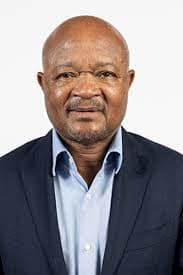
In a firm attempt to quell rising political whispers, the camp of suspended Police Minister Senzo Mchunu has categorically denied that his decision to take special leave from African National Congress (ANC) duties is a strategic gambit to position himself for a run at the party’s presidency in 2027. The denial comes as Mchunu, a key figure in the party’s National Executive Committee (NEC) and National Working Committee (NWC), finds himself at the centre of a perfect storm of legal challenges and political intrigue.
Mchunu’s newly appointed spokesperson, Sthembiso Mshengu, moved to reframe the narrative, insisting that the minister’s sole focus is on the grave allegations against him, not on future political contests. He is preparing to appear before the Madlanga Commission of Inquiry, which is investigating claims that Mchunu interfered with the South African Police Service (SAPS), including allegations he instructed the disbandment of the specialized Political Killings Task Team (PTTT) in KwaZulu-Natal.
“Mr. Mchunu has not stepped aside but has just been placed on special leave by the president and recently by the ANC,” Mshengu stated, carefully distinguishing the status of ‘special leave’ from the more punitive ‘step-aside’ rule. “His focus is entirely on the commission. He has not engaged in any political manoeuvring regarding the upcoming elective conference.”
The forceful denial was necessitated by intense speculation within ANC circles that Mchunu’s leave was a calculated move. The theory posited that by temporarily retreating from the party’s front lines, he could simultaneously dedicate himself to a robust legal defence while discreetly marshalling support for a 2027 presidential bid, free from the daily scrutiny of his ministerial and party roles.
Mshengu dismissed this as baseless conjecture. “Until the leadership officially opens the succession battle, any rumours about bids are unfounded,” he asserted, appealing for party discipline and due process. This sentiment was indirectly supported by ANC Secretary-General Fikile Mbalula, who confirmed the NWC’s approval of the special leave. Mbalula clarified that Mchunu was not compelled to invoke the party’s integrity guidelines, as he has not been formally indicted on any charges.
“In light of the commission’s work and what it requires of him, it was practically impossible not to agree to his request,” Mbalula explained. “This ensures he carries no undue burden, nor does the ANC, as we navigate these matters.”
The statement from Mchunu’s camp reveals a delicate balancing act. While acknowledging that some supporters may be campaigning on his behalf unofficially, Mshengu stressed that Mchunu himself has not met with any branches or regions to discuss succession. “The leadership of the national office must be respected,” he said, a nod to the sensitive and often volatile nature of ANC succession politics.
For now, the message is one of singular focus. Mchunu’s political future, once seen as bright and ascending, is now entirely contingent on his performance before the Madlanga Commission. As his spokesperson concluded, “For now, he is fully focused on the Madlanga Commission, where the country eagerly awaits his testimony.” The witness stand, not the campaign trail, is the stage that will determine whether Senzo Mchunu has a political future to campaign for at all.
About The Author