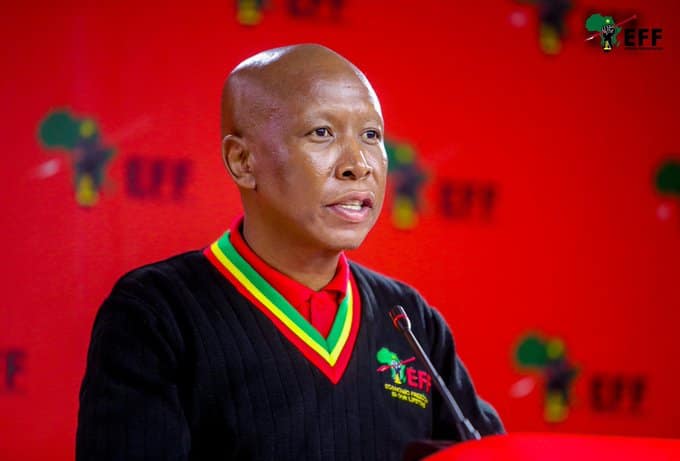
In a characteristically combative session of Parliament’s Ad Hoc Committee investigating alleged state capture and judicial interference, Economic Freedom Fighters (EFF) Commander-in-Chief Julius Malema launched a scathing rebuke against what he termed “cowardly” and “politically convenient” insinuations of corruption within South Africa’s judiciary, demanding that accusers either present concrete evidence or forever hold their peace.
The fiery intervention came during heated deliberations on Wednesday, as committee members grappled with explosive yet broadly worded testimony and submissions alleging that certain judges and court officials had been compromised. Without directing his challenge at any specific witness or political rival, Malema condemned the culture of making grave, nameless allegations that tar the entire judicial system while allowing the actual accused to remain shrouded in protective anonymity.
“We are sitting in a committee tasked with uncovering the truth, not facilitating a smear campaign,” Malema declared, his voice cutting through the committee room. “If you have evidence that a judge took a bribe, if you have proof that a magistrate is on a politician’s payroll, if you have names, dates, and bank statements—then you have a duty to present them here, before this committee, and before the nation. If you do not, then your vague whispers are not testimony; they are political posture. It is the work of cowards who wish to destroy the credibility of the courts without the courage to face their targets.”
Malema’s challenge strikes at the heart of a sensitive and ongoing national debate. In recent years, allegations of “state capture” have extended beyond the executive and parastatals to include concerns about the manipulation of the legal system. However, much of the public discussion has relied on innuendo and unnamed “highly placed sources,” creating a cloud of suspicion over the judiciary without yielding actionable evidence for judicial conduct bodies or law enforcement to investigate.
“What Comrade Malema is correctly highlighting is a dangerous tactic,” explained political analyst Lebohang Mokoena. “By creating a narrative of a universally corrupt judiciary without specifics, you achieve two things: you delegitimize unfavorable court outcomes for political ends, and you protect the actual bad actors by hiding them in a generalized accusation. It undermines the very institution meant to be the last line of defense for accountability.”
The EFF leader insisted that the committee’s work must be evidence-based and fearless. “We cannot become a platform for character assassination by omission,” he continued. “If you are serious about cleansing the judiciary, name the names. Point us to the docket numbers, the case files, the intermediaries. We will follow the evidence wherever it leads, even if it leads to the door of a judge. But we will not be led by the nose by those who trade in shadows and rumors to serve their own ends.”
Legal experts have noted that while the principle of naming accused individuals is fraught with risks to reputations, Malema’s point about the necessity of specifics for a credible inquiry is legally sound. Vague allegations cannot be tested, investigated, or disproven.
The challenge now hangs over the committee’s proceedings. It places pressure not only on those who have made general claims but also on the committee itself to demand greater specificity in future testimony. Malema’s ultimatum—“Name names or stay silent”—has effectively raised the stakes, framing the inquiry as a definitive test between a genuine pursuit of justice and a politically weaponized exercise in sowing distrust. The coming sessions will reveal which path the committee, and the nation, will follow.
About The Author