The smell hits you first. It is not just an odor; it is a physical presence, a thick, suffocating blanket of rot and human waste that clings to the back of the throat and invades every home, every car, every corner of the town. This is Welkom, February 2026, and the multibillion-rand wastewater treatment plant that was supposed to serve this community has fallen silent.
The plant, a massive infrastructure project touted as a solution to the town’s chronic sewage problems when it was built, has been taken completely offline. The reasons are a depressingly familiar litany in South Africa’s municipal crisis: crumbling infrastructure, neglected maintenance, and a staggering, unpayable electricity bill that finally prompted Eskom to pull the plug. Now, raw, untreated sewage flows freely where children play, where commuters walk, and where families live.
For the residents of this small mining town in the heart of the Free State goldfields, the shutdown is not a political inconvenience or a bureaucratic headache. It is a daily, hourly assault on their health, their dignity, and their sanity. The streets of some neighborhoods have become open sewers. The air is poisonous. And the authorities, trapped in a cycle of blame and financial ruin, seem powerless to stop it.
The Plant That Failed
The wastewater treatment plant on the outskirts of Welkom was supposed to be a turning point. Costing billions of rand, it was designed to modernize the region’s sanitation infrastructure, treating sewage from Welkom and surrounding areas in the Matjhabeng Local Municipality. It was meant to handle millions of liters of effluent daily, discharging clean water back into the environment and protecting the community from disease.
But from the start, the plant was plagued by problems. Poor design choices, substandard construction materials, and a lack of skilled operators meant it never operated at full capacity. As the years passed, maintenance was deferred. Pumps failed and were not replaced. Pipes corroded and leaked. The plant, a symbol of hope, became a monument to municipal mismanagement.
The final blow came from Eskom. The municipality, already drowning in debt, had failed to pay its electricity bills for months, perhaps years. The plant, a massive consumer of power, was a significant part of that debt. Eskom, under pressure to recover its own costs, eventually did what it had threatened to do for years: it cut the supply. Without electricity, the pumps stopped. The treatment process halted. And the sewage, with nowhere else to go, began to back up and overflow.
Life in the Sewage
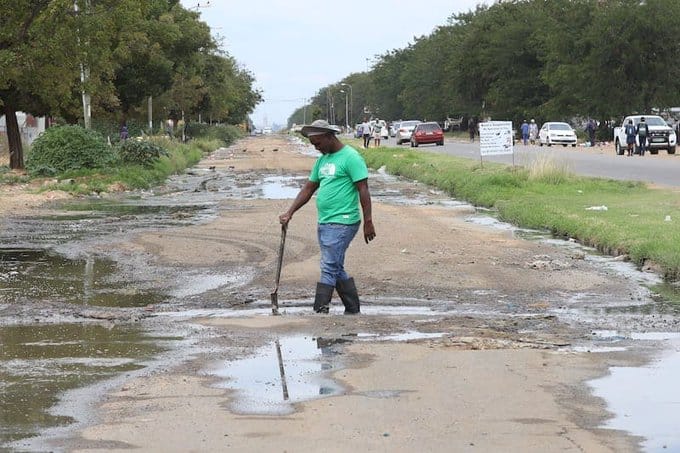
In the residential areas closest to the plant and along the main outflow channels, life has become a battle against filth. Raw sewage bubbles up from manholes, floods across roads, and pools in vacant lots. The stench is so overpowering that residents keep their windows permanently closed, even in the sweltering heat, but the smell seeps through every crack.
Parents escort their children to school through rivers of waste, carrying them on their backs or making them wear plastic bags over their shoes. Commuters heading to the taxi rank hold their breath and pick their way through the mess. Elderly residents, trapped in their homes by the surrounding sewage, rely on neighbors to bring them food and water.
The health risks are catastrophic. Cholera, typhoid, and severe gastroenteritis are constant threats. Children, drawn to water despite the danger, are particularly vulnerable. Local clinics have reported a spike in diarrheal diseases, though many residents cannot afford the trip or the consultation fee. They treat the symptoms with home remedies and hope for the best.
“The smell is the least of our problems,” said a mother of three, standing on her porch as a brown, foul-smelling stream trickled past her gate. “We are scared for our children. They can’t play outside. They can’t breathe the air. We are living in a toilet. This is not a life. This is a punishment.”
The Municipality’s Impossible Position
The Matjhabeng Local Municipality, which oversees Welkom and the surrounding area, is in a state of near-total collapse. It is one of the worst-performing municipalities in a province famous for municipal failure. It owes Eskom hundreds of millions of rand. It owes the water utility. It owes its own employees. It has no money to fix the plant, and even if it did, the scale of the repairs required is so vast that it would take years and billions more to complete.
Municipal officials, when they can be reached, offer statements of sympathy but few solutions. They blame Eskom for cutting the power. They blame the previous administration for the poor construction. They blame the national government for not providing bailouts. They blame everyone except themselves. And while they talk, the sewage continues to flow.
“We are aware of the situation,” a municipal spokesperson said in a carefully worded statement. “We are engaging with Eskom and other stakeholders to find a resolution. We appeal to residents for their patience and understanding as we work to address this complex challenge.” The statement was met with derision by residents, who have heard such appeals for years.
Eskom’s Dilemma
Eskom, for its part, is unrepentant. The power utility, itself struggling under a mountain of debt and operational challenges, argues that it cannot be expected to provide free electricity to municipalities that refuse to pay. The Matjhabeng debt is just one of many across the country, and Eskom has taken a hard line: pay up, or we switch off.
“We understand the hardship this causes,” an Eskom representative said. “But we have a responsibility to our other customers and to the sustainability of the grid. We cannot continue to supply power to entities that have no intention of paying for it. The municipality must find a way to settle its debt and make arrangements for future payments.”
The logic is sound, but the human cost is devastating. Eskom is legally within its rights to disconnect non-paying customers, even if that customer is a municipality and even if that disconnection leads to an environmental and public health catastrophe. The law, in this case, offers little comfort to the people wading through sewage.
A History of Failure
The current crisis is not a sudden event but the culmination of decades of decline. The Matjhabeng area, once the thriving heart of South Africa’s gold mining industry, has been in economic freefall since the mines began to close. Jobs disappeared. Businesses shuttered. The tax base collapsed. The municipality, starved of revenue, began to cut services and defer maintenance.
The wastewater plant was a victim of this decline long before Eskom pulled the plug. It was underfunded, understaffed, and undermaintained for years. Its failure was inevitable. The electricity disconnection was simply the final, fatal blow.
Calls for Intervention
As the crisis deepens, calls are growing for provincial and national intervention. The Free State provincial government, itself struggling with multiple municipal collapses, has promised to send technical teams to assess the situation. But residents are skeptical. They have seen technical teams come and go before, leaving nothing but reports and promises.
Environmental activists have threatened legal action, arguing that the unchecked flow of raw sewage violates residents’ constitutional right to a clean and healthy environment. They are exploring the possibility of a court order compelling the municipality and Eskom to find a temporary solution, such as providing mobile pumps or emergency generators, while a long-term fix is developed.
But the courts move slowly, and the sewage flows fast.
A Town Under Siege
For now, Welkom remains under siege. The smell hangs over the town like a curse. The sewage creeps ever forward. And the people, the ordinary residents who pay their rates and taxes and just want to live in dignity, are left to cope as best they can.
“We are not asking for a palace,” said an elderly man, leaning on a stick and staring at the foul water outside his home. “We are just asking for a basic thing. A thing that every person should have. A toilet that works. Water that is clean. Air that does not make us sick. Is that too much to ask? Is that too much for a multibillion-rand plant?”
In Welkom, it seems, it is. And until the politicians, the bureaucrats, and the utility bosses find a way to work together, the sewage will continue to flow, and the people will continue to suffer.
About The Author