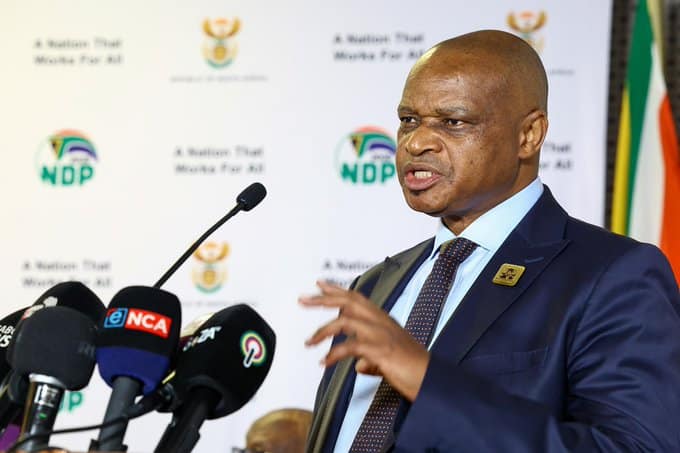
Pretoria – In one of his most significant policy statements since assuming the country’s top prosecutorial role, newly appointed National Director of Public Prosecutions (NDPP), Advocate Andy Mothibi, has issued a powerful call for urgent legislative reforms to strengthen the protection of whistleblowers in South Africa.
Speaking at a justice sector indaba in Pretoria, Mothibi argued that robust, enforceable safeguards are not a luxury but an absolute necessity for a functioning democracy. He emphasized that without a guarantee of safety, individuals with inside knowledge of corruption and serious crime will remain silent, allowing the rot at the heart of the state and private sector to continue unchecked.
“If we are serious about turning the tide against crime and corruption, we must create an environment where those who witness wrongdoing feel empowered to speak, not silenced by fear,” Advocate Mothibi stated. “The current legal framework has proven inadequate. We need urgent, decisive legislative reform to ensure that whistleblowers are protected, not persecuted; believed, not betrayed.”
The Current Landscape: A Climate of Fear
Mothibi’s address comes against a grim backdrop of high-profile failures in the existing protection system. South Africa has a Whistleblower Protection Act, but it has been widely criticized as weak, poorly enforced, and failing to prevent the devastating consequences faced by those who come forward.
The names of assassinated whistleblowers cast a long shadow over the proceedings. Cases like those of Babita Deokaran, the Gauteng health department finance officer shot dead outside her Johannesburg home in 2021 just days after she agreed to testify before a state capture inquiry, serve as a chilling reminder of the risks. Similarly, the killing of Mossblown supervisor Ronnie McGregor in 2017 highlighted the vulnerability of those who expose malfeasance.
Mothibi acknowledged this grim reality. “We have seen the ultimate price paid by those who chose to do the right thing,” he said. “A society that allows its whistleblowers to be silenced by bullets is a society that has failed in its most fundamental duty. We owe it to them and to their families to build a system that works.”
The Proposed Reforms: Beyond Lip Service
While Mothibi did not table a specific bill, he outlined key areas where he believes legislative reform is most urgently needed. His vision includes moving beyond the current, reactive system to a proactive and protective one.
Key proposals mooted by the NDPP include:
- Creating an Independent Whistleblower Protection Authority: A dedicated, state-funded body with the sole mandate of protecting whistleblowers. This body would provide immediate legal and physical support, investigate threats, and enforce protection orders, removing the burden from the often-ineffective general police apparatus.
- Shifting the Burden of Proof: In cases where a whistleblower suffers retaliation, Mothibi suggested the law should presume the retaliation was linked to their disclosure, forcing the employer or perpetrator to prove otherwise. This reverses the current dynamic where whistleblowers must fight to prove their suffering was work-related.
- Strengthening Criminal Penalties: Introducing harsher, mandatory minimum sentences for those found guilty of intimidating, harassing, or causing harm to whistleblowers. This would serve as a stronger deterrent.
- Providing for Financial and Psychosocial Support: Ensuring that whistleblowers who lose their livelihoods or suffer trauma have access to state-funded financial assistance and counseling, recognizing that protection goes beyond physical safety.
A New Era for the NPA?
Mothibi’s forceful stance on whistleblowers is being interpreted by legal analysts as a signal of his intent to lead a more aggressive and enabling National Prosecuting Authority (NPA). For years, the NPA has struggled to secure convictions in complex corruption cases, often hampered by a lack of cooperating witnesses willing to testify.
By pushing for a safer environment for insiders, Mothibi is effectively trying to open a new front in the war on graft. Protected whistleblowers could provide the kind of inside evidence and testimony that builds watertight cases against powerful individuals and criminal syndicates.
“This is not just about being nice to people who do the right thing,” explained a legal expert following the address. “It’s about the NPA’s core business. Mothibi is saying, ‘Give me the tools, and I will use them to build cases.’ He sees witness protection not as a social service, but as a strategic investigative and prosecutorial asset.”
The Road Ahead: Political Will
The call for reform now shifts to the legislature. While Mothibi’s advocacy carries significant weight, the actual drafting and passing of new laws falls to Parliament. Previous efforts to strengthen whistleblower laws have stalled, bogged down by bureaucratic inertia and, some argue, a lack of political will from those who may be inconvenienced by a more transparent system.
Civil society organizations, including Corruption Watch and the Council for the Advancement of the South African Constitution (CASAC), have welcomed Mothibi’s statement. They have long campaigned for exactly the kinds of reforms he outlined and are now calling on parliamentary committees to prioritize the issue.
As Advocate Mothibi settles into his role as NDPP, his message from Pretoria is clear: he is ready to prosecute. But to do so effectively against the most powerful criminals, he needs the men and women on the inside to have the courage to come forward—and that courage, he insists, must be underwritten by the full force of a reformed and resolute law.
About The Author