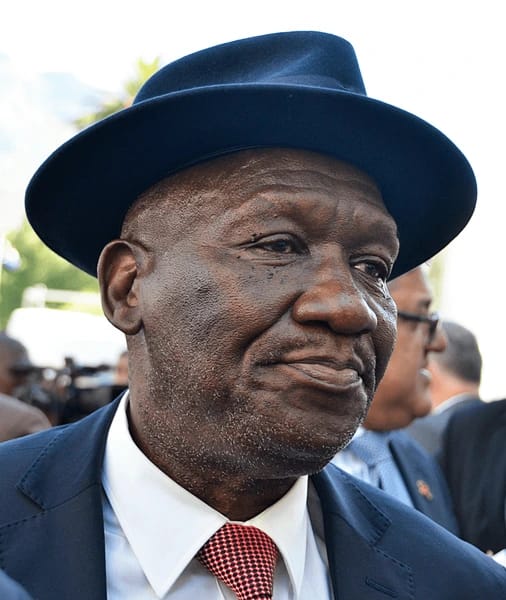
In a seismic testimony that threatens to upend the highest levels of South Africa’s law enforcement establishment, KwaZulu-Natal Police Commissioner Lieutenant General Nhlanhla Mkhwanazi has directly implicated former Police Minister Bheki Cele in a suspicious financial transaction with alleged underworld figure Vusimuzi “Cat” Matlala, revealing what he described as a deep-seated network of “SAPS-linked cartels.”
Testifying under oath before Parliament’s Ad Hoc Committee on police corruption on Wednesday, Mkhwanazi presented a picture of a police service deeply compromised by a syndicate that allegedly includes suspended Minister Senzo Mchunu, Deputy Commissioner Shadrack Sibiya, and a web of officials across critical units.
“It’s About Money. It’s Criminal.”
The most explosive allegation centered on a direct financial link between the former minister and the alleged criminal financier. Mkhwanazi revealed to MPs that their investigation had uncovered communication showing Cele sending a bank account number to Matlala, who then deposited money into it.
“This is not just about phone calls. It’s about money. It’s criminal,” Mkhwanazi stated unequivocally.
He detailed that after making the deposit, Matlala sent proof of payment to Cele, who acknowledged receipt. The General emphasized that the investigation is now actively tracing the final destination of these funds. “The communication dates back to 2024. We are tracking where the money went after the deposit—whether it returned to Cele or reached someone else,” he said, pointing to a potential money laundering operation designed to obscure the trail of funds between a high-level political figure and an alleged underworld kingpin.
A Vast Network of “Runners” and Compromised Units
Mkhwanazi framed this transaction not as an isolated incident, but as a symptom of a vast, integrated network. He alleged that Sibiya and Mchunu are key figures in this arrangement, which utilizes serving police officials as intermediaries with criminal elements.
“There are runners and officers working as intermediaries between Sibiya and criminal elements,” Mkhwanazi told the committee, adding grimly, “We didn’t name all of them—there are too many.”
The web of alleged corruption, according to his testimony, extends far beyond a few individuals, ensnaring core pillars of the country’s crime-fighting apparatus. Investigators have identified compromised members within Crime Intelligence, detective services, forensic units, and the Directorate for Priority Crime Investigation (the Hawks), suggesting a systemic failure that facilitates and protects illegal operations.
State Security Agency Implicated in “Illegitimate” Clearance
Deepening the scandal, Mkhwanazi further alleged that the State Security Agency (SSA) was weaponized to enable one of the key accused. He revealed that SSA reports were used to “illegitimately clear” Shadrack Sibiya for his high-level appointment, despite serious red flags raised by the City of Johannesburg and internal SAPS leadership.
“We need to confirm if the clearance was signed off by the Director-General of SSA, or if someone without authority pushed it through,” Mkhwanazi said, raising alarming questions about the integrity of the state’s own vetting processes and the potential for its sabotage from within.
The testimony paints a picture of a parallel, criminal network operating with impunity inside the state, with tentacles reaching from the alleged underworld into the upper echelons of the police and intelligence services. Mkhwanazi concluded by noting that many individuals remain under active investigation, signaling that the net may soon be cast even wider.
About The Author