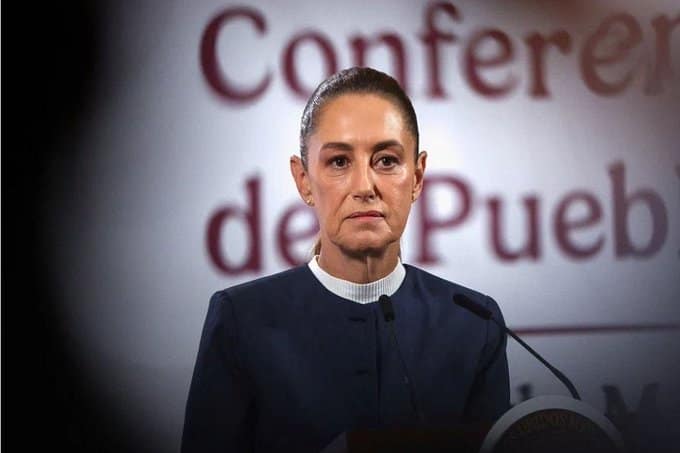
In a dramatic appeal that underscores the escalating danger of a military confrontation in the Western Hemisphere, Mexican President Claudia Sheinbaum issued a direct and urgent call on Wednesday for the United Nations to take immediate action to prevent violence in Venezuela, sharply criticizing the global body’s perceived passivity in the face of a rapidly deteriorating crisis.
Speaking during her nationally televised morning press conference on December 17, 2025, Sheinbaum framed the situation as a pivotal test for multilateralism and regional stability. “The United Nations was created to maintain international peace and security. At this critical hour, when tensions threaten to spill over into conflict, we see a concerning absence,” Sheinbaum stated, her tone unusually grave. “We cannot be spectators to a tragedy in our own hemisphere. Mexico urges the Secretary-General and the Security Council to activate all diplomatic mechanisms to de-escalate this situation immediately, before it is too late.”
The Mexican leader’s intervention marks a significant political escalation and reflects deep anxiety across Latin America as the standoff between Venezuela and the United States enters a newly perilous phase. The catalyst for Sheinbaum’s statement is a series of aggressive moves by the administration of U.S. President Donald Trump, who has returned to office vowing a hardline approach to the government of Venezuelan President Nicolás Maduro.
In recent weeks, the U.S. has not only reinforced existing economic sanctions but has also implemented an aggressive naval blockade, physically intercepting and turning back international oil tankers suspected of carrying Venezuelan crude in violation of sanctions. Simultaneously, the U.S. Southern Command has overseen a conspicuous military buildup in the Caribbean and off the coast of Guyana, involving advanced warships, reconnaissance aircraft, and the deployment of additional troops to bases in Colombia and Puerto Rico. U.S. officials have labeled the actions “a necessary enforcement of international sanctions” and “a deterrent to regional destabilization,” pointing to Venezuela’s continued domestic political repression and its heightened border disputes with Guyana.
Venezuela has responded with fury and mobilization. Maduro, in a national address, accused the U.S. of “piracy and a prelude to war,” and announced large-scale military exercises along his country’s coastline and the disputed Essequibo border. Russia and China, Venezuela’s key international allies, have issued statements condemning U.S. “unilateral coercive measures” and “gunboat diplomacy,” but have so far stopped short of concrete military commitments.
President Sheinbaum’s call places Mexico in a delicate but principled position, analysts say. It aligns with the country’s long-standing doctrine of non-intervention and peaceful conflict resolution while directly challenging the UN’s relevance. It is also a clear departure from the more conciliatory stance of some South American governments and a rebuke to U.S. policy, risking diplomatic friction with its northern neighbor.
“Mexico is walking a tightrope,” noted Dr. Elena Marquez, a professor of International Relations at the National Autonomous University of Mexico. “Sheinbaum is asserting Mexico’s independent foreign policy and its role as a regional leader committed to peace. But by calling out UN inaction and implicitly criticizing U.S. escalation, she is engaging in high-stakes diplomacy. The hope is that this prompts a neutral third party, like the UN or a group of neutral nations, to mediate before a single shot is fired.”
The international community’s response remains divided. European Union foreign policy chief Josep Borrell expressed “great concern” and called for dialogue, but the EU remains internally split on how to address Venezuela. Within the UN Security Council, any resolution for action would likely face a veto from the United States or from Russia and China, leaving the Secretary-General with limited tools beyond quiet diplomacy.
As the world watches, the Caribbean has become a geopolitical tinderbox. President Sheinbaum’s voice, representing a major regional power, adds significant weight to the calls for restraint. The coming days will reveal whether her appeal for UN engagement can forge a path to dialogue, or if the currents of escalation will prove too strong to counter.
About The Author