BLOEMFONTEIN – In a significant intervention aimed at addressing one of the Free State’s most persistent socio-economic challenges, MEC for Finance, Economic Development and Tourism Ketso Makume has announced a substantial R60 million injection into the province’s embattled Department of Human Settlements.
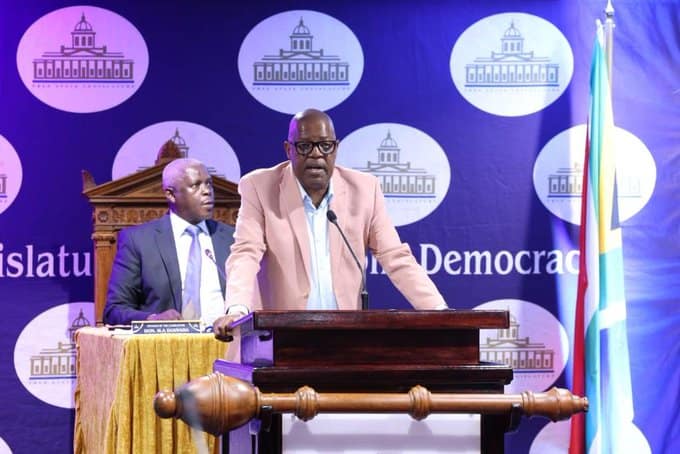
Presenting his second adjustment budget for the 2025/26 financial year in the Provincial Legislature on Tuesday, Makume framed the allocation as a direct response to the “cry of the people,” prioritizing the acceleration of housing delivery and the urgent upgrade of informal settlements across the province. The move represents a strategic re-channeling of funds, drawn from the province’s share of national conditional grants, signaling a decisive shift in budgetary focus toward basic human needs.
“This government hears the voices of our people who are living in unsafe and undignified conditions,” MEC Makume told the legislature. “Today, we are moving beyond rhetoric. This R60 million is a tangible commitment to ensuring that more families in the Free State can sleep soundly in homes that offer safety, security, and a foundation for a better life.”
Where the Money Will Go: Breaking Ground and Installing Services
The fresh allocation is not a blanket deposit into the department’s coffers but is ring-fenced for specific, high-impact projects designed to yield visible results in the coming months. The funds will be split to target two critical fronts in the war against the housing backlog: the completion of stalled projects and the formalization of informal settlements.
A significant portion of the budget is earmarked for the installation of basic services—water, sanitation, and electricity—in several rapidly growing informal settlements around the province’s major towns, including Bloemfontein, Botshabelo, and QwaQwa. By upgrading these areas, the MEC aims to provide immediate relief and improved quality of life for thousands of families currently living without access to municipal infrastructure.
The remainder of the funds is slated for “gap funding” on several incomplete housing projects. These are developments that were started under previous budget cycles but stalled due to contractor issues, material shortages, or funding freezes, leaving half-built structures as monuments to broken promises. By injecting capital into these projects, the department hopes to fast-track their completion and hand over keys to qualifying beneficiaries who have been waiting for years.
“This is about unblocking the blockages,” Makume explained. “We have projects that are 70% or 80% complete but have come to a standstill. It is inefficient and unfair to leave them that way. This money will get the contractors back on site and get families into their homes.”
The Human Cost of the Housing Crisis
The MEC’s announcement lands against a backdrop of a severe housing backlog in the Free State, a problem exacerbated by years of budgetary constraints, population growth, and inward migration to urban centers. Thousands of families remain on municipal waiting lists for years, while others have resorted to erecting makeshift shelters in informal settlements that often lack basic services and are vulnerable to fires, floods, and disease.
For communities like those in the sprawling Slovo Park extension just outside Bloemfontein, the news of the R60 million allocation offers a flicker of hope, though tempered by skepticism born of past disappointments. Residents have long protested the lack of basic sanitation and the muddy, impassable roads that plague their settlement.
“We have been promised things before,” said one resident, who asked not to be named. “But if this money is real, and if it brings us toilets and clean water, it will change our lives. We just want to live like human beings.”
A Political Signal Ahead of Key Cycles
The budget adjustment also carries political weight. As the province gears up for a cycle of local government elections and national campaigns, the African National Congress (ANC)-led provincial government is keen to demonstrate delivery on its core mandate. Makume’s allocation to Human Settlements can be seen as a move to solidify grassroots support by addressing one of the most visceral needs of the electorate.
However, the MEC was careful to frame the allocation within a narrative of prudent financial management. He noted that the funds were identified through a mid-year review of provincial coffers and represent a responsible reallocation rather than reckless spending.
“We are not printing money; we are redirecting it to where it is needed most,” he said. “This is what good governance looks like: identifying underperforming areas or underspent funds and moving them to sectors that can utilize them immediately to change lives.”
A Call for Oversight and Swift Delivery
As the funds begin to flow to the Department of Human Settlements, the spotlight now shifts to implementation. The provincial treasury has indicated it will work closely with the department to ensure strict oversight and prevent the corruption and mismanagement that have plagued housing projects in other provinces.
MEC Makume concluded his address with a direct challenge to the department’s officials and contractors: “The people have waited long enough. We are giving you the tools. Now, we need you to deliver. There will be no excuses. We will monitor every cent and every brick laid.”
For the thousands of Free State families still living in inadequate conditions, the promise of the R60 million will ultimately be measured not in speeches, but in the tangible reality of a new roof over their heads and a tap running clean water in their yard.
About The Author