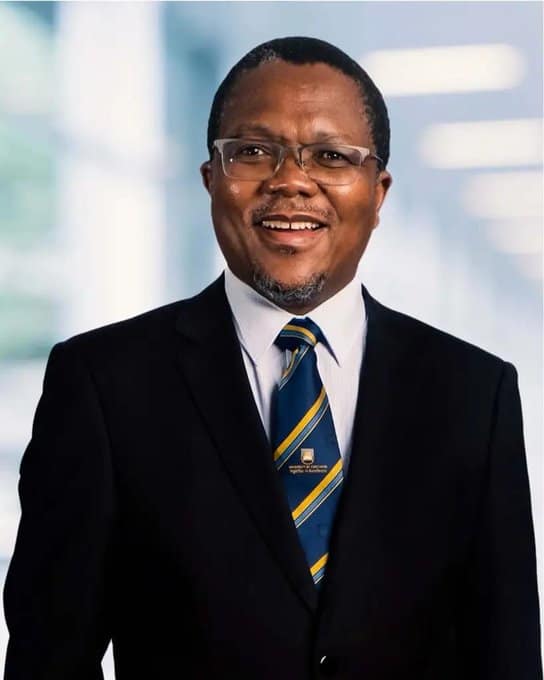
Herman Mashaba, the pugnacious former mayor of Johannesburg and current leader of ActionSA, has never been one to shy away from a political fight. But his latest proposal, unveiled during a frank and wide-ranging interview on Radio 702, is arguably his most audacious yet. With the 2026 local government elections looming, Mashaba has declared that if he is returned to the mayor’s office, he will move swiftly to dismantle some of the city’s most prominent—and, in his view, most dysfunctional—municipal entities.
The targets are familiar to every Johannesburg resident who has endured a power outage, a water cut, or a strike by uncollected rubbish. Mashaba wants to break up City Power, Joburg Water, and Pikitup, absorbing their core functions directly back into the municipal administration. It is a proposal that has been met with equal measures of applause and alarm, and one that strikes at the heart of a decades-long debate about how best to run Africa’s wealthiest city.
“They have failed. Completely and utterly failed,” Mashaba said of the entities, his characteristic bluntness on full display. “We have City Power, and yet the lights go out and stay out. We have Joburg Water, and yet communities go weeks without water. We have Pikitup, and yet the rubbish rots on our pavements. These entities are not delivering. They are a bureaucratic nightmare, a drain on the city’s finances, and a monument to cadre deployment.”
The Case for Dismantling: Cost, Control, and Cadres
Mashaba’s critique of the entities is rooted in both principle and experience. During his turbulent tenure as mayor from 2016 to 2019, he frequently clashed with the powerful bureaucracies that run Johannesburg’s essential services. He argues that the creation of these entities—known as municipal-owned entities (MOEs)—was intended to improve efficiency by ring-fencing specific functions. Instead, he contends, they have become unaccountable fiefdoms.
“They operate like parallel governments,” Mashaba explained. “They have their own boards, their own CEOs, their own massive overheads. They duplicate functions that should be centralised. And worst of all, they have become a dumping ground for failed politicians and party loyalists through cadre deployment.”
The practice of cadre deployment—the ruling party’s policy of placing its members in strategic positions in the public service—has been a consistent target of Mashaba’s ire. He argues that the senior management of entities like City Power and Joburg Water is often filled with individuals chosen for their political connections rather than their technical competence. The result, he says, is a leadership class more concerned with serving party interests than with keeping the lights on.
By dissolving the entities, Mashaba proposes to bring their functions under the direct control of the municipality. The responsibilities would be managed by Section 56 managers—senior officials appointed through a council-approved process, reporting directly to the city manager. In theory, this would create a clear, single chain of command, eliminate duplication, and save millions in executive salaries and board fees.
“It’s about accountability,” he said. “Right now, when the lights go out, City Power blames the city. The city blames Eskom. The residents are left in the dark, literally and figuratively. If we bring this function back into the municipality, there is nowhere to hide. The buck stops with one person: the city manager, and ultimately, the mayor.”
The 2026 Context: A City at a Crossroads
Mashaba’s proposal lands at a critical moment for Johannesburg. The city is teetering on the edge of financial collapse, plagued by infrastructure decay, and grappling with a crumbling service delivery record. The coalition government that replaced Mashaba after the 2021 elections has been characterised by instability, infighting, and a failure to arrest the city’s decline.
For many residents, the entities have become symbols of this failure. City Power, in particular, has been a flashpoint, with its inability to maintain aging infrastructure leading to frequent and prolonged outages. The entity has also been rocked by allegations of corruption, including a recent scandal involving irregular contracts worth millions.
Mashaba is betting that voters are so fed up with the status quo that they will embrace a radical restructuring. His message is simple: the current system is broken beyond repair; incremental reform will not suffice; only a fundamental overhaul can save the city.
“If the people of Johannesburg give me a mandate, I will not waste time,” he vowed. “In the first 100 days, we will begin the process of dismantling these entities. We will bring sanity back to how this city is run.”
The Critics: “A Recipe for Chaos”
Unsurprisingly, Mashaba’s proposal has drawn sharp criticism from those who see value in the current structure, as well as from political opponents who accuse him of grandstanding.
Trade unions representing municipal workers have expressed alarm, warning that the dissolution of entities could lead to mass job losses and a breakdown in labour relations. “These entities employ thousands of workers who have specific skills and expertise,” said a spokesperson for the South African Municipal Workers’ Union (SAMWU). “You cannot simply absorb them into a municipality without a proper plan. This is a recipe for chaos.”
Political analysts have also raised questions about Mashaba’s ability to implement such a sweeping reform, even if he wins the mayoralty. Johannesburg is governed by a coalition, and any major restructuring would require buy-in from multiple parties with competing interests. Furthermore, the process of dissolving entities is legally complex, involving consultations, council votes, and potentially, provincial oversight.
Opposition parties have been quick to pounce. The African National Congress (ANC) in Johannesburg dismissed Mashaba’s proposal as a “populist gimmick” that ignores the technical reasons why entities were created in the first place. “Ring-fencing utilities was meant to protect them from political interference and ensure professional management,” said an ANC spokesperson. “Mashaba wants to put politics back in charge. It’s a recipe for disaster.”
The Democratic Alliance (DA), with whom ActionSA is currently in a cooperation agreement, has been more circumspect, acknowledging the need for reform but stopping short of endorsing Mashaba’s specific proposal.
A Defining Election Issue
As the 2026 local government elections approach, Mashaba has succeeded in doing what he does best: setting the terms of the debate. The question of how to fix Johannesburg’s broken utilities is now firmly on the agenda. Whether voters will embrace his radical solution or view it as a dangerous gamble remains to be seen.
For Mashaba, the stakes could not be higher. His legacy as mayor is mixed—he is credited with cleaning up the city’s finances and taking on corruption, but criticised for failing to make significant inroads on service delivery. A return to office with a mandate to dismantle the entities would be his chance to reshape the city in his image.
“Johannesburg was once a city that worked,” he said, as the interview drew to a close. “It can be that city again. But it will take courage. It will take hard decisions. And it will take leaders who are not afraid to break a few things in order to build something better.”
For the residents of a city tired of darkness, dry taps, and uncollected rubbish, the promise of something better may be exactly what they want to hear. Whether Mashaba’s plan is the answer—or just another campaign promise—will be decided at the ballot box.
About The Author