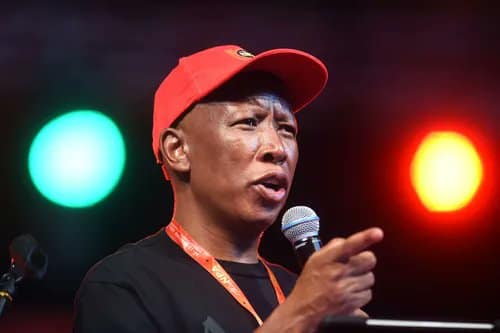
In a dramatic intervention that threatens to derail a high-stakes parliamentary inquiry, Economic Freedom Fighters (EFF) leader Julius Malema has written to National Assembly Speaker Thoko Didiza, raising grave concerns about the “collapsing” administrative and investigative functions of the Ad Hoc Committee tasked with probing allegations by KwaZulu-Natal police boss, Lieutenant-General Nhlanhla Mkhwanazi.
The letter, which has been seen by news outlets, paints a picture of an inquiry in disarray, struggling under the weight of its own mandate. Malema’s warning is not merely procedural; it strikes at the heart of a process that was meant to showcase Parliament’s ability to hold powerful figures in the criminal justice system accountable.
The Genesis of the Crisis: Mkhwanazi’s Explosive Allegations
The Ad Hoc Committee was established in the wake of Lieutenant-General Mkhwanazi’s blockbuster claims, which have sent shockwaves through South Africa’s political and judicial landscape. The senior police official alleged the existence of a coordinated campaign of political interference, intimidation, and unwarranted investigations targeting him.
Central to his testimony are accusations that a faction within the National Prosecuting Authority (NPA) and the Hawks, potentially acting on behalf of political interests, sought to manipulate high-profile cases and sideline officials who resisted. These allegations point to a deep-seated rot within the country’s law enforcement structures, suggesting that the very institutions designed to uphold the law are being weaponized for political combat.
“The Process is Collapsing”: Malema’s Catalogue of Failures
In his communication to Speaker Didiza, Malema delineates a series of critical failures that are crippling the committee’s work. According to the EFF leader, the issues are both systemic and acute:
- Inadequate Resources and Support: The committee is reportedly suffering from a severe lack of administrative and legal support, leaving members—many of whom are not legal experts—ill-equipped to handle the complex, evidence-heavy nature of the probe.
- Procedural Ambiguity: A clear and agreed-upon roadmap for the investigation is allegedly absent. This has led to confusion over the scope of the inquiry, the powers of the committee to summon witnesses and documents, and the standards of evidence required.
- Political Foot-Dragging: While not explicitly stated, the subtext of Malema’s letter suggests a belief that there may be deliberate attempts from certain quarters to stall or sabotage the committee’s work. An investigation of this sensitivity inevitably threatens powerful interests, and a slow, ineffective inquiry is in their best interest.
Malema argues that without immediate and decisive intervention from the Speaker’s office, the committee risks producing a flawed, inconclusive, or entirely illegitimate report, thereby betraying the public’s trust and whitewashing the very serious allegations at hand.
High Stakes in a Political Pressure Cooker
The implications of this probe extend far beyond the confines of Parliament. For the ruling ANC, it is another fraught examination of its ability to manage factional battles within the state. A credible finding of political interference would be devastating, reinforcing the narrative of a party at war with itself and unable to govern key institutions.
For the EFF and other opposition parties, the committee is a crucial platform to expose what they term “state capture remnants” and to hold the executive accountable. A failed inquiry would represent a significant political defeat and a missed opportunity.
Most importantly, for the South African public, this probe is a litmus test for the resilience of the country’s democratic institutions. Can Parliament effectively investigate the police? Can it uncover the truth about the manipulation of the justice system? Malema’s alarm suggests that the answer to these questions is currently in doubt.
The ball is now in Speaker Thoko Didiza’s court. Her response to this crisis will determine whether the Mkhwanazi probe becomes a landmark moment of accountability or yet another chapter in the story of South Africa’s protracted struggle with the politics of impunity.
About The Author