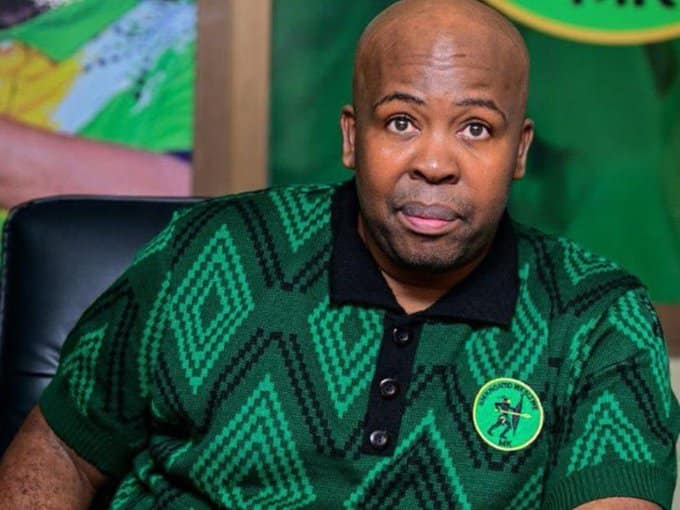
Former uMkhonto weSizwe (MK) Party Head of Presidency Magasela Mzobe has issued a fiery and impassioned appeal to the party’s current leadership and its broader membership, urging them to rise in collective defense of party president Jacob Zuma amid mounting political turbulence triggered by explosive reports of a clandestine meeting between Zuma and controversial businessman Ajay Gupta during a private visit to India. Mzobe’s remarks, delivered during a media briefing in Johannesburg on Thursday, have thrown the party into a fresh storm of internal controversy, raising urgent questions about loyalty, accountability, and the party’s moral compass.
Mzobe, who has remained a vocal and influential figure within the party’s ranks despite stepping down from his official post, did not mince his words. He declared that it is the sacred duty of every MK Party member to shield Zuma from any possible harm—whether political, legal, or physical—as the former president faces renewed scrutiny over his historical ties to the Gupta family, who are at the center of the sprawling state capture allegations that dominated South Africa’s political landscape for years. “President Zuma is the father of this movement. We cannot allow anyone, whether inside or outside this party, to undermine his legacy or expose him to danger,” Mzobe said, his voice laden with emotion.
However, Mzobe’s address did not stop at a call for Zuma’s protection. In a striking and unexpected turn, he also turned his fire inward, calling for party spokesperson Mzwanele Manyi to be held accountable over the same reports. Manyi, who has been a prominent defender of Zuma and the Gupta family, has found himself in the crosshairs after questions were raised about the party’s official knowledge of Zuma’s India visit and the nature of the engagement with Ajay Gupta. Mzobe accused Manyi of creating confusion and potentially exposing the party to reputational damage by failing to provide a coherent and transparent account of the circumstances surrounding the meeting.
“Comrade Manyi must account to the structures of the party,” Mzobe insisted. “The people deserve to know the truth. We cannot have our leadership operating in the shadows while the party’s image is dragged through the mud.” The call for accountability has added a new layer of tension to an already fraught political environment, with internal factions within the MK Party reportedly divided over Zuma’s continued association with the Gupta brothers, who have been linked to widespread corruption and influence-peddling during Zuma’s presidency.
The MK Party leadership has yet to issue an official response to Mzobe’s remarks, but insiders suggest that the matter is likely to dominate discussions at the next national executive committee meeting. Political analysts have observed that Mzobe’s intervention reflects deeper fractures within the party, which has struggled to balance its populist appeal with the need for credible governance. As the fallout continues, all eyes remain on Zuma and Manyi, with the public eagerly awaiting clarity on the India visit and its implications for the party’s future trajectory. For now, Mzobe’s words have reignited a fierce debate about loyalty, transparency, and the enduring shadow of state capture in South African politics.
About The Author