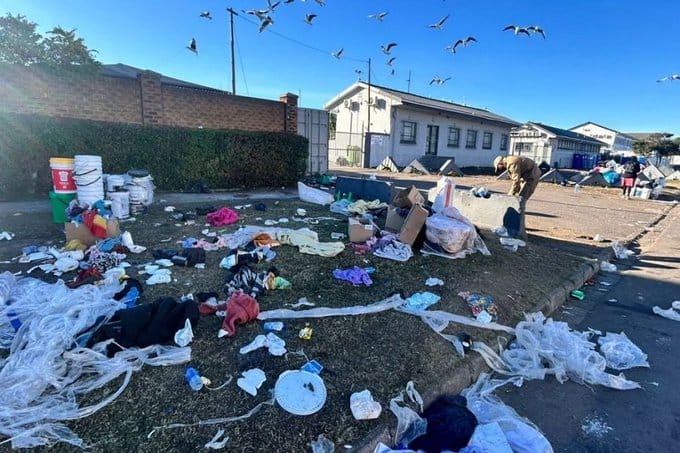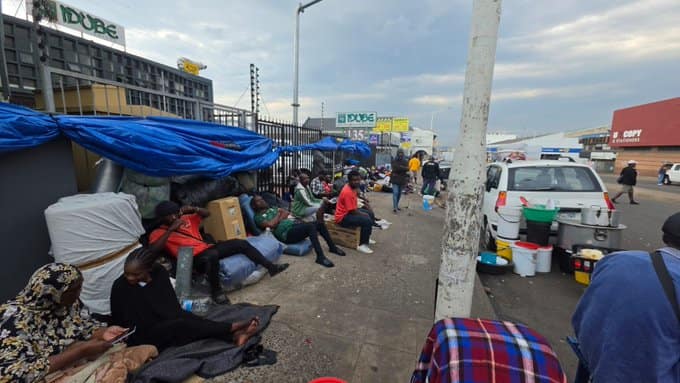
Dozens of refugees and asylum seekers remain camped outside the Durban Refugee Reception Centre on Che Guevara Road, with their numbers swelling daily as fresh waves of individuals flee violence, political instability, and economic collapse in neighboring countries and beyond. The makeshift settlement, which has now been in place for over two weeks, has become a stark and visible symbol of the mounting pressures facing both displaced communities and South Africa’s overburdened asylum system, as humanitarian groups warn of a growing crisis on the city’s doorstep.
The scene outside the reception centre is one of desperation and resilience. Families with young children, elderly individuals, and unaccompanied minors are among those sleeping on cardboard mats, huddled under makeshift tarpaulins, and relying on charitable donations for food and water. Many of the refugees, who have fled conflict-ridden regions in the Democratic Republic of Congo, Somalia, Ethiopia, and Burundi, have been waiting for days—or even weeks—to have their asylum applications processed, only to be met with long queues, system glitches, and chronic staff shortages that have paralyzed operations at the centre.
“We have nowhere else to go,” said one asylum seeker from the DRC, who asked not to be named for fear of reprisals. “We fled war, we fled death, and now we are sleeping on the street. We just want to be processed so we can start our lives again.” His sentiment was echoed by others who described harrowing journeys across borders, often at great personal risk, only to find themselves stranded in a bureaucratic limbo that shows little sign of resolution.
The South African Department of Home Affairs has acknowledged the backlog and attributed it to a combination of underfunding, staff shortages, and the surge in new arrivals. Officials have pledged to deploy additional personnel and extend operating hours to clear the backlog, but refugees and activists remain skeptical, pointing to a history of broken promises. Meanwhile, local community members have expressed mixed reactions—some have offered food and support, while others have voiced frustration over what they perceive as preferential treatment for foreigners in a city already struggling with high unemployment and strained public services.
Human rights organizations have called on the government to urgently intervene, warning that the deteriorating conditions outside the centre pose serious health and safety risks, including the spread of disease, exposure to the elements, and the threat of exploitation. As the numbers continue to rise, the Durban Refugee Reception Centre stands as a microcosm of a broader continental crisis, testing South Africa’s commitment to its international obligations and its capacity to manage migration in a humane and efficient manner. For the refugees camped outside, the wait continues—each day bringing new uncertainty, but also a fragile hope that their long ordeal may finally come to an end.
About The Author