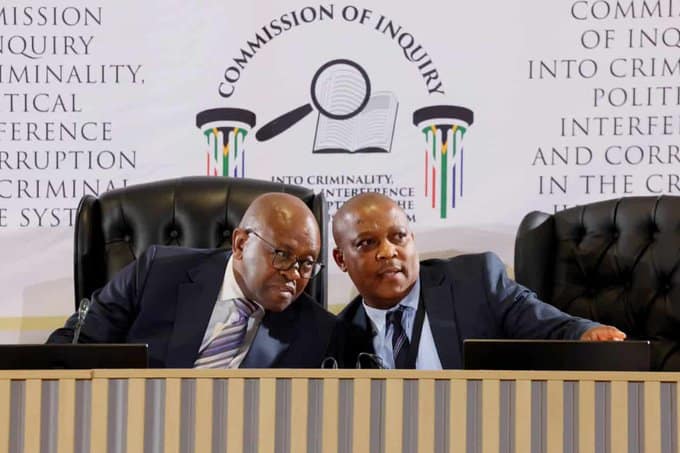
The stage is set for another pivotal day at the Parktown offices in Johannesburg, as the high-stakes Judicial Commission of Inquiry into Alleged Criminality, Political Interference and Corruption in the Criminal Justice System – the Madlanga Commission – gavels back into session this morning.
After a short adjournment, the Commission, steered by Constitutional Court Justice Mbuyiseli Madlanga, enters what observers are calling its most critical phase yet. The air is thick with anticipation, as the inquiry prepares to drill down into the complex, deep-rooted issues that have long plagued South Africa’s law enforcement and prosecutorial authorities, shaking public trust to its core.
Today’s schedule promises to intensify the probe, with two new key witnesses slated to take the stand. While their identities remain under wraps—a common practice to ensure their security and the integrity of their testimony—legal insiders suggest their evidence will cast light into two distinct but interconnected shadows within the system.
The first witness is widely speculated to be a mid-to-high-ranking official formerly within the Directorate for Priority Crime Investigation (the Hawks). It is expected their testimony will grapple with the perennial allegation of political interference in sensitive investigations, particularly those involving high-profile politicians and business figures. The Commission’s evidence leaders have previously hinted at case files being “sterilised” or diverted, and today may see specific instances laid bare.
The second witness, according to sources close to the proceedings, is believed to be a senior forensic auditor or financial investigator who has worked on several major corruption cases that later stalled. Their evidence is anticipated to provide a forensic paper trail, illustrating how corrupt networks allegedly infiltrated the justice system itself to derail prosecutions, compromise investigators, and manipulate asset forfeiture processes.
This dual testimony underscores the Commission’s twin focus: the pressure from above (political interference) and the corrosion from within (systemic corruption). “We are moving from the broad landscape of allegations into the granular detail of specific mechanisms,” a source within the Commission’s legal team noted privately. “It’s about connecting the dots between stalled cases, suspicious appointments, unexplained decisions, and the flow of illicit money.”
The Commission’s mandate is vast, examining allegations that have turned the criminal justice system into a battleground where political factions and criminal syndicates seek to weaponise or neutralise its powers. Previous witnesses have painted a picture of an institution under siege, where dedicated prosecutors and police face intimidation, while compromised elements allow “connected” individuals to operate with impunity.
Justice Madlanga has repeatedly emphasised the inquiry’s purpose is fact-finding, not prosecution. However, the evidence collected—mountains of documents, emails, bank records, and sworn testimonies—will be compiled into a final report with recommendations that could lead to sweeping reforms, disciplinary actions, and even criminal referrals to the National Prosecuting Authority.
As the lawyers gather, the media sets up its cameras, and the public gallery fills, the weight of expectation is palpable. For many South Africans, the Madlanga Commission represents a fragile hope: a chance to surgically expose the rot within the very body meant to protect democracy and the rule of law. With two new witnesses ready to break their silence, today marks another step in the arduous journey to untangle a web years in the making. The nation watches, and waits, for truth.
About The Author